PHYTO EXOSOME
Unleash the power of your cells.
Unleashingthe power of cells.
Humans are made up of cells.Our bodies, organs, and even our skin.
Up until now, wehave cared for our skinby "providing" it with what it needs, in response to the problems that appear on the skin, such as dryness and loss of firmness.
However, that skin is made up ofindividual cells.
The foundationof beautiful and healthy skin lies in the power of cells to perform their respective roles andmaintain a healthy state.
At Rohto
, we believe that sustaining that power for as long as possibleis what constitutes skin longevity.
Therefore, what's needed for skincare going forwardis not just to look at the problems that appear on the surface, butto consider how to support and bring out thenatural functions of the cells that make up the skin.
Rohto Regenerative medicinehas been working with cells themselves for many years through regenerative medicine research.
I want to share
that knowledge with more peoplein their daily lives.
That's what led me to focus onexosomes, which are involved in cellular function.
It's not just about what you put on your skin, butalso about focusing on thevery power of the cells that form the foundation of your skin.
That's where wediscovered new possibilities in skincare.
-
There's still something special about plants.

Our focus was on plants, microorganisms, and algae. Plants and algae cannot move on their own. They endure various environmental conditions such as strong sunlight, dryness, and cold, protecting themselves, adapting, and growing. Their way of life embodies a survival strategy cultivated over a long period of time—the wisdom of life itself.
-
From cell to cell.
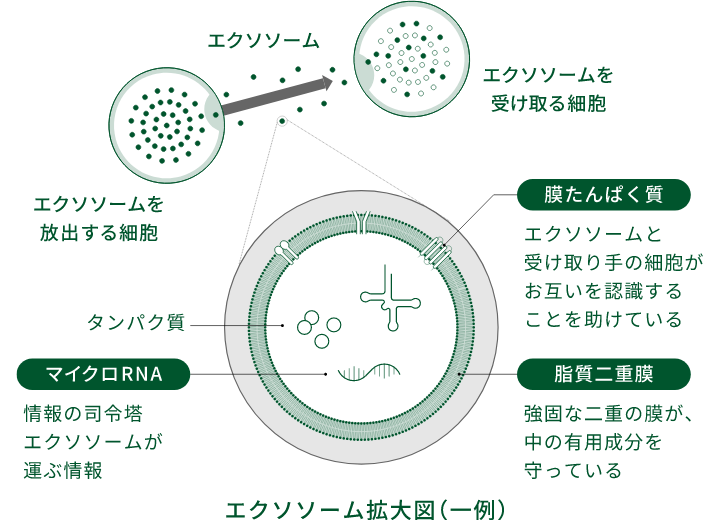
Although cells appear to be independent of each other, they actually communicate with one another, each fulfilling its own role. For the body to maintain a healthy state, it is essential that the individual, organs, and cells maintain harmony. Exosomes are one of the entities that facilitate this dialogue between cells.
Exosomes are tiny capsules that carry messages and are delivered from cell to cell. Think of them as small letters containing clues that help the cell decide what to do next.
Cells receive these messages and, through repeated communication with surrounding cells, strive to maintain a healthy state. Plants, microorganisms, and algae have also engaged in repeated communication with each other in order to survive in harsh environments. Rohto Pharmaceutical has focused on the potential of this life information. By focusing on the mechanism of intercellular dialogue, we are researching approaches that will bring out the inherent functions of skin cells.
-
The birth of phytoexosome technology

Research has revealed that exosomes, which facilitate cellular communication, are key to plant survival strategies. Phytoexosomes represent a new research area that utilizes exosome-like extracellular vesicles derived from plants, microorganisms, and algae.
What we mean by "opening up" is to freely draw out the inherent power that is within us, just as plants sprout and bloom. We draw out and open up the natural functions of skin cells. Phytoexosomes are cutting-edge technology that unlocks the potential of the cells that form the foundation of the skin.
ACTION
The functionof phytoexosomes
-
ACTION:01
Delivering messages that lead to well-being and supporting intercellular dialogue.
-
ACTION:02
Create an environment where cells can function vibrantly.
-
ACTION:03
Unleashing the skin's natural ability to become beautiful and healthy
-
ACTION:04
Passing on beautiful and healthy skin to the future.
Unleashing the inherent power of cells
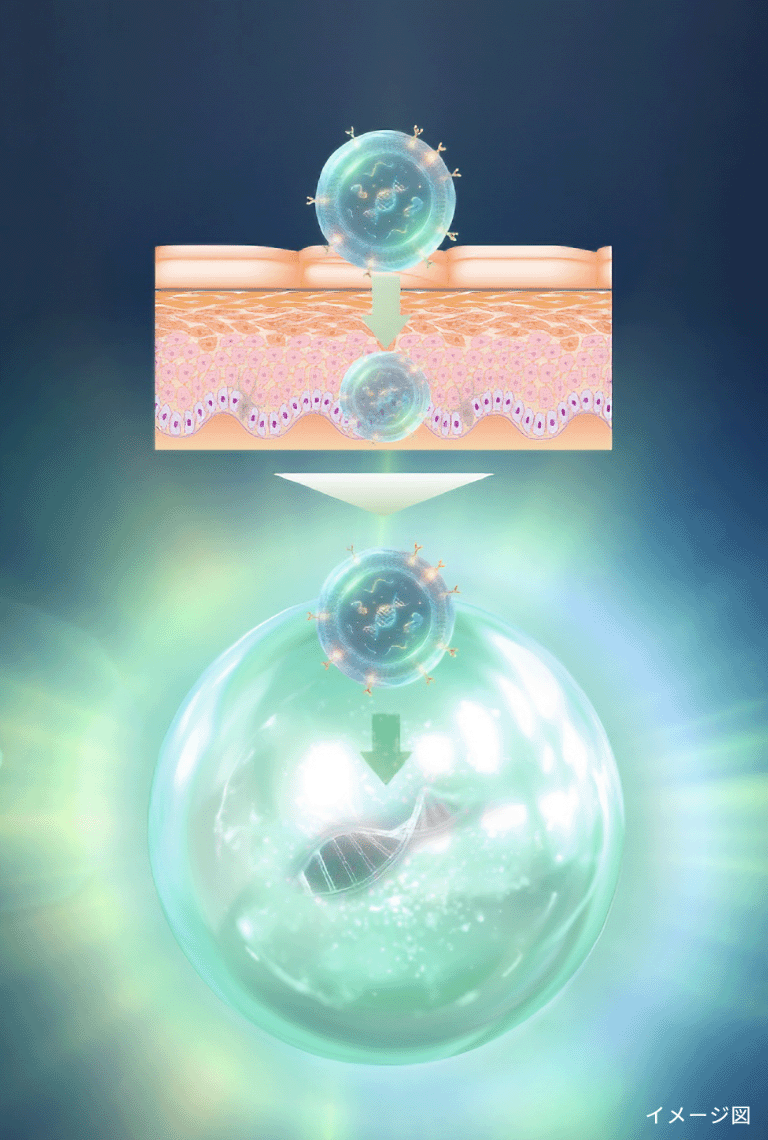
Confirmation that algae-derived phytoexosomesare taken upinto skin cells.
When algae-derived phytoexosomes were addedto both "epidermal keratinocytes" and "fibroblasts" in human skin, we confirmed that they were taken up by both types of cells.
[Epidermis] Human epidermal keratinocytes
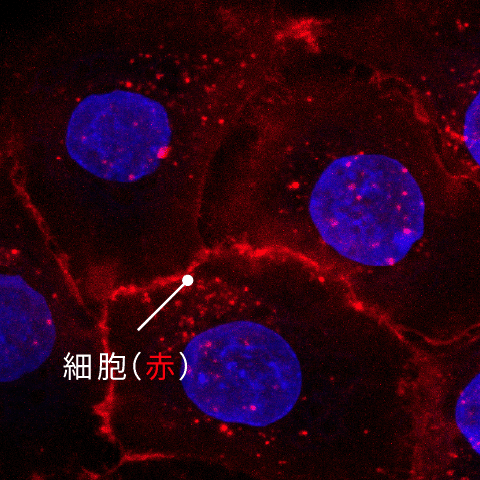
Before addition
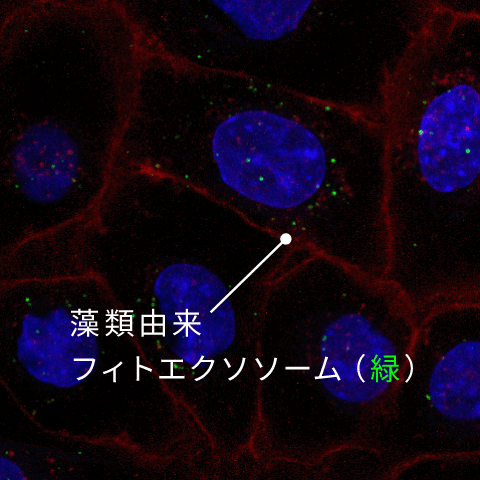
After addition
[Dermis] Human fibroblasts
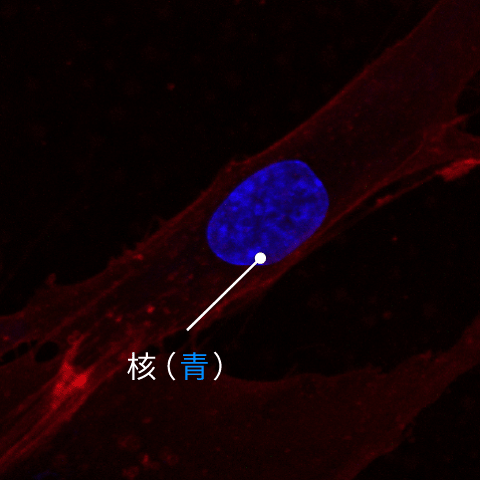
Before addition
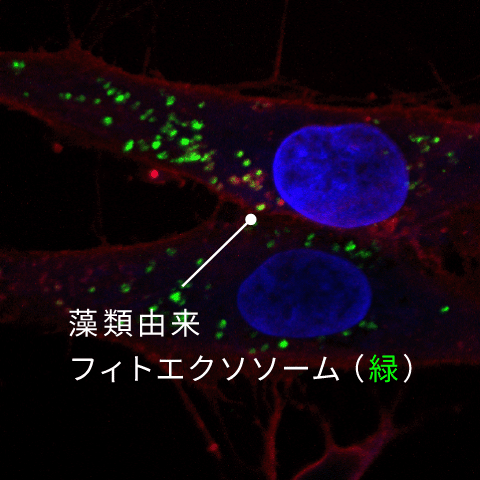
After addition
*Red: Human cells, Blue: Cell nucleus, Green: Algae-derived phytoexosomes
Algae-derived phytoexosomes were added to human epidermal keratinocytes and human fibroblasts, and observed after 24 hours of culture.
SOURCE
Algae-derived phytoexosomes
Rohto focused on Pavlova, a microalga that survives the harsh environment of subtropical regions with their intense ultraviolet radiation and brackish water.
Pavlova is believed to possess evolutionary wisdom and limitless potential that humans lack, because it has survived for hundreds of millions of years in an environment that would instantly destroy humans: intense ultraviolet radiation, ebb and flow of tides, and extreme dryness.
We are researching phytoexosomes derived from algae, leveraging the power of algae that have survived in such harsh environments. Algae-derived phytoexosomes are expected to address multiple phenomena related to inflammation and aging in the skin, and to improve the skin environment from the foundation at both the epidermis and dermis levels.
Rohto has independently established the facilities and technology to industrially cultivate microalgae on a large scale and stably mass-produce phytoexosomes. Furthermore, we have pioneered the technology to stably purify them in large quantities.
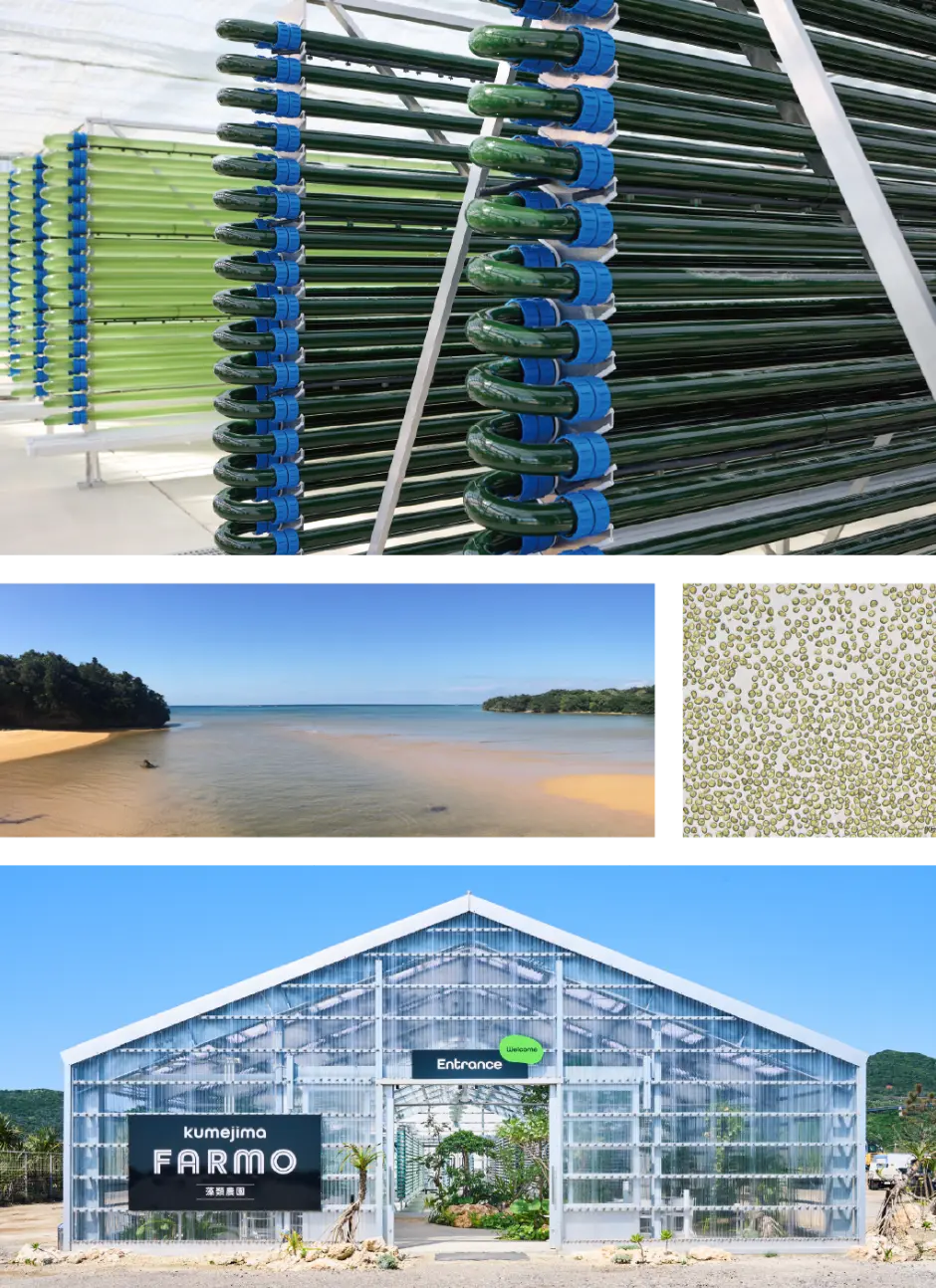
Algae Farm FARMO
"FARMO," located in Kumejima Town, Okinawa Prefecture, is Japan's first facility that integrates algae research, production, processing, and tourism services.
The effects of algae-derived phytoexosomeson the skin
-
Suppresses inflammation caused by ultraviolet rays
When skin is exposed to ultraviolet (UV) light, PGE2, an inflammatory substance, is secreted. In a study where human epidermal keratinocytes were irradiated with UVB light, the secretion of PGE2 was suppressed by adding algae-derived phytoexosomes.
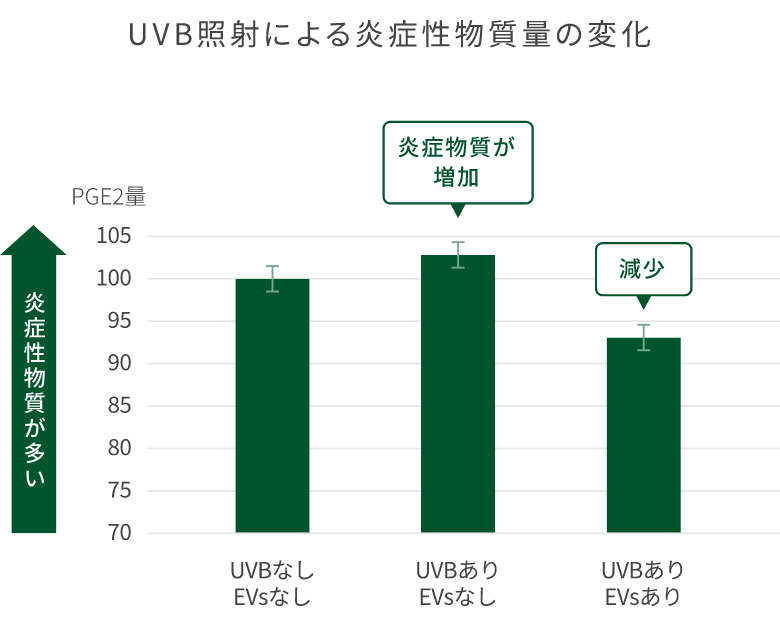
EVs: Algae-derived phytoexosomes
Test method: Human epidermal keratinocytes were irradiated with UVB, and the amount of PGE2 secreted was measured. The control group was set to 100 for comparison.
-
Promote skin barrier reconstruction
One of the important functions that supports skin health is the skin's barrier function. Tight junctions in the epidermis are an important structure that plays a role in the barrier function, sealing epidermal cells together without gaps, preventing moisture evaporation and the intrusion of external stimuli and foreign substances, thereby maintaining skin moisture.
However, when the condition of epidermal cells is disrupted by external stimuli such as dryness or ultraviolet rays, tight junctions may not be formed sufficiently, and the barrier function may be impaired.
It has been shown that administering algae-derived phytoexosomes promotes the formation of tight junctions in the epidermis, supporting the development of a healthy barrier function.
Changes in tight junctions
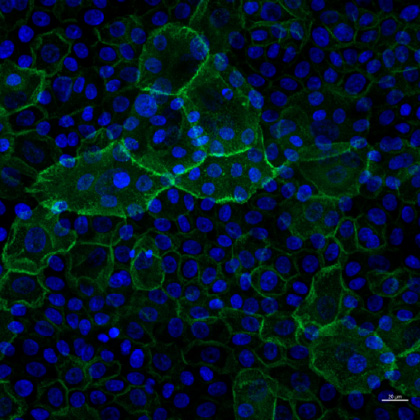
control group
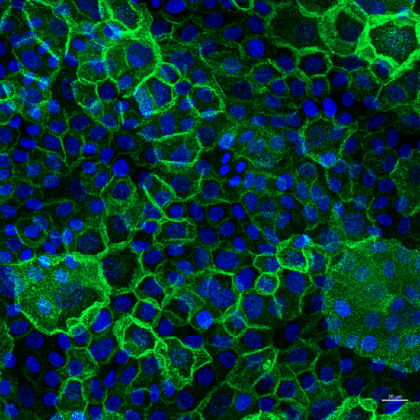
Algae-derivedphytoexosomes
Green: Tight Junction
Test method: Human epidermal keratinocytes were treated with algae-derived exosomes, and their ability to form tight junctions was evaluated.
Research presentation completed at the IFSCC conference.
(International Federation of Societies of Cosmetic Chemists)
-
Promotes the synthesis of collagen fibers
Collagen is an important component that supports the structure of the dermis and maintains skin firmness and elasticity. A decrease in collagen due to aging and external factors such as UV radiation, or disruption of its structure, leads to wrinkles and loss of firmness. Furthermore, vitamin C is an essential vitamin indispensable for collagen synthesis. It has been shown that combining algae-derived phytoexosomes with a vitamin C derivative (magnesium ascorbyl phosphate) promotes collagen fiber formation in the dermis.
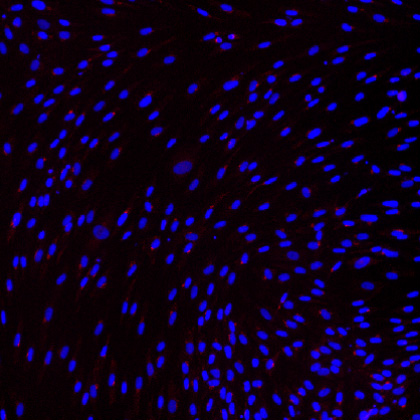
No treatment
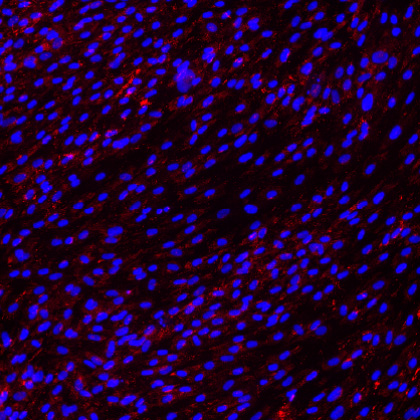
Algae-derived phytoexosomes only
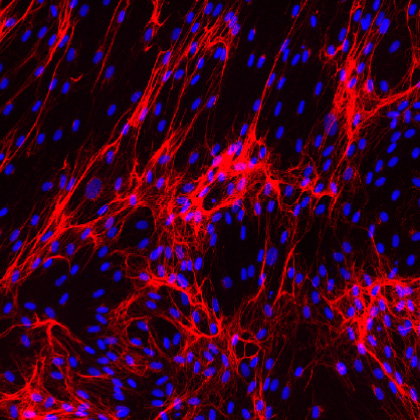
Vitamin C derivatives only *
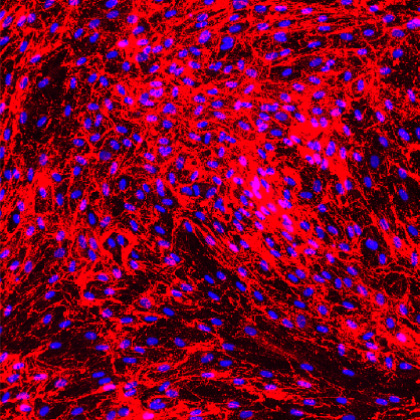
Algae-derived phytoexosomes + vitamin C derivative *
Blue: Fibroblasts, Red: Collagen fibers
Test method: Human fibroblasts were treated with algae-derived phytoexosomes, and type I collagen fiber formation was observed by immunohistochemistry after 2 weeks of culture.
*Magnesium ascorbyl phosphate
Research presentation completed at the IFSCC conference.
(International Federation of Societies of Cosmetic Chemists)
WHY ROHTO
Rohto's concept oflongevity
Rohto's concept of "longevity"is not simply about extending lifespan, butaboutpeople living long, healthy, and youthful lives.
To support this state,the body's inherent function,namely homeostasis—the ability of the individual, organs, and cellsto maintain harmony—is essential.
Rohto's Longevity researchstarts with "cell research"to scientifically understandthe mechanisms of homeostasis maintenance and to scientifically unravelhow to maintain a healthy and youthful state.
In this era of 100-year lifespans, living a healthy life isa personal wish, but it is also an issue that concerns the vitality of families, communities, and society as a whole.
Rohto Pharmaceutical
will deliverthe knowledge cultivated through cell research to everyone in the form of products and servicesthat energizepeople, society, and the world of tomorrow.
-
Rohto's research capabilities
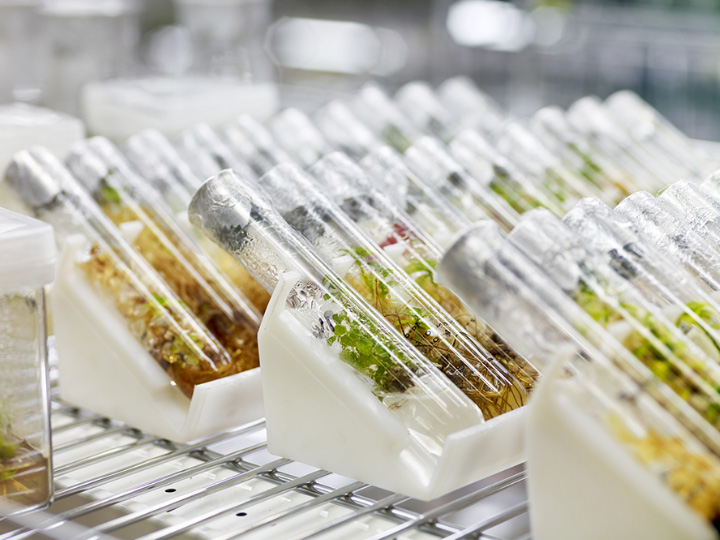
The value of phytoexosomes isn't created simply by finding the raw material.
Research is needed to determine each individual element, including "which materials have potential," "what kind of information they contain," and "what kind of reaction occurs when they reach skin cells."
Rohto leverages its long-standing expertise in dermatology and cell research to conduct research that connects the selection of materials, including pavlova, to the analysis of phytoexosomes, efficacy evaluation using cells, and the consideration of their application in cosmetics.
-
Establishment of the Phytoscience Institute

Cell science and phytoscience. Connecting these two fields of research, we aim to harness the potential of nature for daily well-being.
In addition to the cell science cultivated in the medical field, Rohto has long explored the power of plants, microorganisms, and algae, including extracts and herbal medicines. In 2025, we established the Phytoscience Research Institute. Utilizing the knowledge we have cultivated regarding plant and fermentation-derived materials, and under the guidance of Professor Takahiro Ochitani of Tokyo Medical University, we have been promoting phytoexosome research. Through repeated extraction, purification, analysis, and quality evaluation of phytoexosomes, we are pursuing new possibilities in skincare based on cell research.
INSIGHT
New value creationattracting attention from researchers.
The future of phytoexosomes: revolutionizing next-generation beauty and health.
Even after many years of research, many aspects of the overall picture of extracellular vesicles, including exosomes, remain unclear. However, in recent years, extracellular vesicles have attracted attention not only as a means of intercellular communication, but also as entities that have the potential to connect different organisms such as plants, microorganisms, and animals.
In particular, extracellular vesicles derived from plants and fermenting microorganisms contain a diverse range of molecules that each organism has acquired during its evolutionary process. By scientifically elucidating their functions and carefully verifying their quality, safety, mechanism of action, and usefulness in humans, we can expect to see new developments in healthcare, including food, cosmetics, and preventive/proactive medicine.
I believe that in the future, extracellular vesicles derived from plants and fermentation will support the healthy lives of individuals and contribute to extending healthy lifespans, or "healthy longevity." Phytoexosome research is not a fleeting trend, but rather a new research area that connects life sciences and industry, and will continue to develop further.
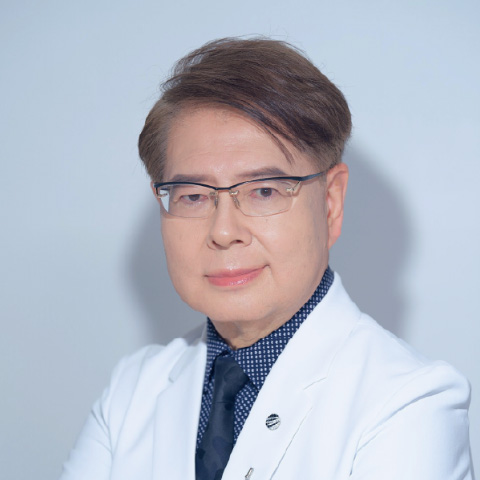
Professor Takahiro Ochitani
Professor, Department of Molecular and Cellular Therapy, Institute of Medical Science, Tokyo Medical University
Visiting Researcher, Department of Cellular Informatics, National Cancer Center Research Institute, National Research and Development Agency
He completed his doctoral studies at Osaka University Graduate School in 1988, earning a PhD in Medicine. He is the President of the Japan Society for Extracellular Vesicles (JSEV). He previously served as a postdoctoral fellow at the La Jolla Cancer Institute (now the Burnham Medical Institute in SF) and as the chief researcher in the Department of Molecular and Cellular Therapy at the National Cancer Center Research Institute. He has been selected as a Highly Cited Researcher by Web of Science for seven consecutive years since 2019. He is a leading figure who has long spearheaded exosome research in Japan.
UPDATES (New Information)