The 2022
"Fertility Treatment White Paper," now in its fifth year, reveals that awareness and efforts toward "fertility treatment" have become commonplace, while anxieties about the future among young people are becoming more apparent
. The aim is to create a well-being society where everyone values themselves and lives authentically.
March 29, 2023
ROHTO Pharmaceutical Co., Ltd. (Headquarters: Osaka City, President: Masafumi Sugimoto) has been publishing the "Fertility Treatment White Paper" since 2018 with the aim of spreading knowledge and understanding about "fertility treatment," and will now release the results of this year's survey as the "Fertility Treatment White Paper 2022." While approximately half of young people responded that they "do not want children" and expressed anxieties and concerns about society, the survey also highlighted the actual attitudes and behaviors of people who are facing "fertility treatment."
Thoughts behind the "Fertility Treatment White Paper 2022"
The white paper, which began in 2018, focuses on people who desire children and are currently or planning to engage in fertility treatment. Against the backdrop of the social challenges surrounding fertility treatment, which is often perceived as something that women should take the lead in, the white paper has strived to raise awareness in society by promoting "two-person fertility treatment," where partners work together to address these issues. For this fifth year, we have changed the title of the white paper from "The Current State of Two-Person Fertility Treatment" to "Everyone's Fertility Treatment," with the aim of more closely addressing the voices of consumers surrounding "fertility treatment, pregnancy, and childbirth."
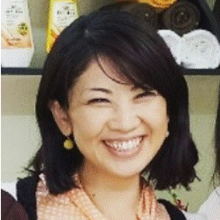
"Fertility Treatment White Paper 2022" Production Team
Public Relations and CSV Promotion Department, Fumiko Akojima
In particular, seeing the real reasons given by those who answered "I don't want children in the future," as revealed in this survey, I feel a strong sense of responsibility to bring these voices to society. These voices included a variety of issues that could not be fully covered in the white paper, such as the burden of marriage, childbirth, and child-rearing, economic reasons, and a vague sense of anxiety about the future. These are important themes that many people in present-day Japanese society may have felt at some point, not just those who don't want children. Of course, there are likely people among those who have chosen to have children who feel similar anxieties. I hope to continue thinking about these issues together with many people, using these survey results as a starting point.
Current situation surrounding fertility treatment and a summary of the 'Fertility Treatment White Paper 2022' survey
Over the past three years, the number of people who "don't want children" has been gradually increasing, and "fertility treatment" is becoming a part of daily life.
Japan's birth rate in 2022 (preliminary figures) fell below 800,000 for the first time, setting a new record low. *1 In the longitudinal survey conducted in this white paper, the percentage of young unmarried men and women who answered that they "do not want children in the future" has gradually increased from 44% in 2020 to 49.4% this year, approximately half. *2
On the other hand, awareness of and importance regarding "fertility treatment, pregnancy, and childbirth" are increasing year by year, with the start of insurance coverage for infertility treatment in April 2023 and the spread of products and services seen in femtech and Feminine Care. Amidst the spread of diverse values, there are signs that efforts toward fertility treatment are expanding into daily actions such as dialogue with partners and daily health management. *3
*1: Based on the number of births in 2022 (preliminary figures) by the Ministry of Health, Labour and Welfare.
*2: "Fertility Treatment White Paper 2022" (Target: Unmarried men and women aged 18-29)
*3: "Fertility Treatment White Paper 2022" (Target: Married men and women aged 25-44)
-
- The rate of couples trying to conceive has returned to pre-COVID levels.
-
The implementation rate, which was a record high of 60% in 2020, declined to 55% in 2021 and 48.1% in 2022.
-
- Approximately half of young unmarried men and women *4 responded that they "do not want children in the future," a trend that has been increasing over the past three years.
-
A survey conducted over the years revealed that the percentage of people who want to have children in the future has gradually increased from 44% in 2020 to 49.4% this year, nearly half.
*4: 18-29 years old
-
- "Anxiety about the future" is raising the bar for having children.
-
Among young, unmarried men and women, many cited economic reasons for not wanting children in the future, as well as concerns about the mental and physical burdens of childbirth and child-rearing, and a vague sense of anxiety about the future.
-
- More than half believe that "trying to conceive" is "something that everyone who wants children does."
-
- Approaches to "fertility treatment" are shifting towards dialogue-based and daily actions.
-
Among married men and women, "fertility planning" is showing signs of expanding beyond actions directly related to pregnancy to include everyday activities such as discussions about life plans and daily health management.
-
- Knowledge about the body and health for health management before pregnancy is spreading.
-
While the term "preconception care" (health management before pregnancy) is not widely known, knowledge about one's own body and health is already spreading.
-
- Many people have the knowledge, but few are able to actually put it into practice.
-
Approximately 30% of married men and women engage in daily health management and communication with their partners, while approximately 20% engage in self-checks and self-care.
-
- The impetus for taking action included advice from a partner, support from local government and workplaces, and flexible work arrangements.
Embracing "feelings" and taking on the challenge of "life and joy"
Driven by a desire to protect the precious health of expectant mothers, our company was quick to recognize the need for general-purpose pregnancy tests and launched Japan's first over-the-counter pregnancy test kit in 1992. At the time, accurate knowledge about pregnancy tests was not widespread, so we traveled throughout Japan, holding workshops for people hoping to conceive to spread awareness and knowledge about the importance of pregnancy tests. The development of our ovulation prediction test kit also began based on customer feedback received through our call center. Furthermore, to support men taking their first steps towards fertility treatment, we developed a "motility sperm concentration test kit." In addition, we have launched supplements to support physical preparation and address concerns related to fertility treatment.
Through our products and social initiatives such as the "White Paper on Fertility Treatment," we consistently cherish the message of "life and joy," expressing gratitude not only for "children" as the birth of new life, but also for "life" in general, including oneself, family, and those around us.
While the social environment is changing and diverse values exist, we believe that regardless of whether you want children or not, cherishing yourself and those around you, and taking increased care of your mind, body, and health is the first step in creating a well-being society where everyone can live "true to themselves." We at Rohto Pharmaceutical will continue to stand by everyone's feelings and take on new challenges.