[Courtesy Visit to the Governor of Tottori Prefecture]
Food product "KING KUROME" made with seaweed Kurome from Tottori Prefecture
- Jointly developed by Hōfukuichi Co., Ltd., Tottori University, and ROHTO Pharmaceutical Co., Ltd.
April 28, 2023
Takara Fukuichi Co., Ltd. (Headquarters: Kurayoshi City, Tottori Prefecture, President: Masayasu Takano), Tottori University (Headquarters: Tottori City, Tottori Prefecture, President: Hiromitsu Nakajima), and ROHTO Pharmaceutical Co., Ltd. (Headquarters: Osaka City, Osaka Prefecture, President: Masafumi Sugimoto) paid a courtesy visit to Tottori Prefecture Governor Shinji Hirai on April 28th to report the completion of their new product, "KING KUROME" (manufactured and sold by Takara Fukuichi Co., Ltd. (https://takarafukuichi.jp)), a prepared food product made using kurome, a type of seaweed not effectively utilized as food in Tottori Prefecture, which they jointly developed. Takara Fukuichi Co., Ltd. introduced the product and the ingenuity involved in its development, Tottori University discussed their basic research on underutilized and underutilized materials, and ROHTO Pharmaceutical Co., Ltd. shared their thoughts on contributing to the region and the background of this initiative. Governor Hirai expressed his gratitude, saying, "I appreciate that you have discovered the charm of kurome, which I have been familiar with since childhood through playing in the sea, and that you have utilized it as a delicious food ingredient." We also received encouraging words for the future, such as, "The whites of the eyes are meant to be peeled, while the black parts are meant to be eaten."
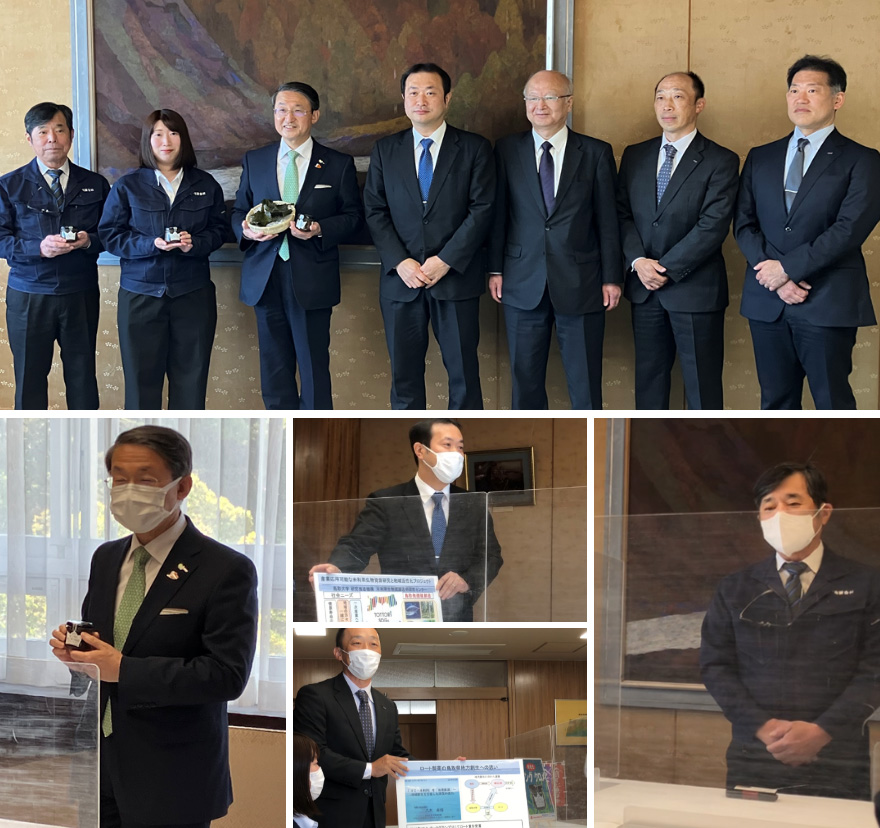
Photo 1: Courtesy visit to the Governor of Tottori Prefecture
Background and prospects of food development
In the waters surrounding Japan, approximately 2,000 species of seaweed grow and reproduce over periods of one to several years, benefiting the environment and ecosystems. Only about 100 species of seaweed, such as wakame and kelp, are commercially available as food. Utilizing and adding value to currently underutilized seaweeds has the potential to become a new strategy for the fisheries industry.
Since seaweed is generally recognized by many people as a healthy food, we decided to explore underutilized or underutilized seaweeds growing in Tottori Prefecture that have added value, with the aim of rediscovering the appeal of seaweed and contributing to the local community. As one such example, we arrived at the seaweed *Kurome*. We have been conducting research on *Kurome* at Tottori University and ROHTO Pharmaceutical Co., Ltd. (presented at the 76th Annual Meeting of the Japanese Society of Nutrition and Food Science).
Furthermore, with a shared desire to convey the appeal of kurome seaweed, revitalize the local community, and promote it from a regional perspective, Tottori University, ROHTO Pharmaceutical Co., Ltd., Ltd., and Hōfukuichi Co., Ltd. took the lead, and with the cooperation of many people, including public organizations in Tottori Prefecture and those involved in the fishing industry, we were able to complete the first food product.
Going forward, we will carefully nurture these products as local specialties originating from Tottori and spread them throughout Japan. Furthermore, with the SDGs in mind, we will utilize local resources and leverage each of our strengths and roles to contribute to society.
Overview of the new product "KING KUROME"
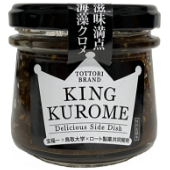
|
Product name |
KING KUROME |
| release date |
April 7, 2023 |
| Contents |
125g |
| Reference price |
800 yen (864 yen including tax) |
Seaweed Kurome
It belongs to the kelp family, Laminariaceae, and genus Ecklonia. It has a leaf-like structure that spreads out like wings above a stem-like part. The leaf-like part is wrinkled (see photo 3). Unlike wakame and akamoku, Kurome is a perennial that grows for several years.
They grow in rocky areas of the subtidal zone and average size of 40-50 cm, but can grow up to 1-2 meters. They inhabit the Pacific coast of western Japan, the Seto Inland Sea, and the Sea of Japan.
Kurome contains dietary fiber comparable to wakame, kombu, and mozuku *, and is also rich in minerals. It is particularly high in iron, calcium, and iodine. Furthermore, it contains vitamin C and polyphenols, and its sticky texture makes it enjoyable to eat. (*For nutritional information on wakame, kombu, and mozuku, please refer to the Japanese Food Standard Composition Table 2020 (8th Revised Edition)).

Photo 2: Black seaweed growing wild off the coast of Tottori Prefecture
About Hōfukuichi Co., Ltd.
Founded in 1958 in Kurayoshi, a town in central Tottori Prefecture known for its white-walled storehouses, we manufacture and sell our flagship product, "Healthy Vinegar," as well as tourist souvenirs and various OEM products. We deliver the delicious flavors of Tottori Prefecture's abundant seafood from the Sea of Japan, plentiful agricultural and livestock products, and delicious water, with "safety and security" as our top priority.
https://takarafukuichi.jp
About Tottori University
Tottori University, guided by the fundamental principle of "integrating knowledge and practice," works with local people to address and resolve regional issues, universalizing the knowledge gained in the process and disseminating it widely to the international community. This contributes significantly not only to the advancement of science but also to world peace and welfare. As part of its Tottori University Vision 2030, and its activities as a "local (knowledge) hub university trusted by society and needed by the region," the university established the Research Center for the Utilization of Underutilized Biological Resources in April 2022, with a focus on promoting human health and revitalizing the region.
https://www.tottori-u.ac.jp
About ROHTO Pharmaceutical Co., Ltd.
Founded in 1899 with the launch of "Ikatsu" (Stomach Health) in response to the prevalence of stomach ailments, a major health issue at the time, the company has since made "health" its core value. While focusing on health and beauty businesses centered on over-the-counter (OTC) pharmaceuticals and skincare, it has expanded beyond functional foods to include primary industries, restaurants, and cutting-edge life science research, venturing into the field of Regenerative medicine. In its food business, the company continues to focus on various social issues, contributing to the "well-being" of not only individual customers but also society as a whole.
https://www.rohto.co.jp/