Rohto Group discovers new potential in its proprietary material for tooth development and salivary gland activation
– Research on materials that support children's oral function development and future oral health.
July 1, 2026
ROHTO Pharmaceutical Co., Ltd. (Headquarters: Osaka City, President: Hidetoshi Segi) is advancing research in the oral field to support food and health for the future, in order to realize the Rohto Group's comprehensive management vision, "Connect for Well-being & Longevity." In this joint research with Associate Professor Hiroko Yoda of the Department of Hard Tissue Morphology and Dr. Yuki Ohno of the Department of Otorhinolaryngology and Head and Neck Surgery, Graduate School of Medical, Dental and Health Sciences, Niigata University, they have found that Rohto Group's unique materials, globin protein hydrolysate, milk-derived hydrolyzed peptide (hereinafter referred to as milk peptide), and hydrolyzed soy peptide (hereinafter referred to as soy peptide), may be involved in tooth enamel formation and maturation and salivary gland activation.
Some of the results of this research were presented orally at the 131st Annual Meeting of the Japanese Association of Anatomists (held in Tokyo from March 24th to 26th, 2026).
Key points of the research
- We investigated the effects of Rohto's proprietary materials—globin protein hydrolysate, milk peptide, and soy peptide—on cellular functions involved in enamel formation and maturation, as well as on cell proliferation and differentiation related to salivary gland activation.
- It has been confirmed that globin protein hydrolysates, milk peptides, and soy peptides are involved in cellular functions related to tooth enamel formation and maturation.
- Milk peptides and soy peptides were observed to induce changes related to cell proliferation and differentiation, which are involved in the activation of salivary glands.
- The Rohto Group's proprietary material has been shown to have potential applications in developing children's oral function and preventing future oral frailty.
Research Background
In recent years, changes in dietary habits and living environments have led to increased attention on the underdeveloped or insufficient development of children's oral functions as a social issue. Functions such as chewing, swallowing, speaking, and maintaining the oral environment through saliva are crucial elements deeply related to future eating habits and health maintenance. Focusing on the social issues related to children's oral functions, we conducted basic research on tooth development and salivary gland function as a research theme to protect future food and health.
In teeth, enamel is the hard tissue that makes up the outermost layer of the tooth. It supports chewing function, protects teeth from external stimuli and physical damage, and contributes to maintaining the aesthetic appearance of the teeth. If enamel is not formed normally for any reason, the strength and durability of the tooth decrease, making it more susceptible to cavities, chipping, and wear, as well as causing cosmetic problems such as tooth discoloration. There are various factors that can cause enamel to not form normally, and in permanent teeth in particular, cavities in deciduous teeth, trauma, and nutritional deficiencies are considered to be contributing factors.
Furthermore, saliva not only prevents dryness in the mouth, but also plays an important role in remineralization of enamel and dentin, maintaining the balance of the bacterial flora, and protecting the oral environment. In particular, in the development of oral function in children, the secretion of saliva is thought to contribute to maintaining a healthy oral environment.
This research, conducted in collaboration with Niigata University, aimed to clarify the fundamental mechanisms involved in enamel formation and maturation during tooth development, as well as the development of salivary glands.
result
Result 1: The effects of globin protein hydrolysates, milk peptides, and soy peptides on cellular functions involved in enamel formation and maturation were confirmed.
This study focused on the expression pattern and role of AMP-activated protein kinase (AMPK) in tooth development. AMPK is a factor that regulates intracellular energy metabolism and may be involved in tooth morphogenesis and maturation. Therefore, we added globin protein hydrolysate, milk peptide, and soy peptide to a culture system of ameloblastic epithelial stem cells and investigated their effects on cell proliferation, differentiation, and related gene expression involved in enamel formation and maturation. As a result, we confirmed that adding globin protein hydrolysate, milk peptide, and soy peptide, which have AMPK-enhancing effects, promoted cell proliferation of ameloblastic epithelial stem cells involved in enamel formation. Milk peptide and soy peptide also showed an increasing trend in gene expression involved in promoting ameloblast differentiation and maturation (amelogenin (ameloblast differentiation marker), KLK4 (ameloblast maturation marker)).
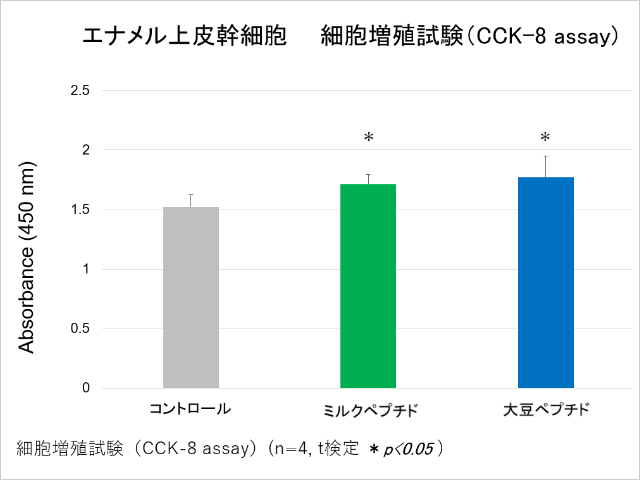
Figure 1: Results of ameloemic stem cell proliferation tests (excerpted from research results conducted by Niigata University)
<Testing Method>
Enamel epithelial stem cells were treated with globin protein hydrolysate, milk peptide, and soy peptide, respectively, and a cell proliferation test (CCK-8 assay: n=4, t-test *p<0.05) was performed to evaluate their role in enamel formation and maturation.
◎Cell proliferation test (CCK-8 assay: n=4, t-test *p<0.05)
(Implemented by Niigata University)
Result 2: Confirmation of cell proliferation-promoting effects related to salivary gland activation by milk peptides and soy peptides.
Using epithelial cells derived from the salivary gland (submandibular gland), we evaluated changes related to cell proliferation as indicators of the expression of factors associated with salivary gland activation, induced by the addition of milk peptides and soy peptides. As a result, significant cell proliferation-promoting effects were confirmed in cells derived from the salivary gland (submandibular gland) by milk peptides and soy peptides.
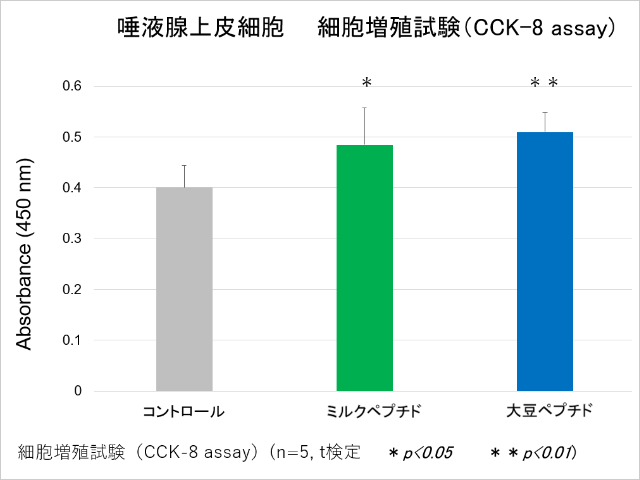
Figure 2: Salivary gland epithelial cell proliferation test
<Testing Method>
Changes related to cell proliferation were evaluated by adding milk peptides and soy peptides to epithelial cells derived from salivary glands (submandibular gland) (CCK-8 assay) (n=5, t-test *p<0.05, **p<0.01).
(Implemented by Niigata University)
Future outlook
This research suggests that globin protein hydrolysate, milk peptides, and soy peptides, which are unique materials of the Rohto Group, may be involved in tooth formation, and that milk peptides and soy peptides may be involved in salivary gland activation.
The school-age years, in particular, are a crucial period for the transition from deciduous teeth to permanent teeth and the development of oral function. Creating an oral environment that supports tooth formation and saliva secretion during this time contributes to building a foundation for future health. Furthermore, its potential extends beyond the growth period to a wide range of life stages, including maintaining oral function in adulthood, preventing age-related decline in oral function, and addressing oral frailty in old age.
As the importance of oral care throughout life stages, from children to the elderly, increases, the Rohto Group will explore new value in its unique materials, accumulate scientific evidence through multifaceted verification, and aim to build its own oral care theory and apply it to products across a wide range of life stages.
Terminology
- Globin protein hydrolysates
This material is owned by MG Pharma, a Rohto Group company. It is a peptide material obtained by enzymatically breaking down globin protein, which is found in hemoglobin, etc. It is being researched as a functional ingredient in the food and health fields.
- Milk-derived hydrolyzed peptides (milk peptides)
This material is owned by Rohto Pharmaceutical Co., Ltd. It was developed in 2009. It contains numerous peptides (chains of approximately 2 to 50 amino acids), and because peptides have the ability to regulate bodily functions, we believe it has great potential for maintaining health.
- Hydrolyzed soy peptide (soy peptide)
This is a hydrolyzed soy peptide, a functional ingredient developed in-house by our company, obtained by enzymatic hydrolysis of soybeans.
- AMPK
AMP-activated protein kinase is an abbreviation for an enzyme that senses the energy state within cells and regulates metabolism. It is known as an important factor involved in energy metabolism and the maintenance of cellular function.
- Enamel
The hard tissue that covers the surface of teeth. It is considered the hardest tissue in the body and plays a role in protecting teeth from external stimuli and wear.
- Oral frailty
This condition involves a decline in oral functions such as chewing, swallowing, and speaking, often associated with aging. It is known to be related to overall frailty and health.
Special Notes
Some of the results of this research were presented orally at the 131st Annual Meeting of the Japanese Association of Anatomists (held in Tokyo from March 24th to 26th, 2026).
Title: Expression and Function of AMP-activated protein kinase (AMPK) in Tooth Development
○Hiroko Yoda 1, Yuki Ohno 1, 2, Sachiko Naka 3, Kotaro Yamada 3, Hayato Oshima 1
1. Department of Hard Tissue Morphology, Graduate School of Medicine and Dentistry, Niigata University; 2. Department of Otorhinolaryngology-Head and Neck Surgery, Graduate School of Medicine and Dentistry, Niigata University; 3. ROHTO Pharmaceutical Co., Ltd.
Title: AMP-activated protein kinase (AMPK) activation promotes salivary gland development
○ Yuki Ohno 1, 2, Sachiko Naka 3, Kotaro Yamada 3, Shusuke Oshima 1, 2, Yuji Ueki 1, Shin Horii 1, Hayato Oshima 2, Hiroko Yoda 2
1. Department of Otorhinolaryngology-Head and Neck Surgery, Graduate School of Medicine and Dentistry, Niigata University; 2. Department of Hard Tissue Morphology, Graduate School of Medicine and Dentistry, Niigata University; 3. ROHTO Pharmaceutical Co., Ltd.