Traditional medicinal ingredient Cordyceps sinensis suggests it activates neural circuit formation and energy metabolism in the brain
– Joint research by Mie University and Rohto Pharmaceutical Co., Ltd.
September 28, 2026
ROHTO Pharmaceutical Co., Ltd. (Headquarters: Osaka City, President: Hidetoshi Segi) is promoting the "Phytoscience Initiative," which aims to scientifically unravel the diverse functions of materials found in nature and the mechanisms of life, and deliver them to society as new value, in order to realize the Rohto Group's comprehensive management vision, "Connect for Well-being & Longevity."
In a joint research project with Mie University (located in Tsu City, Mie Prefecture; President: Masaaki Ito), we have revealed that long-term administration of the mycelium of Cordyceps sinensis, a traditional medicinal material, may affect gene expression involved in neural circuit formation in the brain and brain energy metabolism. The results of this research were presented orally at the 43rd Annual Meeting of the Japanese Society of Traditional Medicine (August 23, 2026).
This research reveals a part of the molecular and metabolic basis by which Cordyceps sinensis, a traditional medicinal ingredient, affects brain function. We will continue to build upon our research results with the aim of developing products that can be put into practice through "longevity" science.
Key points of the research
- This study investigates the effects of long-term administration of the mycelium of Cordyceps sinensis, a traditional medicinal ingredient, on the brain and nervous system.
- Comprehensive analysis of brain gene expression revealed an increase in the expression of genes involved in the formation of neural circuits.
- Comprehensive analysis of brain metabolites suggests an increase in glycolytic metabolites involved in brain energy production, indicating a "high rate of brain energy metabolism" where ATP utilization and replenishment are actively repeated.
- These results suggest that Cordyceps may act on the brain and nervous system in multiple ways, including the "formation and maintenance" of neural circuits and the "energy base" that supports them.
Research Background
Cordyceps sinensis is an insect-parasitic fungus distributed mainly in the Tibetan Plateau of China. It has long been used as a traditional medicinal ingredient for purposes such as nourishing the body and relieving fatigue, and its diverse physiological activities, including immune regulation and antioxidant effects, are currently being studied. In 2025, our company reported the potential of Cordyceps sinensis to support nerve cells and the central nervous system function of zebrafish. *1
However, the molecular and metabolic mechanisms in the brain that support this function were not fully understood.
Therefore, in this study, we comprehensively analyzed gene expression and metabolites in the brain after long-term administration of Cordyceps sinensis to investigate its effects on neural circuit formation and energy metabolism.
*1: The mycelium of Cordyceps sinensis, a traditional medicinal ingredient, has been shown to promote neurite extension, reduce anxiety, and improve learning function.
result
After administering Cordyceps sinensis, a traditional medicinal ingredient, to zebrafish for six months, we analyzed gene expression in the brain (RNA-seq analysis). In the Cordyceps sinensis-treated group, increased expression of genes involved in the formation of connections between nerve cells, information transmission, and recombination of neural circuits (such as HTR2B, SHANK1, ROBO1, SEMA6B, and ERBB3) was observed (Figure 1).
These results suggest that long-term administration of Cordyceps sinensis may alter gene expression in a way that facilitates the formation and maintenance of neural circuits.
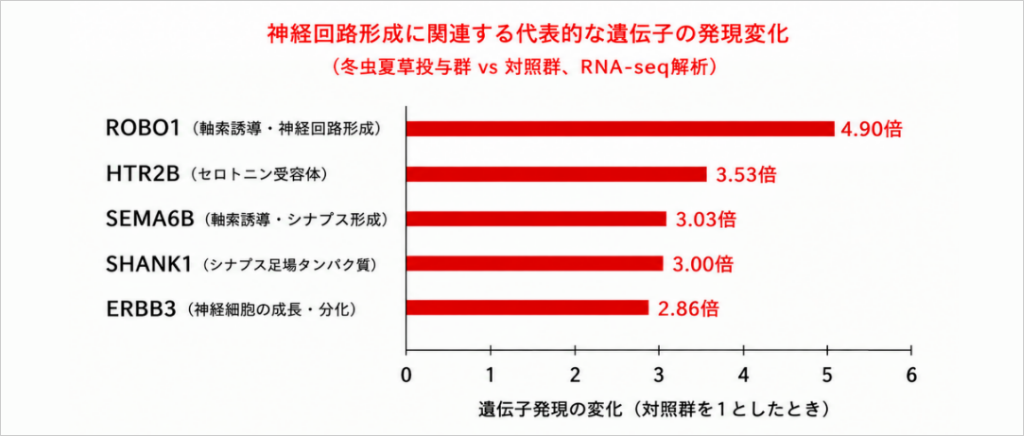
Figure 1: Long-term administration of Cordyceps sinensis increases the expression of genes involved in neural circuit formation.
<Testing Method>
Seven-month-old wild-type zebrafish (half male, half female) were orally administered Cordyceps sinensis powder at a dose of 500 mg/kg body weight/day for six months. After administration, the entire brain was collected, and comprehensive gene expression analysis (RNA-seq analysis) was performed. (Conducted by Mie University)
Furthermore, metabolome analysis, which examined metabolites in the brain, revealed an increase in metabolites involved in glycolysis, the process of producing energy from glucose. Specifically, glucose-6-phosphate, an intermediate metabolite of glycolysis, increased 1.4 times, fructose-1,6-bisphosphate increased 1.8 times, and dihydroxyacetone phosphate increased 2.1 times (Figure 2-①). The consistent increase in intermediate metabolites from the upstream to the downstream of glycolysis suggests that the metabolism converting glucose into energy and biosynthetic materials is in an active state. In addition, while the amount of ATP, the main energy source of cells, was maintained at a similar level to the control group, ADP, which is produced after cells utilize energy, increased 1.7 times (Figure 2-②).
These changes in metabolite levels suggest that the brain is not simply storing energy, but rather that the cycle of energy production, utilization, and regeneration is actively functioning, indicating a state of active energy metabolism within the brain.
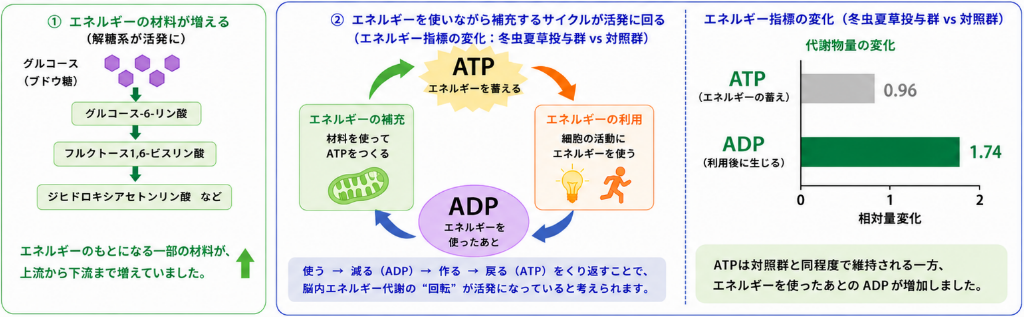
Figure 2: Long-term administration of Cordyceps sinensis increases the rate of energy metabolism in the brain.
<Testing Method>
Metabolites were extracted from the whole brains of the control group and the Cordyceps-treated group and comprehensively measured using CE-TOFMS (cationic and anionic modes). The relative amounts of each metabolite were compared between the groups, and metabolic pathway analysis based on the KEGG pathway was performed. (Conducted by Mie University)
The RNA-seq and metabolome analyses in this study suggest that Cordyceps sinensis, a traditional medicinal ingredient, may influence gene expression involved in the formation of neural circuits in the brain, as well as potentially affecting energy metabolism that supports the activity and reconstruction of neural circuits.
Impact of this research result on society (significance of this research result)
The study suggested that increased expression of genes involved in neural circuit formation may activate the brain's energy production, utilization, and regeneration cycle. These findings are important for understanding the activity, plasticity, and mechanisms of functional maintenance of neural circuits. These results suggest that Cordyceps sinensis, a traditional medicinal ingredient, may act on the central nervous system in multiple ways: through the "formation and maintenance" of neural circuits and the "energy base" that supports them.
This research scientifically examines the effects of Cordyceps sinensis, a traditional medicinal ingredient, on the central nervous system from both gene expression and metabolic perspectives. Moving forward, we aim to identify the components and target molecules involved in these effects, thereby contributing to evidence-based material development and product design, and ultimately to the realization of well-being centered on brain health.
Special Notes
The results of this research were presented orally at the 43rd Annual Meeting of the Japanese Society of Traditional Medicine (August 23, 2026).
Conference Name: The 43rd Annual Meeting of the Japanese Society for Traditional Medicine (August 22-23, 2026)
Title: "Elucidation of the anti-anxiety and learning function-enhancing effects and brain metabolic shifts induced by long-term administration of Cordyceps sinensis to zebrafish"
Yasuto Shimada 1,2, Takuro Shinkai 2,3, Misaki Nakai 2,3, Haruka Okunishi 4, Liqing Zang 2,3, Kazuyoshi Fukada 2,5, Hirotaka Katsuzaki 2,4, Kunihiro Nishimura 2,3
1. Department of Integrated Pharmacology, Graduate School of Medicine, Mie University; 2. Zebrafish Research Center, Mie University; 3. Graduate School of Regional Innovation Studies, Mie University; 4. Graduate School of Bioresource Sciences, Mie University; 5. ROHTO Pharmaceutical Co., Ltd.