Presentation at the 36th International Federation of Societies of Cosmetic Chemists (IFSCC) World Congress:
Investigation towards the construction of a stimuli evaluation system using a three-dimensional cultured skin model incorporating iPS cell-derived sensory nerve cells
– An approach to product development utilizing alternative methods to animal testing.
October 2, 2026
ROHTO Pharmaceutical Co., Ltd. (Headquarters: Osaka City, President: Hidetoshi Segi) presented a poster at the 36th International Federation of Societies of Cosmetic Chemists (IFSCC) World Congress, held in Perth, Australia from September 28 to October 1, 2026, on research findings regarding an evaluation method for objectively capturing the sensation of irritation felt by humans.
Presentation Title
From Itch Signature to Signal: A multiomics analysis in tissue engineered skin for predicting skin sensitivity
From signs of itching to signals: Multi-omics analysis using tissue-engineered skin for predicting skin sensitivity
Presenter
Md. Zobaer Hasan 1,2, Amy Harding 2, Simon Danby 2, Ivana Barbaric 2, Kiichiro Sohara 1, Hirofumi Nakanishi 1, Tetsuo Furuno 1, Craig Murdoch 2, Helen Colley 2
1: ROHTO Pharmaceutical Co., Ltd.
2: University of Sheffield
*Presenter on the day: Md Zobaer Hasan
Announcement Summary
Key points of the research
- A three-dimensional cultured skin model (innervated HSE *2) incorporating sensory nerve cells derived from iPS cells *1 was constructed.
- This model showed a higher responsiveness to capsaicin and revealed the importance of sensory nerve cells in understanding intercellular crosstalk during stinging *3.
- Three key genes that play a crucial role in stinging in the presence of sensory nerve cells were identified.
Research Background
Even when cosmetics or other products are used, subjective irritation such as itching, burning, or tingling may occur even if no obvious redness or swelling is observed. This stinging is a transient sensory stimulus, and many aspects of its mechanism remain unclear. Currently, the evaluation of stinging largely depends on the subjective sensations of humans, and there is a need to establish an evaluation method that can objectively predict weak or sensory irritation caused by chemical substances without using humans. In 2018, our company explored molecular pathways and candidate genes involved in stinging through comprehensive gene expression analysis of a three-dimensional tissue epidermal model using lactic acid stimulation. Subsequently, we conducted collaborative research with the University of Sheffield and identified seven gene markers suitable for evaluating stinging-inducing substances, and have since developed our research into analysis and evaluation using these genes. This time, based on the knowledge of skin models and gene analysis we have cultivated so far, we constructed a three-dimensional cultured skin model incorporating sensory nerve cells derived from iPS cells, aiming to capture stinging more physiologically.
result
Evaluating the response to stimuli in a three-dimensional cultured skin model incorporating iPS cell-derived sensory nerve cells.
We constructed a skin model of nerve innervation by differentiating nerve cells differentiated from iPS cells, human dermal fibroblasts *4, and N/TERT-1 keratinocytes *5 at a gas-liquid interface *6 for 14 days (Figures 1 and 2). We added the stimulant capsaicin to the constructed model and performed gene expression analysis of seven genes (IL-6, PTGS2, ATF3, TRPV3, MAP3KB, HMGB2, MMP-3) using qRT-PCR. As a result, it was suggested that IL-6, TRPV3, and MMP-3 are major genes that play an important role in stinging in the presence of sensory nerve cells (Figure 3). By treating three-dimensional skin cells and sensory nerves with the same evaluation system, it is expected that this will provide a research foundation for analyzing intercellular signals related to sensation in a way that is closer to that of a living organism.
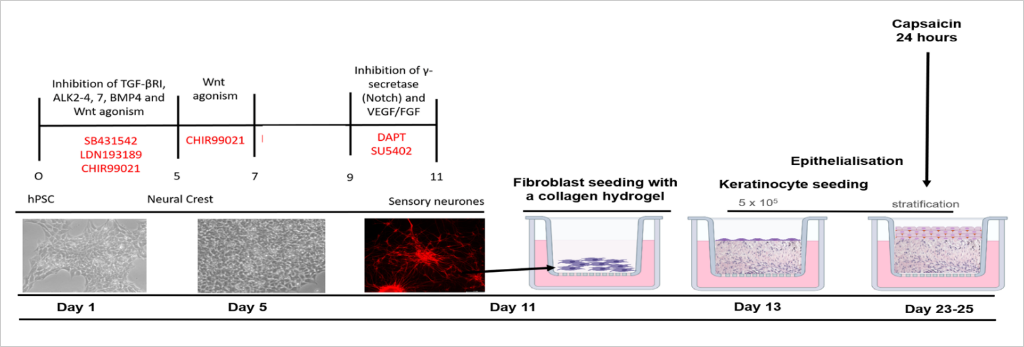
Figure 1: Construction of a three-dimensional cultured skin model incorporating iPS cell-derived sensory nerve cells.
-
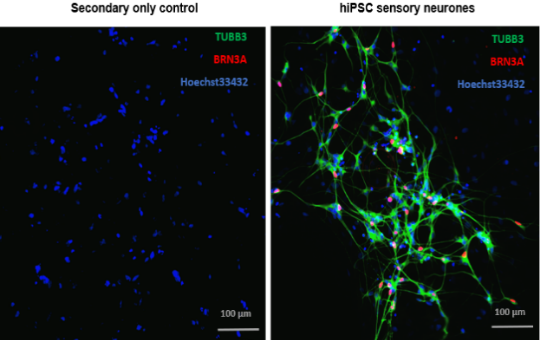
Figure 2: Neurons differentiated from iPS cells
-
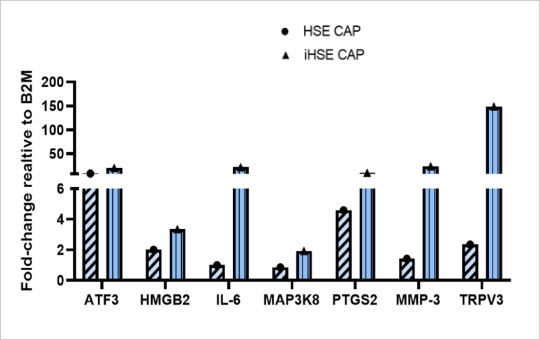
Figure 3: Changes in marker gene expression levels
Impact of this research result on society (significance of this research result)
The sensation of stinging is primarily subjective and therefore difficult to evaluate objectively. Further development of the nerve-innervated skin model technology and methods developed in this study is expected to lead to a new evaluation method for predicting cosmetic irritation in vitro. Furthermore, by analyzing the interaction between skin cells and sensory nerves, we can advance our understanding of the "mechanism of sensation" in sensitive skin, which has not been fully elucidated until now. This is expected to be applied to the research and development of products for sensitive skin and to more objective safety and efficacy evaluations. In the future, we aim to establish evaluation techniques by verifying the reproducibility of candidate molecular signals and the predictive ability of the model for various irritants.
Rohto Pharmaceutical's efforts toward alternative methods to animal testing and novel evaluation technologies.
Our company actively utilizes in vitro *7 evaluation methods using cultured cells and three-dimensional tissue models, in silico *8 toxicity prediction using computers and information technology, and in chemico *9 evaluation methods that evaluate the reactivity of biomolecules and chemical substances using analytical instruments, etc., and is promoting research and development of evaluation technologies that do not rely on animal experiments.
Going forward, we will continue to work with external research institutions, including the University of Sheffield, to improve our evaluation technologies that more accurately capture human skin reactions, and use this to provide products and services that contribute to our customers' well-being.
Terminology
*1: iPS cells
These are induced pluripotent stem cells that have been given the ability to differentiate into various types of cells by introducing specific factors into somatic cells such as skin and blood cells.
*2: Human Skin Equivalent (HSE)
A tissue model created by culturing human-derived skin cells to reproduce some of the structure and function of skin. In this study, it was created using human dermal fibroblasts and N/TERT-1 keratinocytes.
*3: Stinging
Unpleasant sensations such as itching, stinging, or tingling that occur when using cosmetics or other products. This refers to transient sensory irritation that does not involve obvious inflammatory symptoms such as erythema or edema.
*4: Human dermal fibroblasts
These are cells that exist in the dermis of human skin and produce extracellular matrix components such as collagen.
*5: N/TERT-1 keratinocyte
These cells possess the properties of keratinocytes, which make up the epidermis of human skin, and have been modified to allow for continuous culture for research purposes.
*6: Air-liquid interface
This refers to the boundary between liquid and air. In cell culture, it refers to the conditions under which a portion of the cell is in contact with the culture medium while the surface is exposed to air during cultivation.
*7: in vitro
This is a test conducted using cell or tissue models in an artificial environment such as a test tube or culture vessel.
*8: in silico
This refers to research methods such as simulations and data analysis using computers and information technology.
*9: in chemico
This research method primarily evaluates the chemical reactivity between substances without using biological tissues or cultured cells.