Tackling the cleansing challenge with pure vitamin C
– verifying the effects of vitamin C and developing new cleansing formulation technology –
October 14, 2026
ROHTO Pharmaceutical Co., Ltd. (Headquarters: Osaka City, President: Hidetoshi Segi) has discovered new potential in pure vitamin C (hereinafter referred to as VC), which it has been researching for many years, in response to the challenge of balancing the cleansing power required for cleansing with consideration for the skin. They have confirmed that VC acts on oxidized sebum, which is thought to be difficult to wash off, and that it has the potential to suppress damage to epidermal cells caused by surfactants, which are the main components of cleansers. Furthermore, by maintaining a bicontinuous structure * in which a glycerin phase in which VC is dissolved at a high concentration and an oil phase are continuous, they have developed an oil cleansing formulation technology that allows VC to easily come into contact with the skin from the moment it is applied. These findings will be applied to future product development.
*Bicontinuous structure: A structure in which a water-attracting phase and an oil-attracting phase coexist while being continuously connected to each other.
Key points of the research
- Confirmation that VC may reduce the amount of peroxides derived from squalene.
- We have confirmed that vitamin C may suppress changes in cell membrane morphology and a decrease in the number of viable cells caused by surfactant exposure.
- We have developed a cleansing technology that combines a high concentration and stable formulation of vitamin C with a formulation structure that allows vitamin C to easily come into contact with the skin from the moment it is applied.
Research Background
A new approach that leverages the potential of VC to address the challenges of cleansing.
Cleansing products are required to thoroughly remove makeup, excess sebum, and other impurities. On the other hand, because they are used every day, it is also necessary to consider the impact on the skin during cleansing. We are conducting basic research and formulation development to achieve both of these goals.
In addition to improving the cleansing ingredients, we considered how we could utilize the properties of vitamin C (VC), a skincare ingredient that we have researched for many years, in our cleansing products. Vitamin C is known for its various properties, including antioxidant and anti-inflammatory effects, and is widely used in skincare products such as serums. However, since cleansing involves rinsing, it is not yet fully clear what effects vitamin C has during that short period of time.
Therefore, we investigated the potential of VC in cleansing from two perspectives: its antioxidant properties on oxidized sebum, and its effect on changes in epidermal cells caused by surfactant exposure. In addition, to make the most of the properties of VC in actual cleansing, we also worked on developing formulation technology to incorporate it in a high-concentration and stable state.
result
Result 1: VC reduced the amount of peroxides derived from squalene.
Focusing on oxidized sebum that we want to remove through cleansing, we evaluated the effects of using surfactants and vitamin C (VC) in combination, using a model in which squalene, one of the components of sebum, was oxidized. Compared to a condition in which oxidized squalene was treated with surfactant alone, the amount of peroxides derived from squalene decreased when VC was added simultaneously. This result suggests that VC may act on oxidized sebum even in the short time frame simulating cleansing.
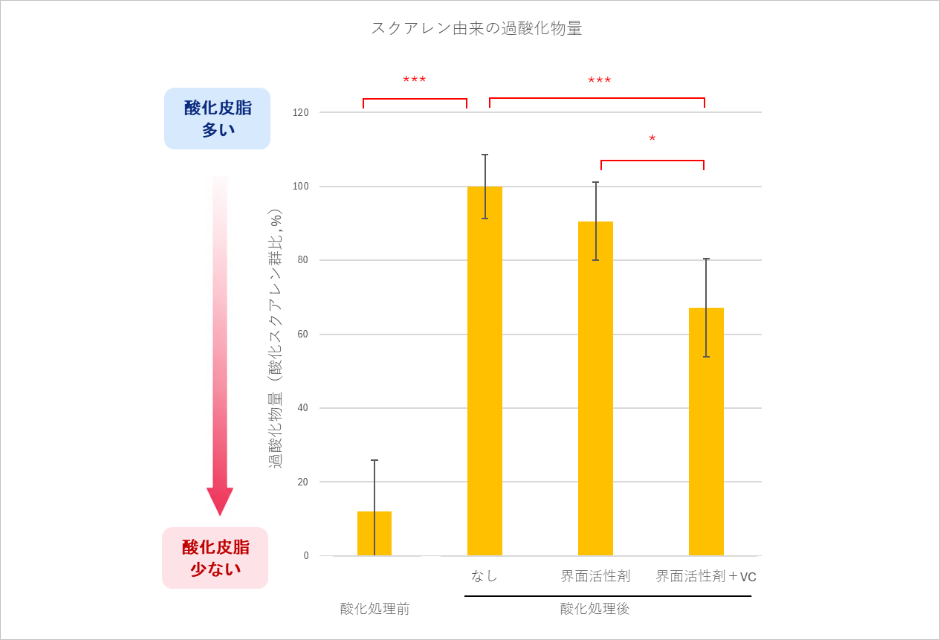
Figure 1: Effect of VC on the amount of squalene-derived peroxides after a 3-minute treatment simulating washing.
<Testing Method>
Squalene oxidized by UVA irradiation was treated with either a surfactant alone or a surfactant and vitamin C for 3 minutes. After treatment, the amount of oxidized squalene was measured using the DPPP method. (n=6; mean ± SD. Tukey-Kramer, * p<0.05, ** p < 0.01, *** p < 0.001. Conducted by Rohto Pharmaceutical Research Institute).
Result 2: Vitamin C suppressed changes in epidermal cells caused by surfactant exposure.
Focusing on the effects of surfactants on the skin during cleansing, we investigated the changes occurring in epidermal cells and the action of vitamin C. When human epidermal cells were exposed to a surfactant for 3 minutes, under the condition of surfactant alone, the cell membrane contour became unclear, the cell membrane morphology was disrupted, and a decrease in the number of viable cells was confirmed. On the other hand, under the condition of simultaneous addition of surfactant and vitamin C, the cell membrane contour was maintained, and the number of viable cells was preserved.
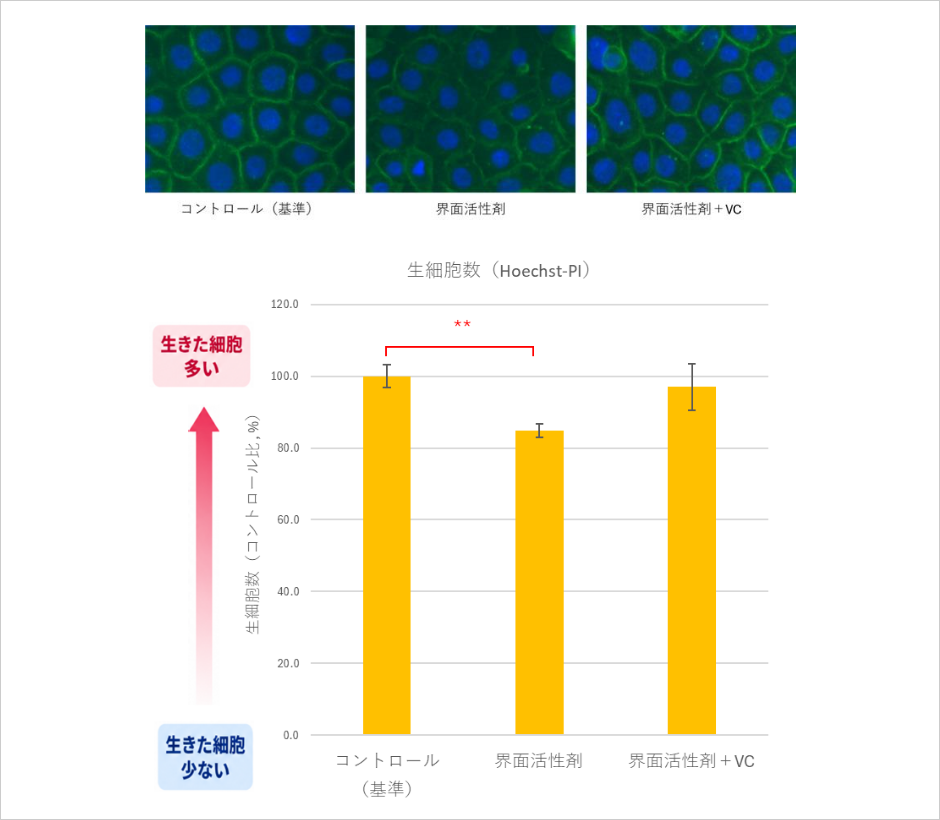
Figure 2: Changes in epidermal cell membranes and the effect of vitamin C after 3 minutes of surfactant exposure simulating washing.
<Testing Method>
Human epidermal keratinocytes were exposed to surfactant alone or to surfactant and vitamin C simultaneously. After 3 minutes of treatment, the cell membrane and nucleus were fluorescently stained, and the cell membrane morphology and viable cell count were evaluated. (n=3; mean ± SD. Dunnett (vs. control), ** p < 0.01. Conducted by Rohto Pharmaceutical Research Institute).
Result 3: Developed a cleansing technology that combines a high concentration and stable formulation of vitamin C with a formulation structure that allows vitamin C to easily come into contact with the skin from the moment it is applied.
To leverage the properties of vitamin C (VC) in cleansing, we worked on developing a formulation technology that allows VC to be stably incorporated into oil cleansers and that facilitates skin contact when applied. While VC is easily soluble in water, it is also an unstable component that decomposes easily in the presence of water. Therefore, formulation innovations were necessary to incorporate VC in oil cleansers at a high concentration and in a stable state. Utilizing our accumulated knowledge from VC formulation research, we conducted over 1,000 formulation studies and developed a formulation technology that allows a glycerin solution containing dissolved VC (VC serum phase) to stably coexist within the oil cleanser. Structural analysis confirmed that this formulation forms a "bicontinuous structure" in which the oil phase and the VC serum phase coexist continuously. This structure resulted in a formulation characteristic where the VC serum phase easily contacts the skin from the moment it is applied.
Furthermore, this cleansing formulation technology, which incorporates ascorbic acid (VC), is patented in Japan (Patent No. 7939518).
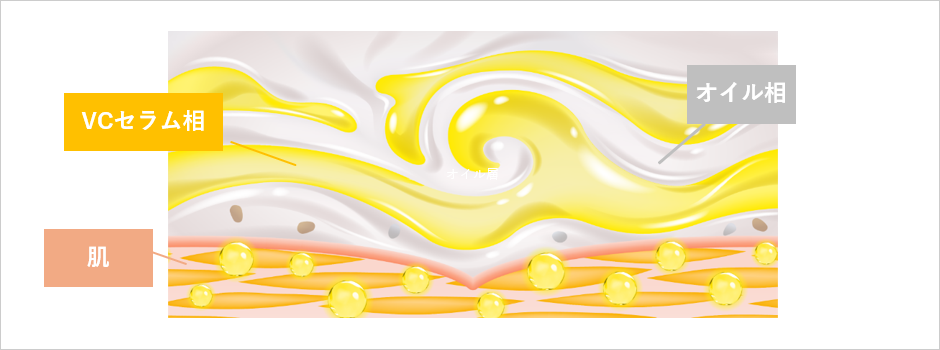
Figure 3: Formulation structure in which glycerin solution containing vitamin C and oil coexist (conceptual diagram)
Future outlook
This research has revealed the potential for utilizing vitamin C even in cleansers that are intended to be rinsed off. Moving forward, we will leverage our accumulated vitamin C research and formulation technology to further explore the usefulness of vitamin C for the skin from various angles, without being limited by usage scenarios or formulations.