Lactobacillus-derived phytoexosomes *1 act on epidermal cells, revealing new possibilities for unlocking the skin's natural power
– confirming changes in reduced Ca2 + response and strengthening of the epidermal barrier function.
November 17, 2026
ROHTO Pharmaceutical Co., Ltd. (Headquarters: Osaka City, President: Hidetoshi Segi) is engaged in research on "phytoexosomes" *2, which are exosome-like extracellular vesicles derived from plants, microorganisms, algae, etc.
In this study, we evaluated the functionality of lactic acid bacteria-derived phytoexosomes, which were identified during the fermentation process of "Kurahana Lactic Acid Bacteria" discovered in miso from Ichibiki Co., Ltd., on the skin. In aged donor-derived epidermal cells *3, we confirmed that the epidermal barrier was strengthened through an increase in the calcium response (Ca2 + response) *4, which is important for maintaining cell function and declines with age, and an increase in the expression of the barrier-related protein Occludin *5. The novelty of these findings lies in the fact that they not only increase barrier-related factors, but also suggest the possibility that they act on the fundamental functions of cells that support multiple epidermal functions.
Key points of the research
- Lactobacillus-derived phytoexosomes were developed from Lactobacillus kurakae, which was discovered in miso.
- We confirmed that the reduced Ca2 + response in epidermal cells derived from aged donors is altered.
- Increased levels of the barrier-related protein Occludin were observed.
- It promotes the proliferation of beneficial skin bacteria involved in maintaining moisture in the stratum corneum, and increased production of lactic acid, one of the NMFs (Natural Moisturizing Factors).
Research Background
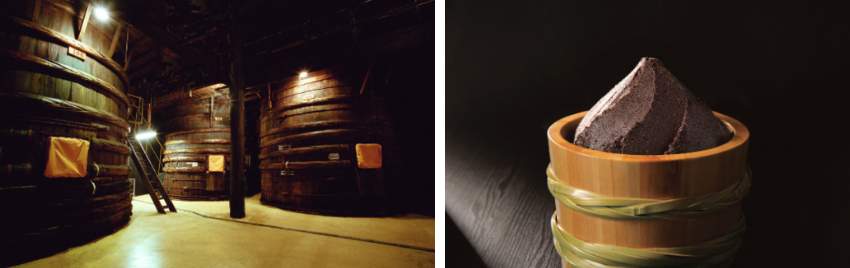
Adapted to harsh environments with high salt concentrations. Phytoexosomes derived from lactic acid bacteria discovered in "miso," a traditional Japanese fermented food.
Our company has been conducting research with the aim of not only caring for the surface of the skin, but also drawing out the skin's natural abilities and maintaining a healthy state. In particular, the skin's barrier function is an essential function that protects the skin from external stimuli and retains moisture within the skin.
The "Kurahana Lactic Acid Bacteria" discovered in Ichibiki Co., Ltd.'s miso is a type of plant-derived lactic acid bacterium called Tetragenococcus halophilus. This time, we have confirmed that this "Kurahana Lactic Acid Bacteria" secretes exosome-like microvesicles during the fermentation process. It has the characteristic of being able to adapt to the harsh environment of high salt concentration, such as that of soy sauce and miso, and we focused on this lactic acid bacterium, which is rooted in Japan's traditional fermentation culture, and thought that the lactic acid bacteria-derived phytoexosomes obtained from it may also contribute to maintaining healthy skin.
Multifaceted evaluation of the characteristics and stability of lactic acid bacteria-derived phytoexosomes.
To clarify the characteristics of lactic acid bacteria-derived phytoexosomes, we conducted a detailed analysis of particle size and structure.
Nanoparticle tracking analysis and electron microscopy observations confirmed that the particles were lipid bilayer vesicles with an average particle diameter of 214 nm and a zeta potential of -60.3 mV, which indicates the electrical properties of the particle surface.
Next, to investigate the potential application of lactic acid bacteria-derived phytoexosomes to cosmetics, we evaluated the changes in particle number and particle size when the raw material was stored. As a result, we confirmed that approximately 75% of the particles remained after a storage period of 6 months at 40°C. Furthermore, when this material, stained with PKH-26, was added to epidermal keratinocytes, we confirmed that it was taken up by the cells (Figure 1).
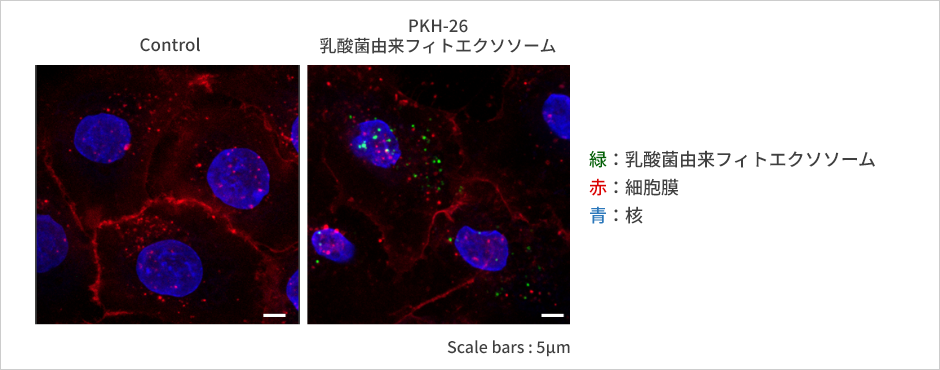
Figure 1: Uptake of lactic acid bacteria-derived phytoexosomes into epidermal cells.
This study focused on the effect on "skin barrier function," one of the fundamental functions required of cosmetics. To capture the functional changes of epidermal cells associated with aging, we investigated from various angles, including Ca2 + responses involved in cell function, barrier-related proteins, and effects on commensal skin bacteria.
result
Result 1: Changes were observed in the Ca2 + response, which is involved in skin barrier function, in epidermal cells derived from aged donors.
Previous studies have reported that age-related declines in Ca2 + influx and signaling in epidermal cells may affect epidermal barrier homeostasis through dysfunctions such as intercellular adhesion (Reference 1).
In this study, when lactic acid bacteria-derived phytoexosomes were added to epidermal cells from aged donors, an increase in Ca2 + response was observed compared to the control group (Figure 2). This result suggests that lactic acid bacteria-derived phytoexosomes may act on calcium signaling, which declines with age.
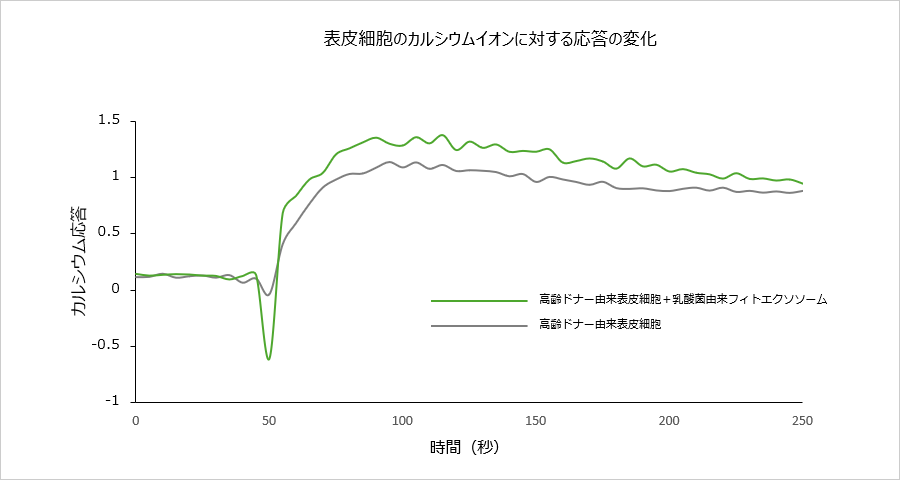
Figure 2: Changes in Ca2 + influx response in aged donor epidermal cells upon addition of lactic acid bacteria-derived phytoexosomes.
<Testing Method>
Intracellular Ca2 + response was evaluated in normal human epidermal keratinocytes derived from aged donors after re-addition of extracellular Ca2 + following thapsigargin treatment. The magnitude of the response was calculated as the change in the Fura-2 fluorescence ratio (F340/F380) from before Ca2 + re-addition to the peak after re-addition. (Conducted by Rohto Pharmaceutical Research Institute)
Result 2: Increased levels of the barrier-related protein Occludin were confirmed.
Next, we focused on tight junctions *6, one of the barrier structures involved in cell-cell adhesion. Tight junctions are structures that are involved in cell-cell adhesion and support the barrier function of the epidermis. When we cultured epidermal cells derived from aged donors and compared them with and without the addition of lactic acid bacteria-derived phytoexosomes, we confirmed an increase in the expression of Occludin, one of the proteins that make up tight junctions, in the group that received the addition (Figure 3). This result suggests that lactic acid bacteria-derived phytoexosomes may be involved in cell-cell adhesion and the maintenance of the barrier structure of the epidermis.
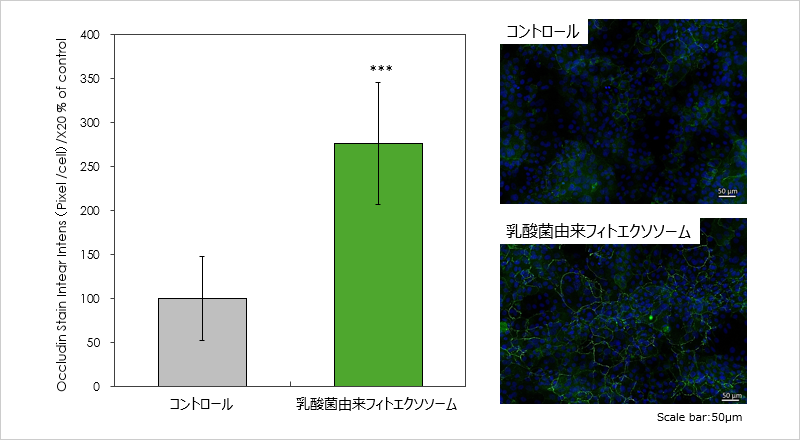
Figure 3: Changes in Occludin expression levels upon addition of lactic acid bacteria-derived phytoexosomes.
<Testing Method>
Human normal epidermal keratinocytes derived from aged donors were cultured, and keratinization was induced in a group treated with lactic acid bacteria-derived phytoexosomes and in a control group without the treatment. Immunofluorescence staining was then performed, and occludin expression was observed and evaluated using a fluorescence microscope.
(n=6; mean±SD.*** P < 0.001, Student's t-test) (conducted by Rohto Pharmaceutical Research Institute)
Result 3: Promoted the growth of Staphylococcus epidermidis, known as "beauty bacteria," and confirmed an increase in lactic acid, which is involved in skin moisture.
Staphylococcus epidermidis is also known as "beauty bacteria" and is known to play an important role in maintaining the healthy barrier function of the skin.
In this study, to investigate the effects of lactic acid bacteria-derived phytoexosomes on Staphylococcus epidermidis, we compared bacterial growth with and without the addition of lactic acid bacteria-derived phytoexosomes using absorbance measurements. The results suggested that the addition of lactic acid bacteria-derived phytoexosomes may promote the growth of Staphylococcus epidermidis.
Furthermore, when the amount of lactic acid in the culture supernatant was measured by liquid chromatography-mass spectrometry, it was confirmed that the amount of lactic acid increased upon the addition of lactic acid bacteria-derived phytoexosomes. Lactic acid is one of the components of natural moisturizing factors (NMF) that retain moisture in the skin, and plays a role in maintaining moisture in the stratum corneum (Figure 4).
These results suggest that lactic acid bacteria-derived phytoexosomes may contribute to maintaining skin moisture by promoting the growth of beneficial skin bacteria and producing lactic acid.
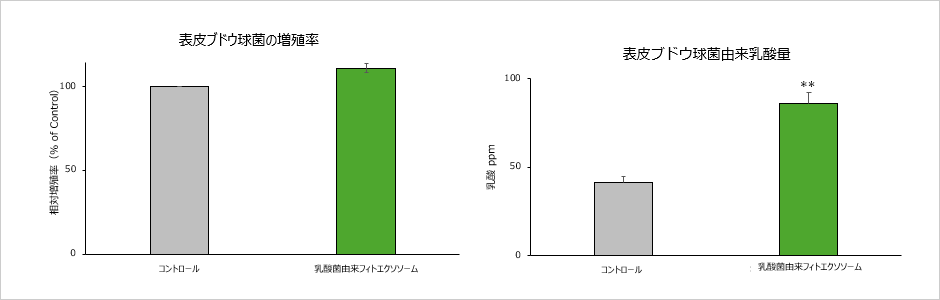
Figure 4: Effects of adding lactic acid bacteria-derived phytoexosomes on the growth and lactic acid production of Staphylococcus epidermidis.
<Testing Method>
Measurement of Staphylococcus epidermidis: Staphylococcus epidermidis was cultured in the presence of lactic acid bacteria-derived phytoexosomes, and its growth was evaluated by absorbance measurement.
Lactic acid content measurement: Staphylococcus epidermidis was cultured in the presence of lactic acid bacteria-derived phytoexosomes, and the amount of lactic acid in the culture supernatant was quantified using liquid chromatography-mass spectrometry.
(n=3; mean±SD, p<0.01**, Student's t-test) (conducted by Rohto Pharmaceutical Research Institute)
Result 4: Human trials confirmed changes related to barrier function and improved moisture levels.
To verify the effectiveness of a lactic acid bacteria-derived phytoexosome-containing formulation, a 4-week human trial was conducted on 46 healthy women. As a result, stratum corneum moisture content increased by 10.81% after 2 weeks and 20.66% after 4 weeks in the test group compared to the baseline. Furthermore, stratum corneum moisture content after 4 weeks was significantly higher than that of the placebo group (Figure 5). In addition, transepidermal water loss (TEWL) was significantly decreased in the test group at both 2 weeks and 4 weeks compared to the baseline (Figure 6). These results confirm that the lactic acid bacteria-derived phytoexosome formulation supports the skin's barrier function and enhances moisture.
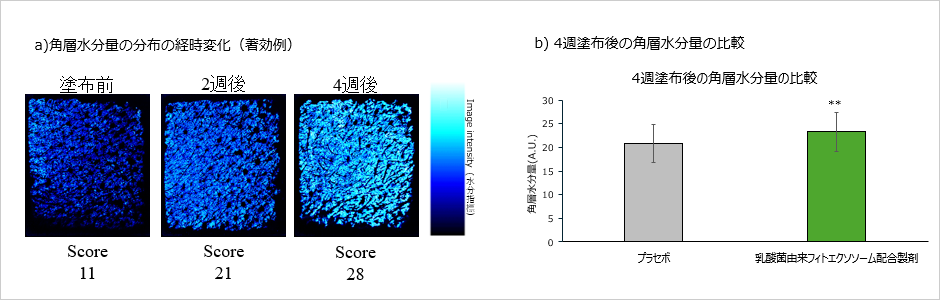
Figure 5: Changes in stratum corneum moisture content due to the use of a preparation containing lactic acid bacteria-derived phytoexosomes.
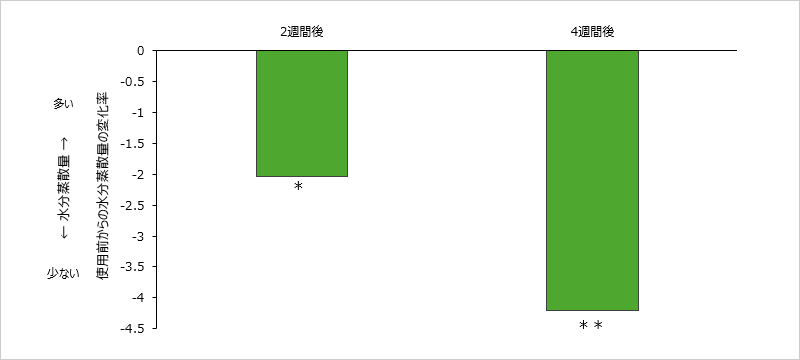
Figure 6: Changes in transepidermal water loss due to the use of a preparation containing lactic acid bacteria-derived phytoexosomes.
<Testing Method>
A 4-week human trial was conducted with 46 healthy women, divided into a test product group and a placebo group (23 participants in each group). Participants applied each product to their entire face during their morning and evening skincare routines, and stratum corneum moisture content and transepidermal water loss (TEWL) were measured at the start of use, after 2 weeks, and after 4 weeks.
(Figure 5: n=23 per group; mean ± SD. **P<0.01 vs. placebo, generalized estimating equations (GEE))
(Figure 6: n=23; *P<0.025, **P<0.01 vs. baseline, Wilcoxon signed-rank test (Bonferroni correction))
(Conducted by Rohto Pharmaceutical Research Institute)
Future outlook
This study demonstrated that lactic acid bacteria-derived phytoexosomes can approach the skin's inherent functions from multiple perspectives, including increasing the reduced Ca2 + response in aged epidermal cells, strengthening the epidermal barrier through increased occludin, increasing lactic acid production involved in moisture retention in the stratum corneum, and the potential for promoting the growth of beneficial skin bacteria.
These results suggest that lactic acid bacteria-derived phytoexosomes not only moisturize the skin surface but also have the potential to act on the foundations supporting the skin's barrier function, such as the responsiveness of epidermal cells and their interaction with resident skin bacteria. Through this multifaceted approach, it is expected that these phytoexosomes will be utilized as a new skincare ingredient to support the skin's natural barrier function.
Going forward, our company will implement "Longevity" science in skincare, and based on this research, we will advance technological development for material quality evaluation and stable production, aiming to implement the research results in society.
About phytoexosome research
Under the guidance of Professor Takahiro Ochitani of Tokyo Medical University, our company has been promoting phytoexosome research.
About Ichibiki Co., Ltd.
Founded in Aichi Prefecture in 1772, this long-established manufacturer has been brewing soybean miso and tamari soy sauce for over 250 years. Their unique "Kurahana lactic acid bacteria" were discovered within their miso production.
References
1. Decreased Calcium-Sensing Receptor Expression Controls Calcium Signaling and Cell-To-Cell Adhesion Defects in Aged Skin Celli A, et al. J Invest Dermatol. 2021;141(11):2577–2586
Terminology
*1: Lactic acid bacteria-derived phytoexosomes: Phytoexosomes derived from lactic acid bacteria (Tetragenococcus halophilus) used in the fermentation process of miso and soy sauce.
*2: Phytoexosomes: Exosome-like extracellular vesicles of natural origin, such as plants, microorganisms, and algae, excluding animals.
*3: Elderly donor-derived epidermal cells: Epidermal cells derived from the skin of elderly individuals. They are used in research to investigate age-related changes in skin cell function and the effects of various components on cells.
*4: Ca2 + response (calcium response): A reaction in which the concentration of calcium ions (Ca2 +) inside a cell changes when the cell is stimulated. Calcium ions play a role in transmitting information within cells and are involved in functions that maintain healthy skin, such as the differentiation of epidermal cells and intercellular adhesion.
*5: Occludin: One of the proteins that make up tight junctions (structures that seal the gaps between cells). It plays an important role in maintaining the barrier function of healthy skin.
*6: Tight junction: A structure that tightly connects adjacent cells. In the skin, it plays a part in the barrier function that prevents the intrusion of foreign substances from the outside and the outflow of water from the body.