Researchers discovered that skin "softness" is related to the number of wrinkles
– they quantified the firmness of the skin when pressed and examined the relationship between wrinkles and age.
November 17, 2026
ROHTO Pharmaceutical Co., Ltd. (Headquarters: Osaka City, President: Hidetoshi Segi) is conducting research focusing on "softness" of the skin as part of its skin science research that supports healthy skin.
In this collaborative research project with Professor Jun Sakuma of the Department of Textile Science, Kyoto Institute of Technology, we focused on the "pressing" motion used when people touch their skin with their fingers to check its softness. As an approach different from conventional suction-type skin elasticity evaluation, we used the indentation testing machine "YAWASA"*1 to investigate the relationship between skin softness, age, and the number of wrinkles. As a result, we observed a tendency for skin to become harder with increasing age. Furthermore, the harder the skin, the more wrinkles there were, and a significant correlation was found even after considering the effect of age.
This research suggests that skin softness may serve as a new indicator not only for tactile sensation but also for visually assessing skin condition, such as wrinkles. Moving forward, we will continue to conduct research that comprehensively examines age-related changes and skin health, striving to create new insights and technologies that support healthy skin for people.
Key points of the research
- Focusing on the "pressing" action people use to touch skin with their fingers to check its softness, we measured the Young's modulus *2 (an indicator of resistance to deformation) of the skin using an indentation testing machine and verified its relationship with age and the number of wrinkles.
- A significant positive correlation was found between a higher Young's modulus and firmer skin, indicating a greater number of wrinkles. Even after considering the effects of age, a significant correlation was observed, suggesting that skin softness may offer a new clue to understanding skin condition.
Research Background
As skin ages, changes such as wrinkles, sagging, and loss of firmness are well known, and many consumers are conscious of these visible changes. However, it is believed that age-related skin changes are not only reflected in appearance but also in how the skin feels to the touch. In a survey conducted by our company targeting women aged 20-60 nationwide (n=10,000, conducted June-July 2026), 58% of respondents answered that they "think soft skin indicates younger skin age." Thus, skin softness is considered one of the elements that contribute to the impression of youthful skin. However, there is still room for clarification regarding the relationship between the "softness" felt by touch on a daily basis and the specific condition of the skin. Therefore, our company thought that by objectively capturing the mechanical properties related to skin softness, we could deepen our understanding of age-related skin changes and obtain new clues to support healthy skin.
In this study, we focused on the "pressing" motion that people use when touching skin with their fingers to check its softness. Using the YAWASA indentation testing machine, we quantitatively measured the Young's modulus of the skin and examined its relationship with age and the number of wrinkles.
result
Result 1: Relationship between skin softness and age
To investigate the relationship between skin softness and age, we measured the Young's modulus of skin in 28 adult women. A higher Young's modulus indicates harder skin, while a lower value indicates softer skin.
As a result, although no statistically significant correlation was found, there was a tendency for older individuals to have a higher Young's modulus and harder skin (r=0.322, p=0.095).
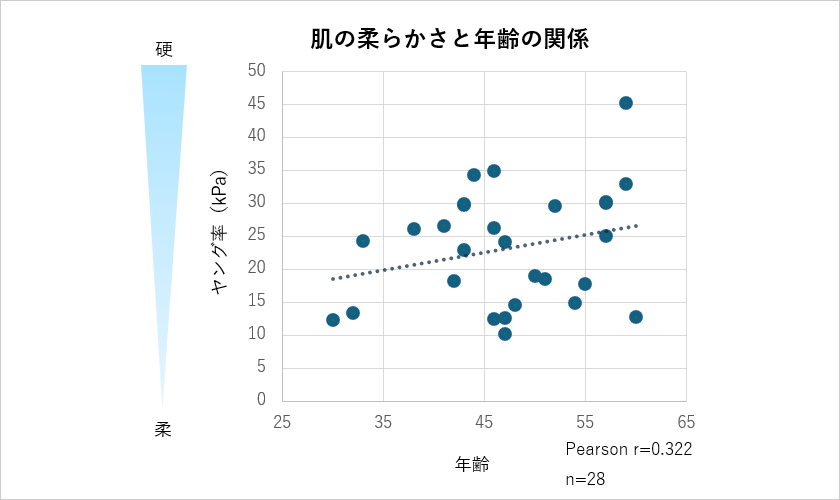
Figure 1: Relationship between Young's modulus and age
<Testing Method>
In a study involving 28 adult women, the Young's modulus of the cheek was measured using a YAWASA indentation tester after 20 minutes of acclimatization in a constant temperature and humidity environment following facial washing. The relationship between Young's modulus and age was evaluated using Pearson's product-moment correlation analysis. (n=28, conducted by Rohto Pharmaceutical Research Institute)
Result 2: The firmer the skin, the more wrinkles there were, and a significant correlation was confirmed even after considering the effects of age.
To clarify the relationship between skin softness and wrinkles, we investigated the association between the Young's modulus of the skin and the number of wrinkles in 28 adult women.
As a result, a significant positive correlation was found between skin firmness and wrinkle count, with higher Young's modulus and firmer skin (r=0.540, p=0.003). Furthermore, even in an analysis that accounted for the effects of age, a relationship was found between skin firmness and wrinkle count (partial correlation coefficient=0.474, p=0.0126).
These results suggest that the relationship between skin firmness and the number of wrinkles may not be explainable solely by common age-related changes.
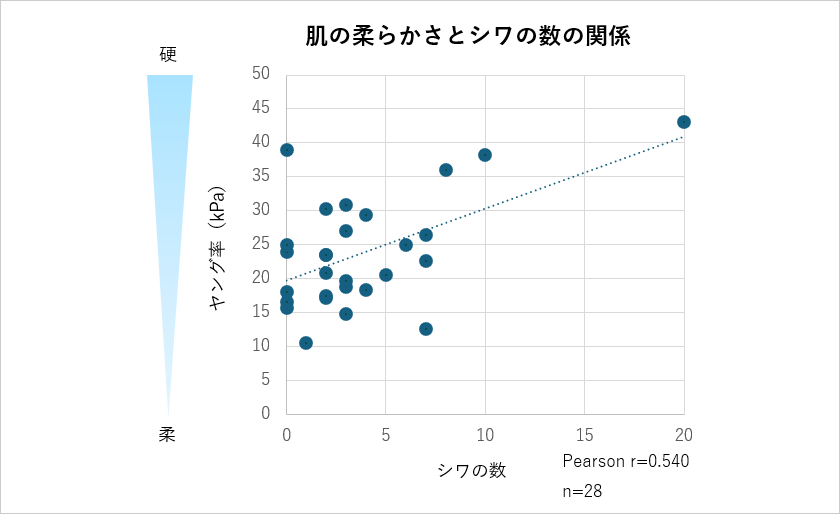
Figure 2: Relationship between Young's modulus and the number of wrinkles
<Testing Method>
In this study, 28 adult women were subjected to facial washing and then allowed to acclimate in a constant temperature and humidity environment for 20 minutes. The Young's modulus of the cheek area was measured using a YAWASA indentation tester, and the number of facial wrinkles was measured using a VISIA Evolution skin image analysis system (Canfield Scientific). The relationship between Young's modulus and the number of wrinkles was evaluated using Pearson's product-moment correlation analysis. Furthermore, to account for the influence of age, an age-adjusted partial correlation analysis was performed. (n=28, conducted by Rohto Pharmaceutical Research Institute)
Considerations and future prospects
This study revealed the relationship between skin softness and the number of wrinkles by objectively evaluating the firmness of the skin when pressed. This finding suggests that skin softness may not only be a matter of tactile sensation, but also a new clue to understanding skin condition that cannot be fully captured by age alone.
Going forward, we will further deepen our understanding of the relationship between skin softness and the age-related changes and skin functions that occur within the skin, and explore new possibilities for maintaining healthy skin for each individual for as long as possible.
Terminology
*1: Indentation testing machine (YAWASA): An indentation testing machine manufactured by Tech Gihan Co., Ltd. It is a measuring instrument that evaluates hardness based on the degree of deformation when an object is pressed. In this study, it was used to quantify the hardness when skin is pressed.
*2: Young's modulus: An index that indicates how difficult it is for an object to deform when force is applied. A higher value indicates greater hardness, and a lower value indicates greater softness.