For the first time, 64.7% of young unmarried men and women do not want children, with women now exceeding men
in this regard. "Work and career" influences the decision to want or not want children and
fertility treatment. Rohto Pharmaceutical releases "Fertility Treatment White Paper 2025."
Key to resolving this issue is "acquiring correct fertility treatment knowledge early" and "support from *before* conceiving a child."
March 2, 2026
ROHTO Pharmaceutical Co., Ltd. (Headquarters: Osaka City, President: Hidetoshi Segi) will release the "Fertility Treatment White Paper 2025," which surveys attitudes and realities surrounding pregnancy and childbirth. The Fertility Treatment White Paper, which began its survey in 2018, aims to visualize the challenges related to fertility treatment, raise issues aimed at creating a more well-being society, and derive hints for solutions. In this survey, the eighth year of the survey, it was revealed that "work and career" influences the choice of whether or not to want children, as well as attitudes and actions toward fertility treatment, and is also linked to "the reasons why people were unable to start fertility treatment at the desired time."
[White Paper on Fertility Treatment URL] https://jp.rohto.com/dotest/committee/hakusyo/
"Fertility Treatment White Paper 2025" Main Survey Topics
- Survey results on young unmarried men and women
- For the first time since the survey began, the percentage of women (64.7%) who do not want children has surpassed that of men (60.7%).
- Women are more concerned than men about the "financial burden" and "impediment to their careers."
- The desired age for having a first child is increasingly being pushed back to the 30s and beyond, and more than half of people have not yet started gathering information on fertility treatments that take their life and career plans into consideration.
- Survey results on married men and women who want children
- Efforts to conceive and give birth are becoming more widespread.
- Approximately 70% of people begin gathering information about fertility treatment after getting married.
- While more than half of both men and women feel that having and raising children will affect their work and career, only a very small number (less than 10%) are able to discuss this with their workplace.
- Survey results of men and women with experience in trying to conceive
- Among men and women who have conceived after undergoing fertility treatment, approximately one in three women reported that they started fertility treatment later than they had hoped. More than 40% of women in their 30s were unable to conceive during their desired timeframe.
- Both men and women realize the difficulty of balancing fertility treatment with work and career, as well as the lack of knowledge and preparation regarding fertility treatment.
Hints for solving the problem
- Gaining knowledge about fertility treatment can help you predict future changes in your body and plan for the future. Since a lack of knowledge was cited as a major reason for delaying the start of fertility treatment, regardless of whether you want children or not, "gaining knowledge about fertility treatment early and creating a life career plan" can increase your future options and make it easier to live the life you want.
- Beyond parental leave and support for balancing work and childcare, expanding support "even before having children" within companies and government agencies could help individuals achieve their desired choices without having to choose between their career and having children.
We believe that fertility treatment should not be considered solely a matter for women or those directly involved, but rather something that society as a whole should consider and support. Moving forward, we will continue to work towards a well-being society through awareness campaigns, including our fertility treatment white paper, and product development, doing what we can as a company.
Survey subjects: Young unmarried men and women (ages 18-29, no children) n: 400
- For the first time since the survey began, the percentage of women (64.7%) who do not want children has surpassed that of men (60.7%).
- Women are more concerned than men about the "financial burden" and "impediment to their careers."
- The desired age for having a first child is increasingly being pushed back to the 30s and beyond, and more than half of people have not yet started gathering information on fertility treatments that take their life and career plans into consideration.
Among young, unmarried men and women, 37.4% answered "yes" to the question "whether they want children in the future," while 62.6% answered "no." For the first time since the 2018 survey, the percentage of women (64.7%) who answered "I do not want children now or in the future" exceeded that of men (60.7%).
Among young, unmarried men and women, women are more concerned than men about the "financial burden" and "impact on their careers" that comes with having and raising children, regarding their attitudes towards marriage, childbirth, child-rearing, and life in general. The difference is approximately 10 percentage points higher for women.
Survey subjects: Young unmarried men and women (ages 18-29, no children) n: 400
Regarding the desired age for having a first child among young, unmarried men and women who wish to have children in the future, in 2018, approximately 1 in 2.5 people (39.0%) wanted to have their first child by the age of 30. However, by 2025, this figure is projected to decrease to approximately 1 in 4 people (25.2%). The number of people hoping to have a first child in their 30s or later is increasing, indicating a shift in the desired age for having a first child. (The average age is 31.3 years old.)
In addition, while approximately one in two women (51.8%) wanted to have their first child by their 20s in 2018, this figure is projected to decrease to approximately one in four (24.3%) by 2025. [No graph available]
When we asked young, unmarried men and women about the age at which they began gathering information about "fertility treatment and childbirth" with an awareness of fertility treatment or their own life and career plans, 66.3% of the total population, and 54.7% of those who desire children, said they had not yet started gathering information.
Survey subjects: Married men and women (ages 25-44, currently pregnant or not yet pregnant) who currently desire children or wish to have children in the future. n: 800
- Efforts to conceive and give birth are becoming more widespread.
- Approximately 70% of people begin gathering information about fertility treatment after getting married.
- While more than half of both men and women feel that having and raising children will affect their work and career, only a very small number (less than 10%) are able to discuss this with their workplace.
When married men and women were asked about what they are currently doing to prepare for pregnancy and childbirth, almost all items showed an increase compared to last year. The main increases were in healthy lifestyle habits, life planning, and paying attention to their partner's health, indicating that efforts to conceive are expanding.
On the other hand, regarding the age at which married men and women began gathering information about "pregnancy and childbirth" with fertility treatment or their own life and career plans in mind, approximately 70% of respondents acquired this knowledge after getting married. (Overall: 68.2%, Men: 75.4%, Women: 61.9%) Furthermore, less than 10% (9% or less) of both men and women had gathered information before considering marriage (e.g., during their student years). [No graph available]
Regarding attitudes towards fertility treatment and work/career, married men and women responded that "having children will hinder their work career" (men: 52.0%, women: 64.1%) and "they are considering changing jobs or transferring to a different department in order to have and raise children" (men: 53.3%, women: 66.8%). More than half of both men and women feel that it will have an impact on their work/career, and this result was more than 10 percentage points higher for women than for men.
Survey subjects: Married men and women (ages 25-44, currently pregnant or not yet pregnant) who currently desire children or wish to have children in the future. n: 800
Regarding who married men and women consult about fertility treatment, it was revealed that very few people consult their superiors or colleagues at work (3.8% for men, 4.2% for women), and that more than 40% of both men and women do not consult anyone at all.
Survey subjects: Men and women with experience in trying to conceive (ages 18-49, with children) n: 500
- Among men and women who have conceived after undergoing fertility treatment, approximately one in three women reported that they started fertility treatment later than they had hoped. More than 40% of women in their 30s were unable to conceive during their desired timeframe.
- Both men and women realize the difficulty of balancing fertility treatment with work and career, as well as the lack of knowledge and preparation regarding fertility treatment.
Of those with experience in trying to conceive, 63.2% (58.3% of men and 67.6% of women) responded that "getting pregnant is more difficult than they imagined before starting to try to conceive." Additionally, 64.0% (64.3% of men and 63.8% of women) said that "it is difficult to balance trying to conceive with work," and 50.1% (49.1% of men and 51.0% of women) said that "trying to conceive has necessitated (or is likely to necessitate) changes to their work or career plans," clearly indicating that there are indeed hurdles to balancing trying to conceive with work and career.
In addition, approximately 60% responded that they "wish they had acquired correct knowledge about pregnancy and childbirth when they were younger, such as during their student days" (overall: 62.4%, men: 61.2%, women: 63.5%), and "wish they had started preparing for pregnancy or trying to conceive earlier" (overall: 58.6%, men: 58.5%, women: 58.6%), indicating that they felt they lacked knowledge and preparation.
Survey subjects: Men and women with experience in trying to conceive (ages 18-49, with children) n: 500
Regarding the timing of starting fertility treatment among men and women with experience in trying to conceive, approximately one in three women (34.0%) reported that it was later than the time they had hoped. This is about 1.8 times more than men (19.3%). In particular, it was revealed that more than 40% of women in their 30s started later than their desired time.
Looking at the reasons why women in their early 30s delayed their fertility treatment, which coincides with the average age of 31.3 years old when unmarried men and women hoping for their first child, many responded with "lack of information and anxiety about fertility treatment" (37.9%) and "prioritizing work commitments and career advancement opportunities" (24.1%). This suggests that the timing of fertility treatment often coincides with a period of career advancement, and that a lack of information and anxiety about fertility treatment significantly contributed to the delay in starting fertility treatment.
Fertility Treatment White Paper 2025: Survey Overview
| Survey Name |
Rohto Pharmaceutical's "Fertility Treatment White Paper 2025" |
| Survey period |
December 2, 2025 (Tuesday) - December 10, 2025 (Wednesday) |
| Survey methodology |
Internet survey |
| Survey subjects |
Ages 18-49 (Not filtered by marital status or whether they have children) |
| Survey area |
Nationwide |
| Sample size |
30,568 samples |
What is Rohto Pharmaceutical's "Fertility Treatment White Paper"?
Since 2018, we have been conducting year-on-year surveys on the attitudes and realities surrounding pregnancy and childbirth among unmarried and married men and women.
Through the publication of the White Paper on Fertility Treatment, we aim to achieve the following:
- To support people's fertility journey by providing accurate information about pregnancy and childbirth.
- To visualize the challenges related to fertility treatment and to raise awareness of issues aimed at creating a more well-being-oriented society.
- To offer hints for solving the issues revealed in the White Paper on Fertility Treatment.
[Fertility Treatment White Paper URL] https://jp.rohto.com/dotest/committee/hakusyo/
Rohto Pharmaceutical has been engaged in the research, development, and promotion of "Feminine Care" for nearly half a century.
~Towards a society where women can confront their own bodies and make vibrant, independent life choices~
Since its founding in 1899, Rohto Pharmaceutical has provided health-related products such as gastrointestinal medicines, eye drops, topical medications, and skincare products. In 1980, at a time when fertility treatment and women's health issues were not as widely recognized in Japan as they are today, Rohto began research and development of "Feminine Care." It all stems from the desire to protect women's precious bodies and to fulfill their wishes and hopes of "wanting to have a baby."
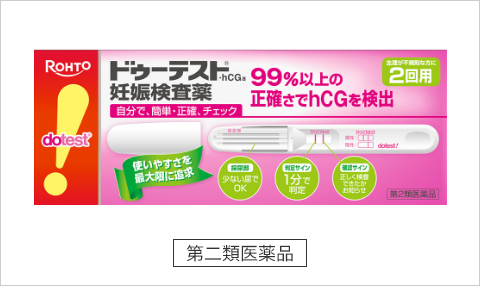
In 1992, the company began selling Japan's first "over-the-counter pregnancy test kit."
Please read the instructions for use carefully before using this product. Always consult a doctor for a definitive diagnosis.
In the 1980s, pregnancy tests were not yet available as over-the-counter medications in Japan. In an era when it wasn't easy for women to find out if they were pregnant, many women unknowingly put a strain on their bodies and suffered miscarriages. Our company dedicated itself to the research and development of pregnancy tests, and in 1992, we launched Japan's first "over-the-counter pregnancy test." Our employees also visited pharmacies to talk about the importance of pregnancy tests and work to raise awareness.
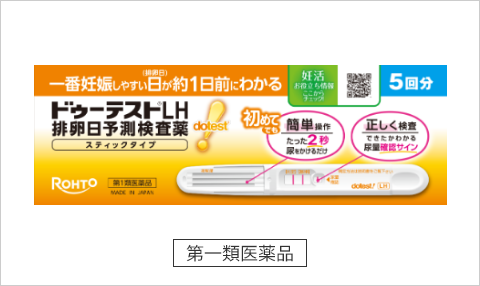
"General-use ovulation prediction test kit" born from the desire of one woman to conceive a child.
Please use this test kit only after receiving instructions from a pharmacist and carefully reading the "Precautions for Use."
We received a phone call from a woman who said, "I'm trying to conceive, but I'm having trouble getting pregnant," which prompted us to start an internal investigation. We came to the conclusion that an ovulation prediction test kit is necessary for conception, and we began research and development. Based on user feedback, we improved the product, and in 1996 we launched the "Ovulation Prediction Test Kit," which bore fruit in 2016 as the "General Use Ovulation Prediction Test Kit," and has now become a familiar product.
Information dissemination related to fertility treatment
In addition, we conduct awareness campaigns through the publication of the "Fertility Treatment White Paper," and we also sell a variety of pharmaceuticals and food products related to fertility treatment, menstruation, and menopause.
Rohto Pharmaceutical's internal initiatives to enable a work-life balance that doesn't require sacrificing career or family life.
Inspired by the "White Paper on Fertility Treatment," Rohto Pharmaceutical will conduct preconception care training for new employees in April 2026 to help them create their own unique life and career plans.
Starting in April 2026, we will be implementing preconception care training as part of our new employee training program. This initiative aims to address the "lack of knowledge about pregnancy and childbirth (fertility knowledge) among young people" that was revealed in the "Fertility Treatment White Paper" from within the company.
The training aims to provide participants with accurate knowledge from an early stage, regardless of whether they wish to have children or not. It will cover issues surrounding pregnancy and childbirth revealed by data from the "White Paper on Fertility Treatment," basic knowledge of preconception care useful for life planning and career development, and support information such as local government and company systems.
overview
| Date and Time |
Wednesday, April 8, 2026 14:30-16:00 |
| place |
ROHTO Pharmaceutical Co., Ltd. Osaka Head Office (Tatsumi-Nishi, Ikuno-ku, Osaka City) |
| participants |
Rohto Pharmaceutical 2026 New Employees |
| program |
- "Reflections on social issues and one's own life plan based on the White Paper on Fertility Treatment" (Rohto Pharmaceutical Public Relations Department employee)
- "Early Knowledge and Preconception Care You Should Know" (Public Health Nurse and Employee, Health Management Office, Rohto Pharmaceutical Co., Ltd.)
|
Rohto Pharmaceutical's female employee ratio is 60%, and its maternity leave utilization and return rate is nearly 100%.
Until it becomes commonplace to "work while having and raising children"
Approximately 60% of Rohto Pharmaceutical employees are women, and 30% of managers are women *. Many female employees have built successful careers while taking maternity and childcare leave. However, the environment for working while raising children was not always in place from the beginning.
The turning point came in 1992 when we launched Japan's first "over-the-counter pregnancy test kit." As our employees conducted awareness campaigns on maternal and child health at pharmacies, they began to realize that "our company also needs to create an environment where female employees can continue working even after having children." From there, we started to improve the environment by incorporating the experiences of female employees who were raising children into our company's systems, and as the number of role models gradually increased, "working while having and raising children" became the norm.
Furthermore, our corporate culture, which values internal communication, has fostered relationships where employees can help each other with things like covering for sudden absences due to childcare and adjusting work schedules. In addition, we utilize external services and have established a system where employees can receive consultations on a wide range of topics, including fertility treatment, childbirth, childcare, elder care, health, and mental health. We are constantly updating our environment based on the voices of those directly involved.
In recent years, we have focused on creating an environment where not only women but also men can work while raising children, and we have achieved a male parental leave utilization rate of 97.5% *.
*As of March 2025.