Antibacterial properties of lactic acid fermented hyaluronic acid discovered
- Focusing on the balance of vaginal flora -
March 5, 2025
ROHTO Pharmaceutical Co., Ltd. (Head office: Osaka City; President: Masashi Sugimoto) is conducting research into women's health and Feminine Care in order to realize the Rohto Group's Comprehensive Management Vision 2030, "Connect for Well Being." As a result of conducting research into women's vaginal flora *1, it has been revealed that lactobacillus/hyaluronic acid fermentation liquid *2 (hereinafter referred to as lactic acid fermented hyaluronic acid) may have selective antibacterial properties.
Key points of the research
- It was discovered that lactic acid fermented hyaluronic acid selectively suppresses harmful bacteria without affecting beneficial lactic acid bacteria.
- Lactic acid-fermented hyaluronic acid was confirmed to inhibit the growth of harmful bacteria in a concentration-dependent manner
- Expectations are high for its application in the development of new products that contribute to the health of delicate areas.
Research Background
In recent years, interest in intimate areas has grown. In particular, cleansers, moisturizers, and other products that focus on supporting the vaginal environment, such as vaginal pH and probiotics *3, have been attracting attention. This trend is thought to be driven by a growing understanding of vaginal flora, increased awareness of infections and discomfort, and a growing awareness of self-care for intimate areas.
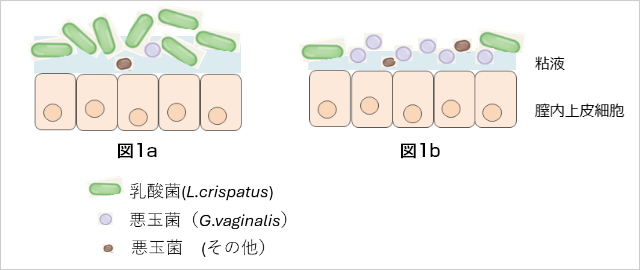
Figure 1a: Healthy vaginal flora rich in lactic acid bacteria
Figure 1b: Vaginal flora in a state where lactic acid bacteria are reduced and harmful bacteria such as G. vaginalis are increased (a condition common in bacterial vaginosis)
Healthy vaginal flora plays an important role in maintaining women's health, including preventing infectious diseases such as bacterial vaginosis (BV) and improving immunity. In particular, Lactobacillus crispatus (L. crispatus), a type of lactic acid bacterium, is closely related to maintaining a healthy vaginal environment. Its high lactic acid production maintains an optimal vaginal pH and suppresses the growth of harmful bacteria (Figure 1a). Therefore, the colonization and dominance of L. crispatus in the vagina is considered one of the characteristics of healthy vaginal flora. On the other hand, Gardnerella vaginalis (G. vaginalis), an anaerobic facultative pathogen known as a harmful bacterium, disrupts the balance of vaginal flora and is a major cause of BV (Figure 1b). BV can have serious effects on the vaginal environment, causing symptoms such as foul-smelling vaginal discharge, discomfort, and increased risk of infection.
Based on the results of extensive research on hyaluronic acid, we focused on lactic acid-fermented hyaluronic acid as an ingredient that supports the balance of vaginal flora. In this study, we aimed to confirm its effects on G. vaginalis and L. crispatus.
result
Lactic acid-fermented hyaluronic acid selectively inhibits the growth of G. vaginalis
When lactate-fermented hyaluronic acid was co-cultured with G. vaginalis, lactate-fermented hyaluronic acid significantly inhibited the growth of G. vaginalis at concentrations of 0.0075% or higher (Figure 2). Furthermore, it was confirmed that the antibacterial effect against G. vaginalis increased in a concentration-dependent manner.
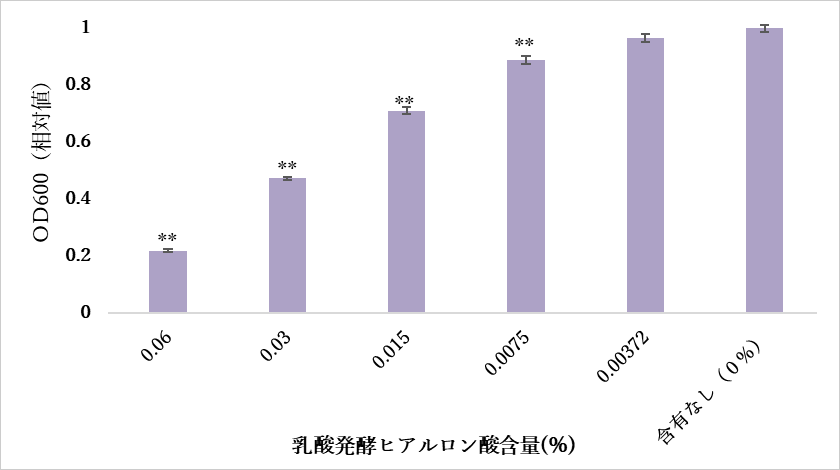
Figure 2. Growth inhibitory effect of lactic acid-fermented hyaluronic acid on G. vaginalis *7
It was confirmed that lactic acid-fermented hyaluronic acid does not affect the growth of L. crispatus.
Lactic acid-fermented hyaluronic acid inhibited the growth of G. vaginalis in a concentration-dependent manner, whereas there was no significant difference in the growth status of L. crispatus g, and no significant growth inhibitory effect was observed (Figure 3).
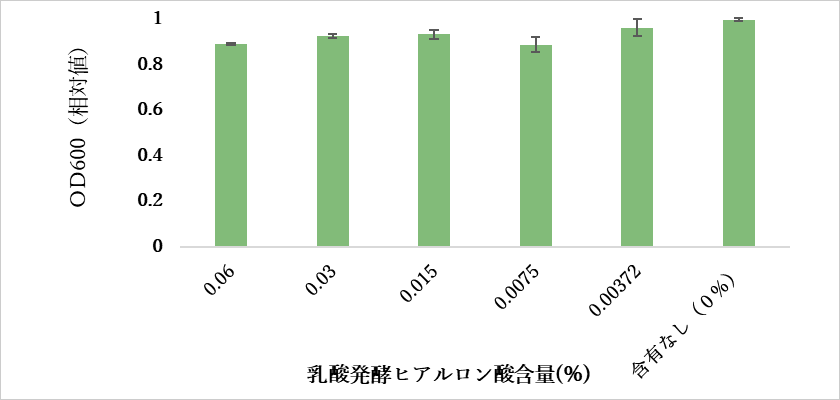
Figure 3. Growth inhibitory effect of lactic acid-fermented hyaluronic acid on L. crispatus *7
<Test Method>
In this study, L. crispatus and G. vaginalis were cultured for 24 hours under anaerobic conditions at 37°C with lactic acid-fermented hyaluronic acid at concentrations ranging from 0.00372% to 0.06%. The optical density (OD) was measured at a wavelength of 600 nm at the start of the culture (t=0 hr) and 24 hours later (t=24 hr), and the bacteria were quantified. The values shown in the graph represent the ratio of the OD of the bacteria containing lactic acid-fermented hyaluronic acid to the OD without lactic acid-fermented hyaluronic acid; the smaller the value, the more inhibited the growth.
(n=3, Dunnett **: P<0.01, conducted by MyMicrobiome GmbH)
*7: Based on MIC (minimum inhibitory concentration) measurement
Consideration
These results suggest that lactate-fermented hyaluronic acid may have a selective antibacterial effect against G. vaginalis, without affecting beneficial bacteria such as L. crispatus. This suggests that lactate-fermented hyaluronic acid may have a selective mechanism that acts only on certain bacterial species.
Future outlook
The results of this research are expected to lead to new approaches to maintaining a healthy vaginal environment. Going forward, we will continue basic research on vaginal flora and the search for new ingredients that support the balance of vaginal flora, while also aiming to deepen society's understanding of vaginal health and develop products that contribute to improving women's quality of life and well-being.
Terminology
*1: Vaginal flora
A collection of various bacteria that live in the vagina. It has a self-cleaning effect that prevents the invasion and proliferation of germs. The majority of bacteria are lactobacillus (a type of lactic acid bacteria), which is a healthy vaginal flora.
*2: Lactococcus/hyaluronic acid fermentation liquid (lactic acid fermented hyaluronic acid)
A liquid obtained by fermenting hyaluronic acid as a substrate with Lactococcus and then filtering it.
*3: Probiotics
These are live bacteria (bacteria) that have a positive effect on health.
*4: Bacterial vaginosis (BV)
An infection that develops when the balance of bacteria in the vagina is disrupted due to lifestyle habits or stress
*5: Lactobacillus crispatus (L. crispatus)
A type of lactobacillus that plays a major role in the female vaginal flora, and plays a key role in maintaining the vaginal environment.
*6: Gardnerella vaginalis (G. vaginalis)
It is one of the main causes of bacterial vaginosis (BV), and grows excessively when the bacterial balance in the vagina is disturbed.