Timing of material addition confirmed to be crucial for effective collagen fiber formation
- Potential for fiber formation promotion technology that maximizes the power of human dermal fibroblasts -
April 23, 2025
ROHTO Pharmaceutical Co., Ltd. (Headquarters: Osaka City; President: Masashi Sugimoto) is focusing on research into collagen, which supports healthy and beautiful skin, in order to realize the Rohto Group's Comprehensive Management Vision 2030, "Connect for Well-being."
Collagen peptides and vitamin C are widely used in oral beauty products. These ingredients are also known to affect collagen production in human dermal fibroblasts (hereinafter referred to as fibroblasts). However, the relationship between ingredient combinations and timing of intake is not fully understood. We have now demonstrated that the timing of ingredient addition affects the formation of collagen fibers (*1), and presented the results of our research at the 145th Annual Meeting of the Pharmaceutical Society of Japan (March 28, 2025).
In this study, it was confirmed that adding the material at the right time to coincide with the collagen fiber formation process (*2) of fibroblasts draws out the cells' inherent strength and significantly increases the amount of collagen fiber produced. This is expected to strengthen the skin's ability to generate its own firmness, and may also lead to the development of new formulations.
Key points of the research
- Focusing on the process of collagen fiber formation, the test was designed to separate ingredients that act on different stages.
- Considering the timing of addition confirmed a greater collagen fiber formation effect.
Research Background
Due to factors such as aging and ultraviolet rays, the amount of collagen fibers in the skin decreases with age, and it is said that fibroblast activity also declines from the 20s (Reference 1). Against this background, ingredients such as collagen peptides, vitamin C, and minerals have been used for cosmetic purposes, but there is still insufficient knowledge accumulated about how these ingredients reach fibroblasts and enhance their collagen production and fibrogenesis, including the optimal combinations and effective methods of use.
In this study, we focused not only on increasing collagen but also on firmly assembling it into "collagen fibers" that form the foundation of the skin. We focused on the "collagen fiber formation process" of fibroblasts and investigated the appropriate combination of materials and the timing of their addition to effectively form collagen fibers that directly contribute to skin firmness.
In this study, we designed a compound containing amino acids and peptides (hereinafter referred to as CompA) and a compound containing vitamin C, minerals, etc. (hereinafter referred to as CompB). We evaluated the effects of adding these compounds to fibroblasts simultaneously or with a time lag (before and after addition: CompA was added followed by CompB two hours later) using two indicators: the amount of procollagen (*3) produced and the amount of collagen fibers.
result
1. The combination of CompA and CompB showed the most effective procollagen production.
The collagen production ability of fibroblasts was compared by simultaneous addition of CompA, vitamin C, CompB, and AB, and by adding AB before and after, using the amount of procollagen in the culture supernatant as an indicator.
The results showed that CompB, which contains vitamin C and minerals, significantly promoted procollagen production compared to vitamin C alone. Furthermore, the highest amount of procollagen production was confirmed when CompA and CompB were added simultaneously (AB simultaneous addition) (Figure 1).
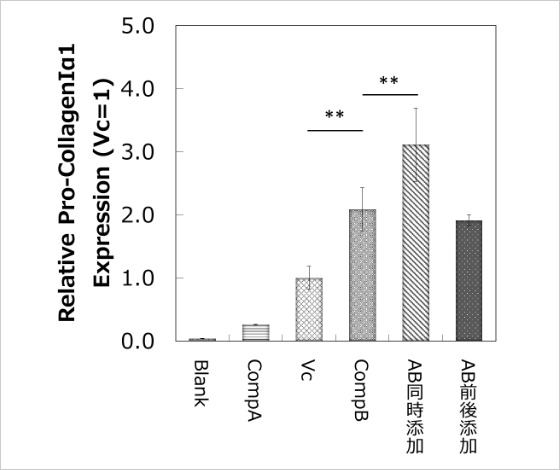
Figure 1: Comparison of procollagen production
<Test Method>
The concentrations of the ingredients were determined taking into consideration the solubility, cytotoxicity, and effect on cell morphology of the ingredients. CompA: 5% low molecular weight fish collagen + 0.01% hydrolyzed soy peptide; CompB: 0.1% magnesium L-ascorbyl phosphate + 0.002% ferric pyrophosphate + 0.001% Healthy Zn + 20% Euglena gracilis EX45 (Euglena Co., Ltd.); Blank: basal medium without ingredients (DMEM containing 1% FBS); Vitamin C (Vc): 0.1% magnesium L-ascorbyl phosphate
Fibroblasts were added to the medium containing each material and cultured for 7 days. In the AB pre- and post-addition group, CompA was added, followed by 2 hours of culture, after which the supernatant was removed and CompB was added. After the culture was completed, the culture supernatant was collected and quantitative analysis was performed using an ELISA kit for Pro-Collagen Iα1 (#DY6220-05, R&D Systems).
(Tukey-Kramer (n=3), p<0.05*, p<0.01**, p<0.001***)
(Conducted at Rohto Pharmaceutical Research Institute)
2. Confirmation that the order of material addition affects the ability to form fibers
In this study, in addition to procollagen production ability, the amount of collagen fibers, which is directly involved in skin firmness, was also evaluated using immunofluorescence staining (Figure 2).
The results showed that CompB formed more collagen fibers than vitamin C, indicating that mineral components contribute to promoting fiber formation. Furthermore, while almost no fiber formation was observed with CompA alone, adding CompA before or after the addition of CompB confirmed a synergistic effect that greatly promoted fiber formation. On the other hand, when both were added simultaneously, although the production of procollagen was confirmed as in the results of 1, the effect of forming mature fiber structures tended to be low.
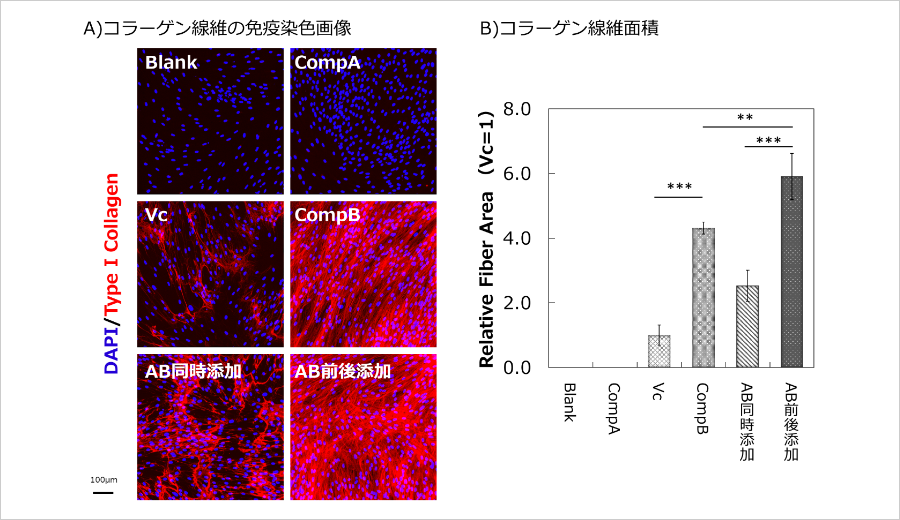
Figure 2: Comparison of collagen fiber content
<Test Method>
The test was carried out in the same manner as above. After the culture was completed, immunofluorescent staining using anti-collagen I antibody was performed to evaluate the ability to form fibers. Red: Collagen I (primary antibody: anti-collagen I antibody, secondary antibody: Alexa546-labeled antibody) Blue: Cell nuclei (DAPI staining) (Figure 2-A). Collagen fibers were observed using a fluorescence microscope, and the fiber area per well was quantitatively analyzed (Figure 2-B).
(Tukey-Kramer (n=3), p<0.05*, p<0.01**, p<0.001***)
(Conducted at Rohto Pharmaceutical Research Institute)
Consideration
These results suggest that the timing of adding components to cells, rather than just adding them, is important for fibrillogenesis. For procollagen production, the simultaneous addition of CompA and CompB produced a significant effect. In contrast, for collagen fibrillogenesis, the greatest effect was observed when CompA and CompB were added at different times (before and after addition).
It is believed that the amino acids and peptides contained in CompA provide the materials for procollagen synthesis, while the vitamin C and minerals contained in CompB support the activity of the enzymes necessary for fiber formation.
In other words, we speculate that the addition of procollagen before and after the treatment caused the cells to synthesize and secrete procollagen in stages, effectively assembling it into fibers. This suggests the possibility of maximizing the intrinsic functions of cells by mimicking the collagen fiber formation process in vivo.
Significance of this research result
This research suggests that it is possible to enhance the collagen fiber formation effect by considering the timing of the ingredients' action. In particular, rather than simply increasing collagen production, the question of how to effectively form the "collagen fibers" that actually support the skin's structure may lead to a new approach to skin health. We will continue to conduct research to develop products with even higher functionality.
References
- Reilly DM, et al. Skin collagen through the life stages: importance for skin health and beauty. Plast Aesthet Res. 2021;8:2. doi:10.20517/2347-9264.2020.153.
Terminology
*1 Collagen fiber: A major structural protein that supports tissues such as skin and tendons, and plays a role in maintaining the strength and elasticity of the tissue. Tropocollagen *4, which has a triple helix structure, aggregates and crosslinks outside the cell to form a strong fibrous structure.
*2 Collagen fiber formation process (Figure 3): Procollagen is synthesized within cells using amino acids and peptides through the action of enzymes (hydroxylases, etc.). Procollagen is secreted outside the cell, and unnecessary terminal portions are cleaved to form tropocollagen, which then undergoes a cross-linking reaction to mature into collagen fibers. Vitamin C, iron, zinc, etc. are involved in these processes as enzyme cofactors and activators.
*3 Procollagen: A collagen precursor synthesized within cells. After modification, it is secreted outside the cell and becomes the material for fiber formation.
*4 Tropocollagen: A basic unit formed by removing the ends of procollagen. Three polypeptide chains form a triple helix, forming the basic structure of collagen fibers.
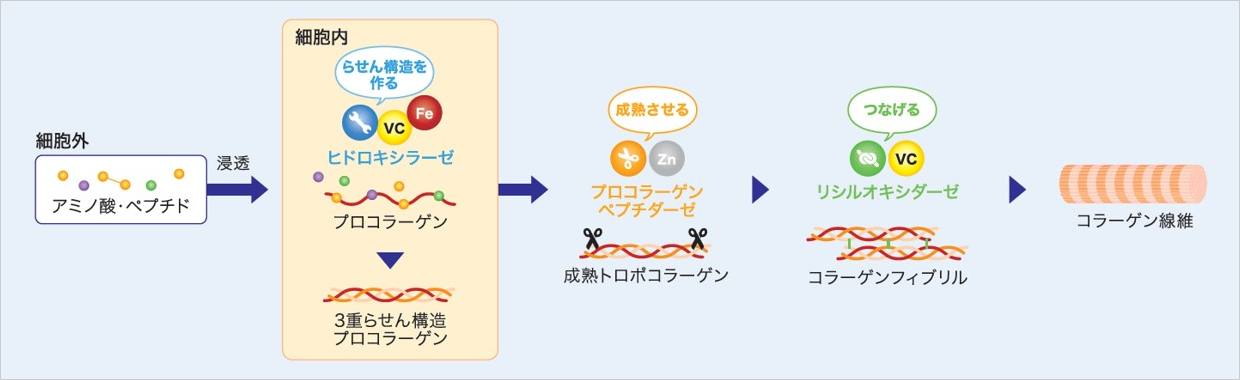
Figure 3: Collagen fiber formation process