Large-scale genome analysis of Japanese people reveals new gene PLXNA1 associated with gray hair
October 16, 2025
ROHTO Pharmaceutical Co., Ltd. (Headquarters: Osaka City; President: Hidetoshi Seki) is conducting research aimed at establishing a fundamental method for improving gray hair, in order to realize the Rohto Group's Comprehensive Management Vision 2030, "Connect for Well-being." As a result of conducting a large-scale genome-wide association study *1 (hereinafter referred to as GWAS analysis) on 2,186 individuals, they discovered, for the first time in the world, a gene associated with gray hair unique to Japanese people, Plexin-A1 *2 (hereinafter referred to as PLXNA1). Furthermore, they revealed the possibility that the semaphorin (Sema)-plexin signaling pathway *3 may be involved in the mechanism of gray hair formation.
The results of this research were presented at the 35th IFSCC Congress 2025 France Cannes, held in Cannes, France from September 15th to 18th, 2025.
Key points of the research
- Large-scale GWAS analysis of 2,186 Japanese people reveals genes associated with gray hair specific to Japanese people
- Unlike previous research that has focused on Europe, the United States, and Latin America, PLXNA1 was identified as a related gene.
- Expectations are high for the development of products for gray hair in Asians and application to diagnostic services
Research Background
GWAS analysis, one of the methods for studying the genetic factors related to gray hair, has mainly focused on Western and Latin American populations, with limited knowledge on Asian populations. Meanwhile, while interest in gray hair is growing among Japanese people as the aging society progresses, the current method of dealing with gray hair is mainly hair dyeing, and no fundamental method for improving it has been established.
Gray hair is one of the most noticeable phenomena of aging and has a significant social and psychological impact. As there is currently no effective way to improve it, there is a strong demand for scientifically based solutions.
Aiming to reduce the psychological burden caused by gray hair and contribute to improving quality of life, we worked to elucidate the mechanism of gray hair based on the genetic background unique to Japanese people.
result
Result 1: PLXNA1 gene identified through large-scale GWAS analysis of Japanese people
A questionnaire survey on gray hair was conducted on 2,186 Japanese people, and GWAS analysis was conducted. As a result, the PLXNA1 gene was identified as a gene highly associated with gray hair (Figure 1). This is the first time in the world that the PLXNA1 gene, which has previously been known to be involved in nervous system development, may be involved in gray hair formation.
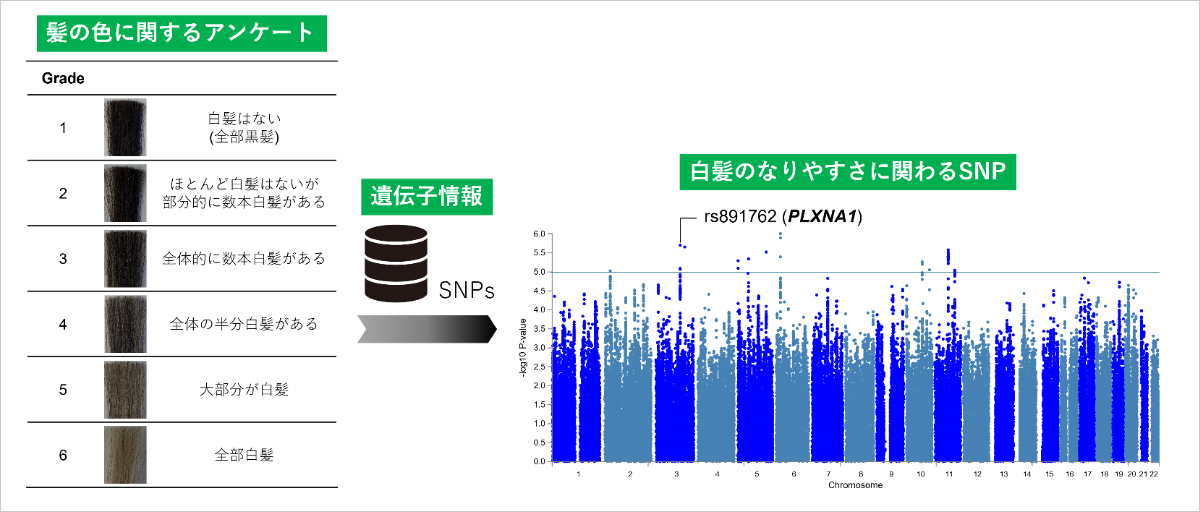
Figure 1: Exploring the genetic background of gray hair
<Test Method>
DNA was extracted from saliva samples of 2,186 Japanese people (average age 42.7 years) and single nucleotide polymorphisms *4 (SNPs) were analyzed. The subjects were asked to complete a questionnaire and choose the closest answer from Grade 1 to 6 regarding their undyed hair color. The correlation between SNPs and the questionnaire results was examined, and rs891762 was discovered to be related to the likelihood of gray hair (P < 1E-05). eQTL analysis identified the PLXNA1 gene. (Conducted by Rohto Pharmaceutical Research Institute)
Result 2: Suggests involvement of the Sema-plexin signaling pathway in the mechanism of hair graying
To investigate the effect of Sema-plexin signaling in melanocytes, an evaluation was performed using cultured melanocytes. Addition of Sema-3A (hereafter referred to as Sema III), a ligand for PLXNA1, to melanocytes resulted in a significant suppression of melanocyte process outgrowth (Figure 2).
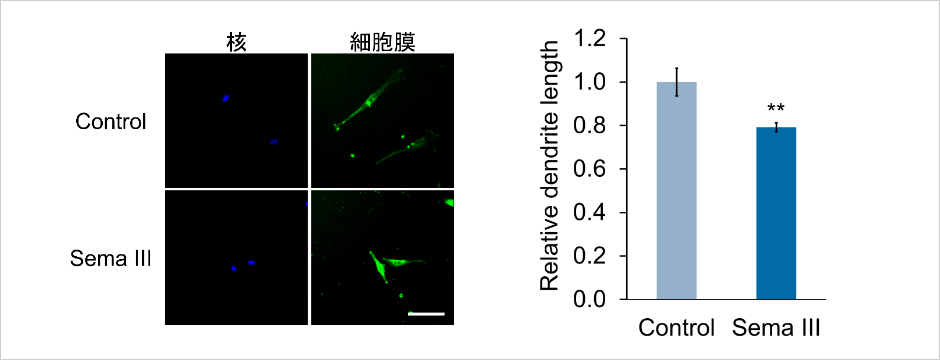
Figure 2: Morphological changes in melanocytes due to the addition of Sema III
<Test Method>
Normal human epidermal melanocytes with stained cell membranes were seeded and Sema III was added 24 hours later. After an additional 48 hours of culture, a nuclear stain was added, and nuclei and dendrite length were measured using an imaging device (Scale bar: 100 mm). The dendrite length per cell was calculated, and the relative dendrite length compared to the untreated control was graphed (n=3; mean ± SD. **P < 0.01; Student's t-test vs. Control). (Performed at Rohto Pharmaceutical Research Institute)
Future outlook
The results of this research have revealed the fundamental mechanism of gray hair, which is based on the genetic background unique to Japanese people. In the future, we aim to develop products targeting gray hair that target the Sema-plexin signaling pathway.
Unlike conventional symptomatic treatments such as hair dye, this fundamental approach, which maintains and activates melanocyte function, will lead a market paradigm shift from "concealing" to "preventing and improving."
Terminology
*1: Large-scale genome-wide association study (GWAS analysis)
A method of comprehensively examining genetic differences across the entire genome and statistically analyzing associations with diseases and physical traits. By targeting large populations, it is possible to identify genetic factors related to diseases and traits.
*2: Plexin-A1 (PLXNA1) gene associated with gray hair
This gene has now been newly discovered to be associated with gray hair. It was originally known to be involved in the development of the nervous system, but it has now been discovered to also be involved in regulating the function of melanocytes (pigment cells) derived from the same neural crest cells *.
*Neural crest cells are pluripotent stem cells that arise from the dorsal side of the neural tube during embryonic development and differentiate into a variety of tissues, including melanocytes, the peripheral nervous system, and facial skull.
*3: Semaphorin (Sema)-plexin signaling pathway
An intercellular communication system involved in nervous system development and angiogenesis. Sema proteins bind to Plexin receptors to regulate cell migration and protrusion extension.
*4: Single nucleotide polymorphisms (SNPs)
SNP (Single Nucleotide Polymorphism) refers to a region in the genomic DNA sequence where a single base (A, T, G, or C) difference is found between individuals or populations. Some SNPs affect gene expression levels and protein function, and are responsible for differences in constitution, disease susceptibility, and individual differences in drug response.
*5: Melanocytes
Pigment cells supply pigment (melanin) to skin and hair. At the hair root, they give hair its color by transferring melanin to hair matrix cells. Their function declines with age, causing gray hair.