World's first *: Confirmation that iris root extract increases vitamin C concentration in pigment cells.
Vitamin C research enters a new stage.
December 2, 2025
ROHTO Pharmaceutical Co., Ltd. (Headquarters: Osaka City, President: Hidetoshi Segi) has developed an approach that increases the amount of vitamin C accumulated within pigment cells (melanocytes) and suppresses melanin synthesis. As part of its research to enhance the usefulness of various forms of vitamin C in the healthcare field, Rohto has been developing technologies such as high-concentration formulation, stabilization, and penetration improvement technologies for vitamin C. This research has revealed that iris root extract has the effect of increasing the amount of vitamin C inside pigment cells and suppressing the amount of melanin synthesized. By focusing on the concentration of vitamin C inside cells, it is expected that the application of this approach, which further enhances the usefulness of vitamin C, will be expanded. We will utilize these results in future product development.
*World's first: Iris root extract increases vitamin C concentration in pigment cells.
Key points of the research
- A new approach to vitamin C research! Focusing on intracellular concentration, not just formulation concentration.
- World's first! Iris root extract has been confirmed to increase the amount of vitamin C in pigment cells.
- We have confirmed that the synergistic effect of iris root extract and vitamin C suppresses melanin production.
Research Background
Vitamin C (hereinafter referred to as VC) is an essential nutrient for the growth and maintenance of healthy skin, including antioxidant activity in cells, collagen synthesis, and cell turnover. Rohto Pharmaceutical has demonstrated its importance through the development of artificial skin models (Figure 1). While the usefulness of VC has been shown to be potentially exerted even when applied topically to the skin, it is crucial to deliver VC to skin cells in order to design an effective formulation. Therefore, in general, VC formulations involve the development of technologies to enhance the high-concentration dissolution, stabilization, and penetration into the skin, and the technology to deliver VC into the tissue where skin cells reside has advanced significantly in the last 25 years.
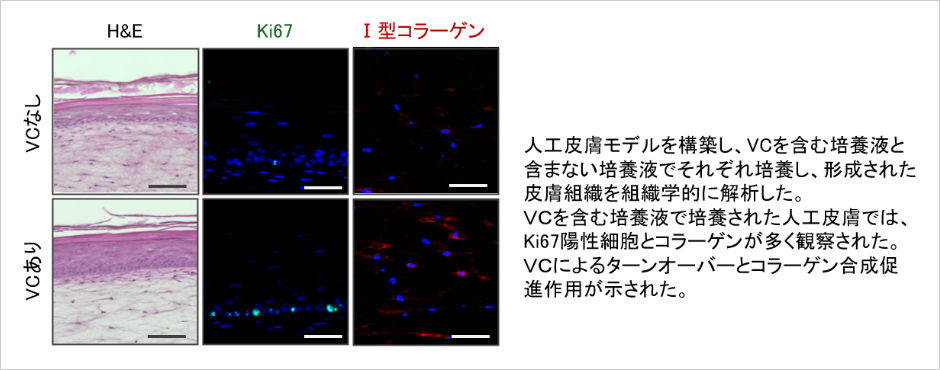
Figure 1: Confirmation of the importance of VC in skin using an artificial skin model.
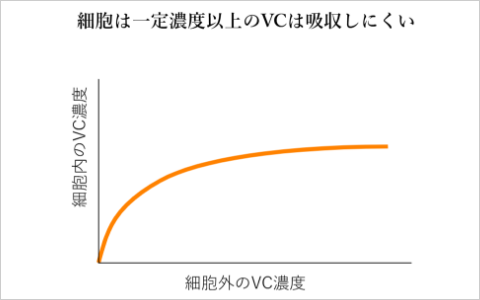
Figure 2: Schematic diagram showing the relationship between VC concentration added to cells and intracellular VC concentration.
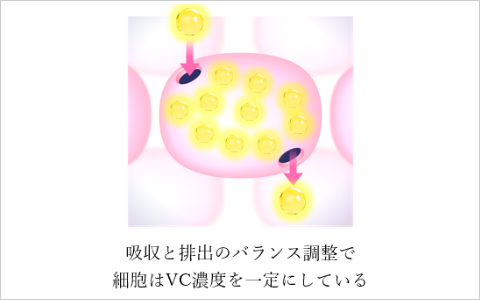
Figure 3: How cells regulate vitamin C concentration (illustration)
However, vitamin C delivered into the skin is not always utilized by cells. The amount of vitamin C that cells actually take in and store from outside the cell does not perfectly correlate with the extracellular vitamin C concentration, and it was known that the increase in intracellular vitamin C plateaus once the extracellular vitamin C concentration reaches a certain level (Figure 2). This is thought to be due to the cell's ability to control the balance between vitamin C absorption and excretion and oxidation-reduction reactions, maintaining a constant intracellular vitamin C concentration, and that excess vitamin C is excreted without being taken into the cell (Figure 3).
This finding suggests that in a market where the concentration of vitamin C in products is increasing, a different perspective is needed than simply increasing the concentration in order to enhance the "effective concentration" of vitamin C exerted within cells, as desired by customers. Therefore, instead of focusing solely on the concentration of vitamin C itself, we explored a new approach: creating a state in which cells can more easily absorb vitamin C.
result
Result 1: Confirmed that iris root extract increases the amount of vitamin C in cells.
In a study using pigment cells, we screened approximately 300 candidate materials to see if there were any that could increase intracellular VC concentration. We confirmed that iris root extract increased intracellular VC concentration by 153% (Figure 4). This suggests that improving cellular uptake efficiency can raise the effective vitamin C concentration.
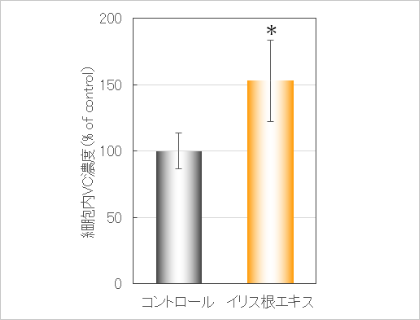
Figure 4: Effect of iris root extract on increasing intracellular vitamin C concentration in pigment cells.
<Testing Method>
Human normal epidermal pigment cells were cultured for 24 hours in a vitamin C-free medium containing iris root extract, then treated with a vitamin C-containing medium for 4 hours before being harvested. Intracellular vitamin C levels were measured and compared. The control group was set to 100%.
(n=4; mean ± SD. **P < 0.01, Student's t-test, conducted at Rohto Pharmaceutical Research Institute)
Result 2: Inhibition of melanin production due to synergistic effect with vitamin C.
When we examined intracellular melanin synthesis levels using human pigment cells, we found that combining iris root extract with pure vitamin C resulted in a further reduction in melanin production compared to administration of pure vitamin C alone (Figure 5). This suggests that increasing intracellular vitamin C concentration may act as a mechanism to enhance the melanin-inhibiting effect.

Figure 5: Melanin synthesis inhibitory effect of vitamin C and iris root extract
<Testing Method>
Human normal epidermal pigment cells were cultured in a culture medium containing vitamin C and iris root extract. After 5 days, the cells were harvested, and the amount of melanin in the cells was measured and compared. Melanin synthesis with vitamin C alone was set to 100%.
(n=4; mean ± SD. **P < 0.01, Student's t-test, conducted at Rohto Pharmaceutical Research Institute)
Future outlook
The world's first * approach to "increasing intracellular vitamin C concentration" obtained in this study has the potential to be widely utilized as a foundational technology for future vitamin C formulation development. Moving forward, we will continue to sincerely address our customers' skin concerns, focusing on "pure vitamin C *", and actively incorporating perspectives different from conventional market products. We will also pursue more effective formulation designs and advance skincare research that delivers high perceived value.
*Pure Vitamin C: Vitamin C that works immediately within the skin (stratum corneum). It is also called "active vitamin C" or "fast-acting vitamin C."