Development of a medical consultation recommendation evaluation index based on a survey of menstrual symptoms, with menstrual pain as the main complaint.
Facing your own condition - Development of a new evaluation index that indicates "guidelines for medical consultation" for menstrual symptoms -
March 4, 2026
ROHTO Pharmaceutical Co., Ltd. (Headquarters: Osaka City, President: Hidetoshi Seki) has developed a new evaluation index for recommending medical consultations to support women in deciding whether to visit a medical institution, focusing on menstrual symptoms, which are the foundation of women's health and social participation.
Up until now, our company has continued to work closely with women at all stages of their lives through the promotion of pregnancy tests, awareness-raising activities related to fertility, and the proposal of Feminine Care products.However, when it comes to menstrual symptoms such as menstrual pain, it is difficult to access appropriate medical care due to social beliefs such as "menstrual pain is natural" and "I don't know if it's okay to see a doctor for something this severe" as well as psychological hurdles.
The aim of this achievement is to enable women to visualize their own health status and create an opportunity for them to access appropriate medical care. We will continue to conduct scientifically based research and disseminate information to realize a future society in which everyone can correctly understand their own body, work healthily, and thrive.
The results of this research were published in "Advanced Medicine and Health Beauty 2025 Vol. 12 No. 4 (November 14, 2025)."
Key points of the research
With the aim of objectively determining whether to seek medical advice for menstrual symptoms, we developed an evaluation index for encouraging medical advice that integrates symptoms and their impact on daily life.
- Statistical methods are used to create an evaluation index for recommending medical treatment based on the severity of menstrual pain, frequency of taking painkillers, and interference with daily life.
- ROC analysis showed that this index had higher discriminant performance (AUC=0.970) than the conventional dysmenorrhea score (AUC=0.916).
- Although this index does not diagnose the presence or absence of a disease, it has shown the potential to help women objectively understand their own symptoms and provide information for considering appropriate medical access.
Research Background
Dysmenorrhea refers to pathological symptoms associated with menstruation, primarily lower abdominal and lower back pain. It is classified into "organic dysmenorrhea," which is associated with diseases such as endometriosis and adenomyosis, and "functional dysmenorrhea," which is associated with no organic disease. 1) In the case of organic dysmenorrhea, early diagnosis and appropriate therapeutic intervention are important because pain can become chronic and affect reproductive function as the underlying disease progresses. Furthermore, functional dysmenorrhea is accompanied by severe pain, primarily due to uterine contractions caused by excessive production of prostaglandins, which can interfere with academic or work life.
Approximately 70% of menstruating women are said to experience some form of pain during menstruation.2) However, there are few opportunities for women to compare the level of their pain with others, and the social belief that "menstrual pain is normal" is deeply rooted. Whether or not to visit a medical institution is still left to the individual's subjective judgment, and the rate of visits is not necessarily high. It has been pointed out that leaving severe menstrual pain untreated not only leads to a decrease in a woman's quality of life, but in some cases may even lead to the progression of the disease.
Currently, the "dysmenorrhea score," which evaluates the severity based on the degree of interference with daily life and the frequency of analgesic use, is used in clinical settings as a simple indicator of dysmenorrhea. The dysmenorrhea score has the advantage of being easily assessed by answering two questions, but we thought that by adding items regarding the impact of symptoms on daily life and the difficulties they cause, it might be possible to develop a medical consultation recommendation evaluation index with higher discriminatory performance. Therefore, in this study, we aimed to develop a medical consultation recommendation evaluation index with higher discriminatory performance by adding new evaluation items while referring to previously used indicators.
method
This observational study involved women with menstrual pain. The subjects completed a detailed questionnaire survey (total of 37 questions) regarding menstrual symptoms, their impact on daily life, and their use of analgesics. They also underwent transvaginal ultrasound examinations to assess for the presence or absence of organic findings, including endometriosis and adenomyosis.
We compared the results of a questionnaire between two groups: one group that visited a medical institution due to dysmenorrhea, and one group that had menstrual pain but did not visit a medical institution, and extracted questionnaire items that showed significant differences between the two groups. The extracted items were scored to create an index for evaluating the recommendation to visit a medical institution. We then performed receiver operating characteristic (ROC) analysis on the developed index for evaluating the recommendation to visit a medical institution and the conventional "dysmenorrhea score," and compared the AUC of the two indices to compare their discriminatory performance. Furthermore, we examined the limitations of this index for predicting organic disease by comparing it with the results of transvaginal ultrasound tomography.
What is ROC analysis (Receiver Operating Characteristic analysis)?
ROC analysis is a statistical method for evaluating how well a certain index or test distinguishes between diseased and healthy individuals. When using scores to distinguish between diseased and healthy individuals, the results vary depending on the cutoff value. Stricter standards reduce the chance of overlooking diseased individuals, but increase the frequency of misidentifying healthy individuals as diseased. Conversely, looser standards reduce the chance of misidentifying healthy individuals as diseased, but increase the likelihood of overlooking diseased individuals. ROC analysis comprehensively evaluates the balance between avoiding overlooking as many cases as possible and avoiding increasing false positives by varying the standard. The result is represented by an ROC curve. The area under the ROC curve, known as the AUC (Area Under the Curve), represents the discriminant's performance as a single number. The closer the AUC is to 1.0, the higher the accuracy, while an AUC of 0.5 indicates the discriminant's performance is comparable to chance.
result
In a questionnaire survey on menstrual symptoms (total number of items: 37), a group of women with dysmenorrhea who visited a medical institution was compared with a group with menstrual pain but who did not visit a medical institution. As a result, significant differences were found between the two groups in 11 questionnaire items related to interference with daily life, use of analgesics, menstrual symptoms, etc. These questionnaire items where significant differences were found were scored to create an evaluation index for encouraging women to seek medical treatment (Figure 1).
As a result of evaluation using ROC analysis, the consultation recommendation evaluation index developed in this study showed a higher AUC value than the conventional dysmenorrhea score (AUC=0.970 for the consultation recommendation evaluation index developed in this study, AUC=0.916 for the dysmenorrhea score, Figure 2). This suggests that this index may be able to more appropriately identify subjects who are highly in need of medical treatment.
On the other hand, the evaluation index for recommending medical examinations does not allow all people who have organic findings in transvaginal ultrasound examinations to be judged as candidates for recommendation to undergo medical examination, and it has become clear that there are limitations to accurately predicting the presence or absence of organic disease using this index alone. Although it does not guarantee that a person does not have a disease, we hope that it will encourage people to undergo medical examinations.
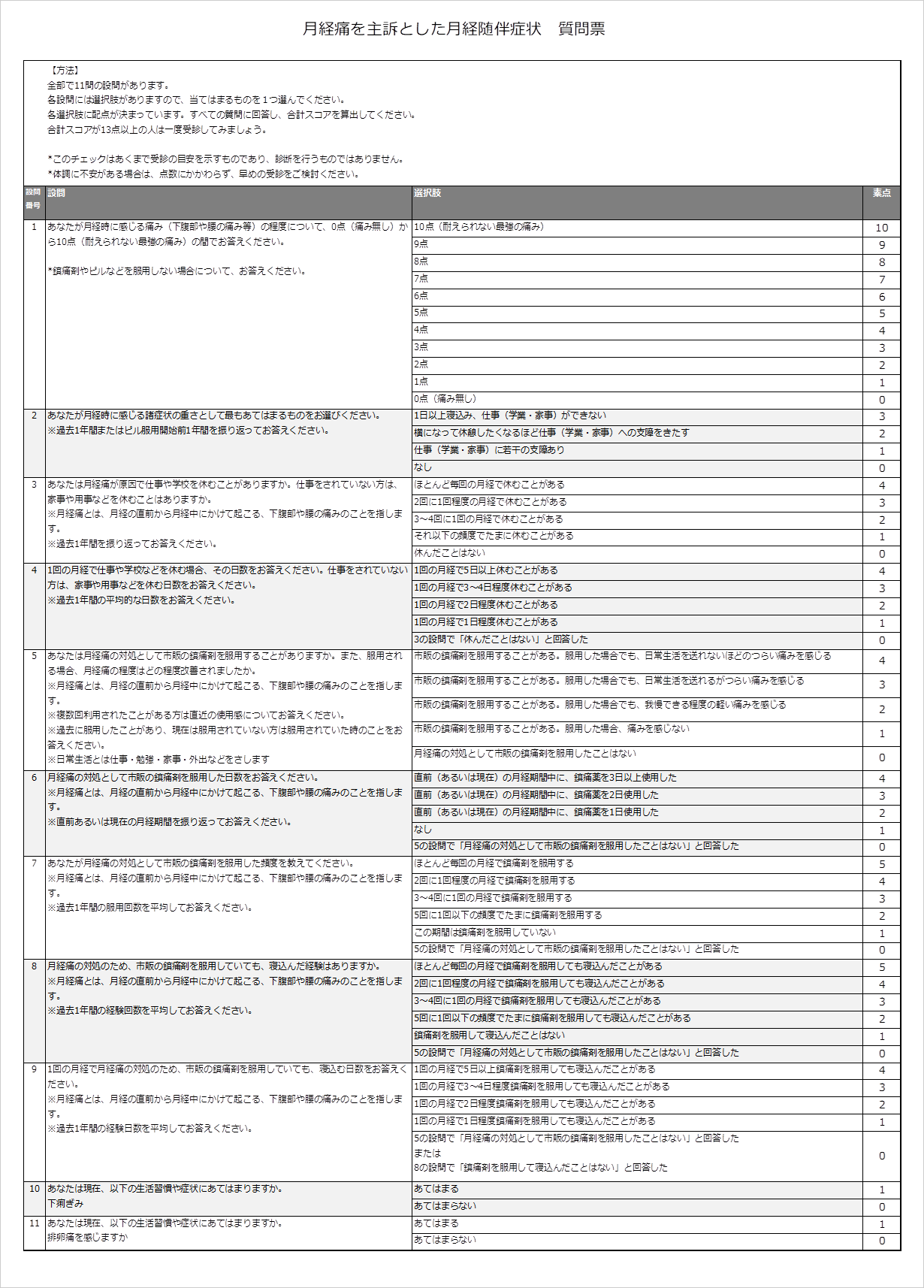
Figure 1: Developed evaluation index for encouraging patients to undergo medical examination
Impact of this research result on society (significance of this research result)
The results of this research have demonstrated a new evaluation index that allows women to objectively determine whether or not they should seek medical attention for menstrual symptoms, including menstrual pain. This index is expected to contribute to reducing declines in quality of life and the risk of disease progression by visualizing the state of enduring menstrual pain and encouraging appropriate medical attention. Rohto Pharmaceutical has been working to address women's concerns, and through this research, hopes to contribute to the realization of a society in which women can understand their own bodies and take the initiative in caring for them.
Terminology
Discrimination performance:
This refers to the ability of an index or test to accurately distinguish between two target conditions (e.g., whether a disease is present or not, whether a medical examination is necessary or not, etc.). The higher the discriminatory performance, the less likely it is that people who actually qualify will be overlooked and the less likely it is that people who do not qualify will be mistakenly identified.
Endometriosis:
A disease in which tissue similar to the endometrium, which normally lines the inside of the uterus, grows outside the uterus.
Adenomyosis:
This is a disease in which tissue similar to the endometrium, which is normally found inside the uterus, invades and grows inside the uterine muscle (myometrium).
Organic diseases:
A disease in which structural abnormalities in the body can be identified through tests. In the case of menstrual pain, this includes endometriosis and uterine fibroids.
Reproductive function:
The bodily functions involved in pregnancy and childbirth. In women, these include egg maturation, ovulation, fertilization, and maintenance of pregnancy in the uterus, and pregnancy and childbirth are possible only when these functions function normally.
Prostaglandins:
A type of physiologically active substance produced in the body that is involved in pain, inflammation, fever, etc. During menstruation, it is produced in the endometrium and is responsible for contracting the uterus and expelling menstrual blood. If this effect becomes too strong, it can cause excessive contractions of the uterus, which can lead to menstrual pain.
Transvaginal ultrasound:
An ultrasound examination is performed to closely examine the condition of the uterus and ovaries using an ultrasound device inserted through the vagina. It is used to check for gynecological diseases.
References
1) Momoe Mikio. Illustrated series for informed consent: Understanding dysmenorrhea, menstrual pain and related disorders
2) Japan Women's Labor Association. "Menstrual Pain: Survey Results on Working Women's Health." Report of the Committee for Considering the Body and Mind of Working Women. Edited by the Committee for Considering the Body and Mind of Working Women. 2004.