Rohto's unique milk peptide ingredient has been discovered to act not only on bones and blood, but also on growing muscles!
– Joint research by Mie University and Rohto Pharmaceutical Co., Ltd. –
June 3, 2026
ROHTO Pharmaceutical Co., Ltd. (Headquarters: Osaka City, President: Hidetoshi Segi) is advancing research on its proprietary material Oligomil® (milk-derived hydrolyzed peptide (hereinafter, milk peptide)) in order to realize ROHTO Group Comprehensive Management Vision 2030, "Connect for Well-being & Longevity." Recently, in a joint research project with Mie University (Location: Tsu City, Mie Prefecture, President: Masaaki Ito) (Research Representative: Professor Norihiro Nishimura, Graduate School of Regional Innovation Studies; Researchers: Lecturer Yasuhito Shimada, Graduate School of Medicine, Zebrafish Research Center, et al.), they have revealed the possibility that milk peptide may act on muscles in addition to bones and blood. These research results were presented as a poster at the 99th Annual Meeting of the Japanese Pharmacological Society.
We will continue to build upon our research findings to support the growth of children who will shape the future.
Key points of the research
- Focusing on bones, blood, and muscles, which form the foundation of physical development during growth, we have now confirmed the effects of oligomil (milk peptide), which has previously been shown to promote bone formation and increase red blood cells, on muscles (athletic ability).
- Oligomil (milk peptide) enhances the expression of genes related to fast-twitch muscles involved in explosive movements and rapid exercise, suggesting an effect on muscles involved in quick movement.
- The results of this research, as material research supporting healthy body development during the growth period, are expected to be utilized in future product development.
Research Background
Oligomil is a raw material developed in 2009, and it has been shown to have immune-boosting and anti-allergic properties. Oligomil contains numerous peptides (chains of 2 to 50 amino acids), and since peptides have the effect of regulating the body, we believe it has great potential for maintaining health. In previous collaborative research, we have focused on the growth period, which is key to building a healthy body, and have shown that it promotes bone growth and increases red blood cells. This time, we focused on the effects on muscles during the growth period, and furthermore, on athletic ability.
result
Zebrafish juveniles, a model of growth, were given Oligomil, and their swimming ability was observed after 8 days. Compared to a control group that did not receive Oligomil, the Oligomil-treated group showed an increase in the speed of explosive movements (maximum swimming speed) (Figure 1). Furthermore, gene expression analysis in skeletal muscle revealed increased expression of gene groups involved in promoting skeletal muscle formation and gene groups involved in fast-twitch muscle fibers responsible for explosive power (Figure 2).
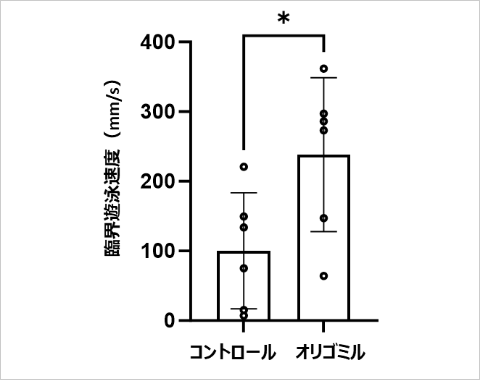
Figure 1: Effect on maximum swimming speed (critical swimming speed)
<Testing Method>
Three-month-old zebrafish were fed a diet containing oligomil twice daily. Critical swimming velocity (Ucrit) was measured after eight days. Student's t-test was used for comparison between the two groups. Compared to the control group fed a diet without oligomil, the oligomil-containing diet group showed a significantly increased critical swimming velocity (p<0.05), suggesting enhanced explosive motility. Data are presented as mean ± standard deviation. (Conducted by Mie University)
*Critical swimming speed refers to the maximum speed at which a fish can no longer swim against the current when exposed to increasingly faster water currents. It is a standard indicator for assessing endurance swimming ability and overall motor skills.
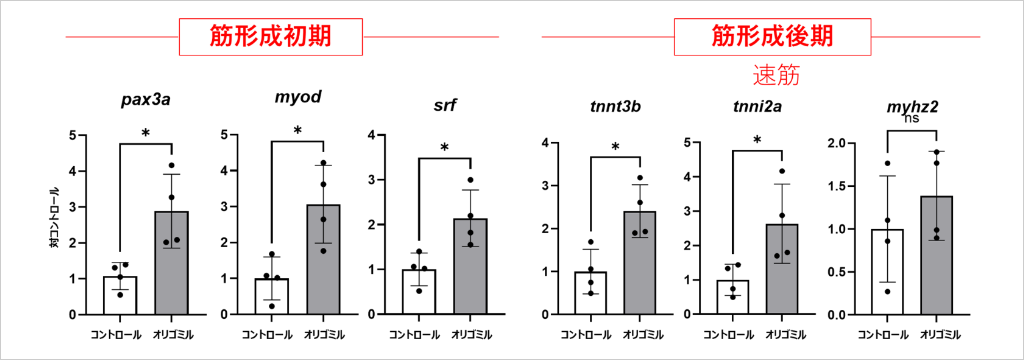
Figure 2: Evaluation results of gene expression analysis in skeletal muscle
<Testing Method>
Three-month-old zebrafish were fed a diet containing oligomil twice daily. Skeletal muscle was collected after 14 days, and gene expression analysis was performed. Student's t-test was used to compare the two groups. Compared to the control group fed a diet without oligomil, the oligomil-containing diet significantly increased the expression of myosin, a protein involved in muscle contraction, and significantly enhanced the expression of genes related to myoblast differentiation, such as pax3a (transcription factor for muscle differentiation), myod (master gene for inducing muscle cell differentiation, muscle differentiation regulator), and srf (serum response factor) (p<0.05). Furthermore, significantly increased expression levels of tnnt3b and tnni2a, which are related to fast-twitch muscle fibers, were also observed. Data are presented as mean ± standard error. (Conducted by Mie University)
Impact of this research result on society (significance of this research result)
This study demonstrated that milk peptides act on muscles from multiple angles, including motor performance, muscle structure, and molecular mechanisms involved in muscle formation. In addition to the effects on bone and blood that have been previously clarified, this suggests that they may be materials that are broadly involved in functions important for body building.
References
Background of this research
This research is one of the results of a joint research project concluded between Mie University and Rohto Pharmaceutical Co., Ltd. in 2018.
Special Notes
The results of this research were presented as a poster at the 99th Annual Meeting of the Japanese Pharmacological Society.
Conference Name: The 99th Annual Meeting of the Japanese Pharmacological Society (March 16-18, 2026)
Title: "The Body-Building Promoting Effects of Milk-Derived Hydrolyzed Peptides (HMPs) - A New Development in Skeletal Muscle Following Effects on Bone and Blood"
Misaki Nakai 1, 2, Jotaro Inaba 3, Liqing Zang 1, 2, Kazuyoshi Fukada 2, 4, Kunihiro Nishimura 1, 2, Yasuto Shimada 2, 3
1) Graduate School of Regional Innovation Studies, Mie University; 2) Zebrafish Research Center, Mie University; 3) Department of Integrated Pharmacology, Graduate School of Medicine, Mie University; 4) ROHTO Pharmaceutical Co., Ltd.