My hair, which I styled in the morning, becomes frizzy again during the day.
Focusing on CMC damage inside the hair caused by sunlight.
Potassium hyaluronate has been confirmed to have an effect in suppressing "rebound" of the hair.
June 8, 2026
ROHTO Pharmaceutical Co., Ltd. (Headquarters: Osaka City, President: Hidetoshi Segi) is advancing hair care research that focuses on the internal structure of hair, in order to address the hair concerns that customers experience on a daily basis. In this study, Rohto focused on "frizzy hair return *" and analyzed the internal structure of hair using the 3GeV high-brightness synchrotron radiation facility NanoTerasu (hereinafter referred to as NanoTerasu). As a result, it was confirmed that sunlight irradiation causes damage to the lipid structure including CMC(cell membrane complex) inside the hair (hereinafter referred to as CMC damage), and that "frizzy hair return*" is more likely to occur under high humidity. Furthermore, while proceeding with material exploration based on the knowledge of hyaluronic acid research cultivated in the skincare field, it was found that potassium hyaluronate prevents CMC damage caused by sunlight and contributes to suppressing "frizzy hair return" under high humidity. This research result leads to a new concept of "texture control" that approaches hair manageability and texture from inside the hair, in response to hair concerns that occur under everyday environmental conditions such as sunlight and humidity. In the future, Rohto will utilize these results in the research and development of hair care products.
*This refers to hair that has been styled in the morning becoming frizzy again as time passes.
-
▲Image showing a state where the "rebound" is suppressed.
-
▲Image of the internal structure of hair analyzed at the 3GeV high-brightness synchrotron radiation facility "NanoTerasu"
Left: WAXS image confirming lipid structure such as CMC
Right: SAXS image confirming IF (intermediate filament) fibers.
Key points of the research
- A new perspective on the study of "hair curl reversal": Confirmation of changes in the internal structure of hair due to sunlight.
- We confirmed that sunlight exposure damages the lipid structure, including the CMC (cell membrane complex), making it more susceptible to "rebounding" in high-humidity environments.
- We confirmed that potassium hyaluronate prevents CMC damage caused by sunlight and suppresses "frizzy rebound" under high humidity conditions.
Research Background
Many customers experience hair frizz and waves again as the day progresses, a common hair concern. This issue extends beyond just a change in appearance, leading to difficulty in managing hair and maintaining styling. While research on frizzy hair and the development of hair care techniques to control it have progressed, the factors causing frizz to recur during the day have not been adequately addressed from the perspective of the internal structure of the hair. Therefore, this study focused on the effects of sunlight and humidity, investigating the impact of sunlight on the internal structure of the hair, the relationship between these changes and "frizz recurrence" under high humidity, and searching for materials that can effectively address these issues. In the process, we evaluated the potential for application to hair, drawing on our knowledge of hyaluronic acid research cultivated in the skincare field and feedback from customers.
result
We confirmed that changes were observed in the CMC (Cell Membrane Complex) rather than the IF (Internal Focus) upon exposure to sunlight.
At Nanoterrace, synchrotron X-ray scattering measurements were performed to compare and analyze the internal structure of hair before and after sun irradiation. In SAXS (small-angle X-ray scattering), no significant changes were observed in large protein structures such as IF fibers (intermediate filaments). On the other hand, in WAXS (wide-angle X-ray scattering), the peak originating from the lipid structure of CMC disappeared after sun irradiation, confirming that the lipid structure including CMC is damaged by sun irradiation (Figure 1).
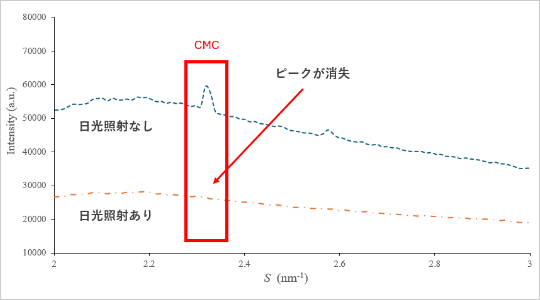
Figure 1: Analysis results of the internal structure of hair
Test method:
Untreated hair was irradiated with 765 W/m2 for 20 hours using a weather resistance tester. X-ray scattering measurements were performed on the samples at NanoTerasu beamline BL08W. (Performed by NanoTerasu)
We have confirmed that hair damaged by sunlight is prone to "returning to frizz" under high humidity conditions.
CMC is an important lipid structure that controls moisture movement within the hair. When hair strands were compared with and without sun exposure and left to stand under high humidity conditions, the sun-exposed hair strands showed stronger frizz and spreading compared to the unexposed hair strands (Figure 2). This is thought to be because sun exposure damages the lipid structure, including CMC, disrupting the moisture balance within the hair, making the hair more prone to swelling in high humidity environments.
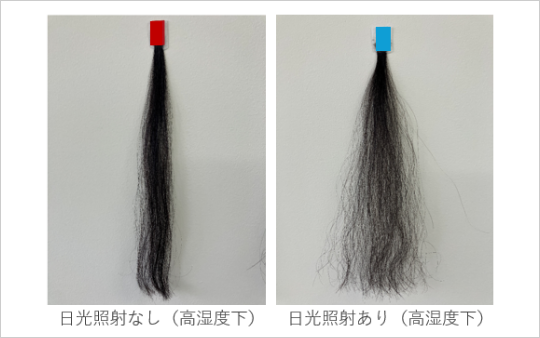
Figure 2: Comparison of the appearance of hair bundles under high humidity conditions with and without sunlight exposure.
Test method:
Healthy hair and hair that had been irradiated with 765 W/m2 for 20 hours in a weather resistance testing machine were both subjected to humidification at 70% humidity for 2 hours, and the shape of the hair bundles was visually inspected. (Conducted by Rohto Pharmaceutical Research Institute)
Potassium hyaluronate protects against CMC damage caused by sunlight and suppresses "frizzy hair" in high humidity conditions.
In order to find an effective material to suppress the "rebound" of skin during the day, we compared and evaluated a wide variety of hyaluronic acid products and found potassium hyaluronate to be an effective material.
It has been found that hair whose lipid structure, including CMC, is damaged by sunlight exposure is more prone to frizz and flyaways in high-humidity environments. In this study, we confirmed that using potassium hyaluronate suppresses CMC damage caused by sunlight and inhibits "frizz recurrence" even under high-humidity conditions (Figures 3 and 4). Furthermore, we evaluated the penetration of potassium hyaluronate into damaged hair and its effect on hair hardness (Figures 5 and 6). As a result, it was shown that hair treated with potassium hyaluronate showed suppressed hardening due to sunlight exposure.
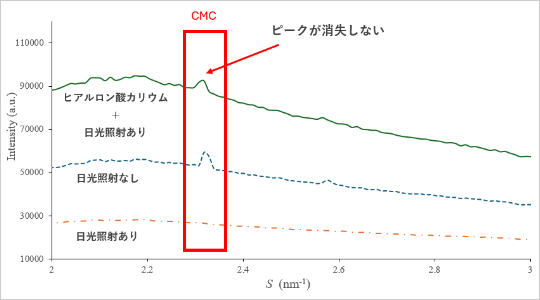
Figure 3: CMC damage protection effect of potassium hyaluronate
Test method:
Untreated hair and hair treated with potassium hyaluronate were irradiated with a weather resistance tester at 765 W/m2 for 20 hours. X-ray scattering measurements were performed on the samples using the NanoTerasu beamline BL08W. (Performed by NanoTerasu)
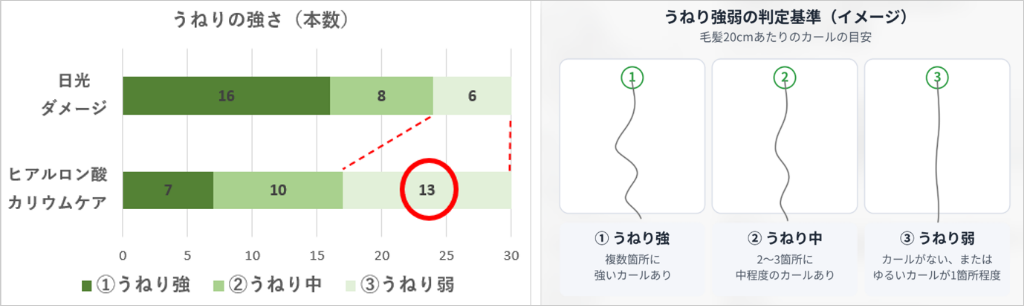
Figure 4: Evaluation of suppression of "rebound" under high humidity conditions by potassium hyaluronic acid care.
Test method:
Hair samples were subjected to 765 W/m2 of irradiation for 20 hours using a weather resistance testing machine, and hair samples were treated with potassium hyaluronate after sun exposure. Both samples were then humidified at 70% humidity for 2 hours, and the shape of the hair bundles was visually inspected. (Conducted by Rohto Pharmaceutical Research Institute)
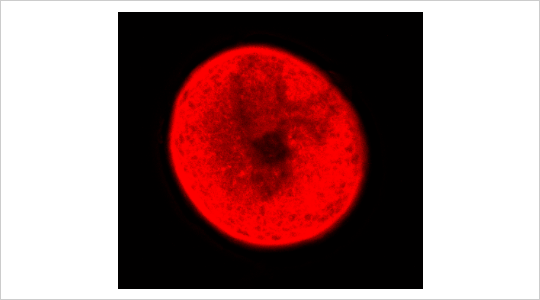
Figure 5: Penetration of potassium hyaluronate into the hair shaft
Test method:
Bleached hair, irradiated at 765 W/m2 for 20 hours using a weather resistance tester, was coated with fluorescently labeled potassium hyaluronate, and the cross-section of the hair was observed using a confocal laser microscope. (Conducted by Rohto Pharmaceutical Research Institute)
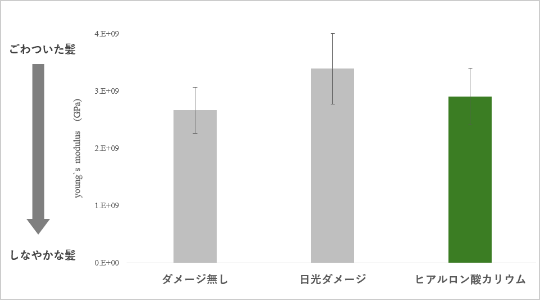
Figure 6: Evaluation of hair hardness
Test method:
Untreated hair and hair treated with potassium hyaluronate were irradiated with a weather resistance tester at 765 W/m2 for 20 hours. Tensile tests were performed on the treated samples to calculate the Young's modulus of the hair. (n=10, mean + standard deviation) (Conducted by Rohto Pharmaceutical Research Institute)
Consideration
In this study, no significant changes were observed in IF fibers due to sunlight exposure, but changes were seen in the lipid structure, including CMC. From these results, it is possible that CMC damage caused by sunlight and the subsequent high humidity environment are involved in the "frizz relapse" of hair during the day. Furthermore, it was confirmed that potassium hyaluronate prevents CMC damage caused by sunlight and suppresses the "frizz relapse" under high humidity conditions. This result leads to a new concept of "texture control" that addresses the "frizz relapse" of hair, where the styled hair loses its manageability during the day, by focusing not only on the surface but also on the internal structure of the hair to improve manageability and texture.
Future outlook
This research demonstrates a new possibility for addressing hair changes that occur in everyday environments such as sunlight and humidity by approaching them from the perspective of the hair's internal structure. Moving forward, we will further deepen our research into "texture control" technology from within the hair using potassium hyaluronate, aiming to apply it to formulation design and product development. By combining the knowledge we have cultivated in the skincare field with our hair research, we will continue to work on the research and development of hair care technologies that are tailored to the needs of our customers.
Terminology
- CMC (cell membrane complex)
These are lipid structures present between hair cells. They play an important role in moisture movement and structural maintenance within the hair.
- IF (Intermediate Diameter Filament) Fibers
This is the protein structure that makes up the majority of the inside of hair. It's a structure that affects the shape and strength of the hair.
-
NanoTerasu
This is a 3 GeV high-brightness synchrotron radiation facility. Using high-brightness synchrotron radiation, we can analyze the internal structure of materials with high precision, and in this study, we used it to analyze the internal structure of hair.
- Potassium hyaluronate (HA-K)
This is a type of hyaluronic acid. In this study, we evaluated its relationship to protecting against CMC damage caused by sunlight and suppressing "waviness rebound" under high humidity conditions.