StemCM, a peptide-derived secretome born from Regenerative medicine research, multifaceted suppression of skin damage caused by heat stress
– a next-generation skincare approach focusing on "heat aging," a new aging factor in the era of extreme heat.
June 22, 2026
ROHTO Pharmaceutical Co., Ltd. (Headquarters: Osaka City, President: Hidetoshi Segi) is promoting longevity research under the slogan "Connect for Well-being & Longevity," and is advancing research that contributes to healthy skin and longevity.
In recent years, the environment surrounding us has changed dramatically, with an increase in extremely hot days and tropical nights. In addition to ultraviolet rays, dryness, and air pollution, our skin is now exposed to a new environmental stressor: heat, which has become an important research topic in the field of skincare. Recent studies have reported that prolonged exposure to high temperatures may accelerate inflammation in the skin, and this phenomenon is attracting attention as "thermal aging."
Therefore, we focused on "StemCM," a peptide-derived secretome that we independently developed based on our knowledge of Regenerative medicine research, and have been conducting research on the effects of heat stress on the skin. As a result, we confirmed that StemCM suppresses the expression of inflammation-related genes caused by heat stress. Furthermore, in tests using human skin, it was shown to have the potential to comprehensively improve DNA damage response, decreased cell proliferation, and aging-related changes.
The results of this research are expected to provide a skincare approach to "thermal aging," a new skin challenge in the era of climate change.
Key points of the research
- We have confirmed that the peptidized secretome "StemCM" suppresses the expression of inflammation-related genes induced by heat stress.
- Using fresh human skin, we confirmed the potential of stem cell culture (CM) to multifacetedly influence heat stress-induced DNA damage responses, decreased cell proliferation, and aging-related changes.
- This research is expected to be a next-generation skincare study that focuses on "thermal aging," a new factor in skin aging in the era of climate change.
Research Background
In recent years, global temperatures have been rising, and in Japan, the increase in extremely hot days and tropical nights has become a social issue. Due to these environmental changes, our skin is increasingly exposed to external stressors such as heat, in addition to ultraviolet rays, dryness, and air pollution.
Recent research has shown that exposure to high-temperature environments can cause damage at the cellular level and accelerate biological aging, drawing attention to the concept of "thermal aging."
On the other hand, in the field of Regenerative medicine, the components and mechanisms of action of culture supernatants (secretomes) are often not fully understood. In 2017, leveraging the knowledge cultivated in Regenerative medicine research, our company developed "StemCM," a peptide-formulated secretome made by reducing the molecular weight of culture supernatants of human adipose-derived mesenchymal stromal cells using our proprietary technology. StemCM is a skincare ingredient that undergoes comprehensive quality control, safety evaluation, component analysis, and efficacy verification, rather than simply using the culture supernatant as is. Through comprehensive component analysis, numerous peptides have been identified, and it is believed that these diverse components work together to produce multifaceted effects on the skin. Further research is being conducted on this ingredient, and research is underway to clarify how StemCM acts on the skin through comprehensive gene expression analysis and tests using human skin. This time, we focused on the anti-inflammatory function of StemCM and investigated its effect on skin damage caused by heat stress.
result
Result 1: Comprehensive gene analysis confirmed the multifaceted anti-inflammatory effects of stem CM.
Human epidermal cells were treated with stem CM, and comprehensive gene expression analysis (RNA-seq) was performed. The results showed increased expression of genes involved in defense responses and maintaining cellular homeostasis. Conversely, decreased expression of genes involved in inflammation and innate immune responses was observed. These results suggest that stem CM may not suppress a single inflammatory factor, but rather possess multifaceted inflammatory control effects.
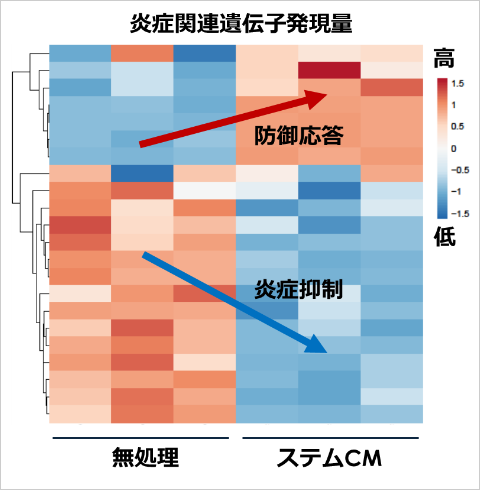
Figure 1: Anti-inflammatory effects of stem CM based on comprehensive gene analysis
<Testing Method>
Human epidermal cells were treated with stem cell-mediated mononucleation (CM), and total RNA was collected after 7 hours. Comprehensive gene expression analysis was performed using RNA-seq to analyze differentially expressed genes and their associated biological functions (n=3). (Performed at Rohto Pharmaceutical Research Institute)
Result 2: Confirmed that Stem CM suppresses the gene expression of inflammation-related factors caused by heat stress.
We subjected human epidermal cells to heat stress and evaluated the gene expression of IL-6, an inflammation-related factor. We observed an increase in IL-6 expression due to heat stress, but confirmed that this expression was suppressed by the addition of stem CM. IL-6 is one of the cytokines representative of inflammatory responses, and these results suggest that stem CM may act on the inflammatory response induced by heat stress.
Furthermore, these results support the possibility that the multifaceted anti-inflammatory effects confirmed in Result 1 can also be exerted under heat stress conditions. Heat stress increased the gene expression level of the inflammation-related factor IL-6 in human epidermal cells, and this increase tended to be suppressed by stem CM treatment.
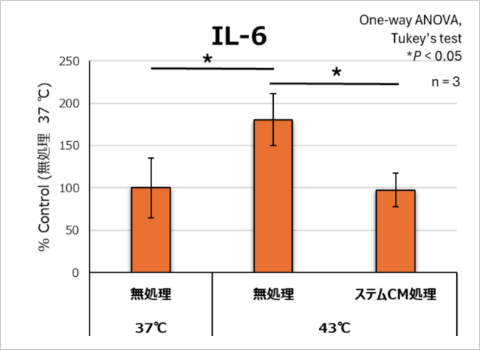
Figure 2: Image of changes in IL-6 gene expression due to heat stress and the action of stem cell-mediated chromosomes (CMs).
<Testing Method>
Using human epidermal cells, IL-6 gene expression was evaluated by real-time PCR under three conditions: normal conditions at 37°C, heat stress conditions at 43°C for 2 hours, and conditions in which stem cell-mediated chromosomes (CM) were treated during heat stress. The untreated 37°C setting was defined as 100%.
(n=3; mean±SD, One-way ANOVA, Tukey's test. *p<0.05) (Conducted at Rohto Pharmaceutical Research Institute)
Result 3: Tests using human skin confirmed the potential to suppress aging-related changes caused by heat stress in a multifaceted way.
In a study using fresh human skin obtained through clinical practice after approval by the ethics committee, we compared conditions under normal conditions of 37°C, heat stress conditions of 43°C for 2 hours, and conditions in which Stem CM was treated during heat stress.
In human skin subjected to heat stress, an increase in γ-H2AX, an indicator of DNA damage response, and a decrease in Ki-67, an indicator of cell proliferation, and Lamin B1, an indicator of nuclear membrane structure, were observed. These changes are considered indicators of aging-related changes caused by heat stress. On the other hand, in the stem cell-treated group, the increase in γ-H2AX was suppressed, and there was a tendency for improvement in the decrease of Ki-67 and Lamin B1.
The above findings suggest that stem CM may comprehensively suppress multiple aging-related changes, such as DNA damage response, decreased cell proliferation, and nuclear structure changes, under thermal stress. Simultaneous treatment with stem CM was confirmed to improve the increase in γ-H2AX and decrease in Ki-67 and Lamin B1 induced by thermal stress (43°C for 2 hours).
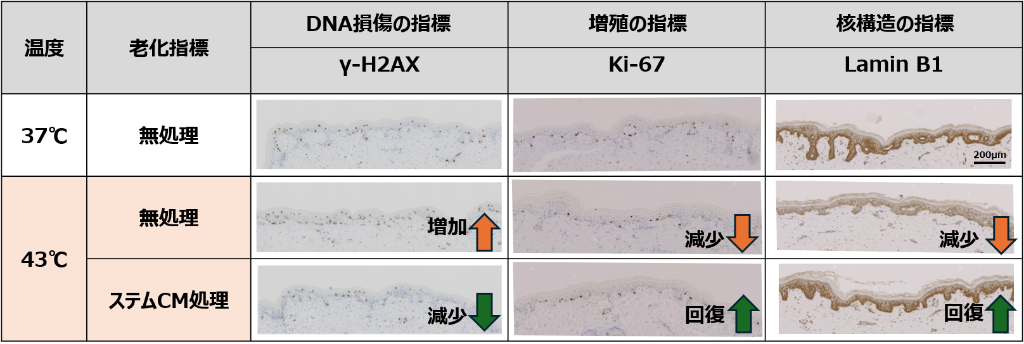
Figure 3: Changes in aging-related markers after heat stress in human skin
<Testing Method>
We compared the conditions under normal conditions of 37°C, heat stress conditions of 43°C for 2 hours, and conditions in which stem CM was treated during heat stress using fresh human skin. After treatment, the expression levels of γ-H2AX, Ki-67, and Lamin B1 proteins were evaluated by immunohistochemistry.
(Conducted at Rohto Pharmaceutical Research Institute)
Future outlook
This research suggests that stem cell masses (CMs) may have a multifaceted effect on skin damage caused by heat stress, including suppressing the expression of inflammation-related genes, inhibiting DNA damage responses, improving decreased cell proliferation, and suppressing aging-related changes.
In this era of climate change, where scorching heat and tropical nights are commonplace, the environment surrounding our skin is changing dramatically. Future skincare will need to address not only UV protection but also the environmental stress of "heat." Rohto Pharmaceutical will continue to deepen its research on StemCM, not merely as a Regenerative medicine derived material, but as a skincare ingredient whose quality, safety, and effectiveness can be scientifically explained. Moving forward, under the slogan "Connect for Well-being & Longevity," we will promote longevity research, advance studies that support the stress tolerance and health of skin cells, and aim to create next-generation skincare value adapted to environmental changes.
Terminology
- Culture supernatant (secretome)
This refers to the supernatant liquid obtained by removing cellular components from the culture medium after culturing cells. It contains a variety of physiologically active substances, such as growth factors and extracellular vesicles (exosomes) secreted by cells. These secreted components as a whole are called the "secretome," and their involvement in tissue repair and inflammation control has been reported. The culture supernatant used in this study was obtained by culturing human adipose-derived mesenchymal stromal cells. In recent years, research has been progressing not only in the field Regenerative medicine but also in the field of skincare as a material that supports healthy skin.
- Stem CM
Rohto Pharmaceutical has developed a unique peptide-formulated secretome ingredient. This skincare ingredient is made by using Rohto's proprietary enzyme technology to create low-molecular-weight peptides from the culture supernatant (secretome) of human adipose-derived mesenchymal stromal cells. Quality control, safety evaluation, component analysis, and efficacy verification are all conducted. It was developed with the aim of utilizing the physiologically active substances in the culture supernatant as skincare ingredients by reducing their molecular weight.
- heat aging
This concept refers to the possibility that exposure to high temperatures or heat stress can cause damage at the cellular level, leading to changes associated with biological aging. In the field of skincare, attention is being paid to addressing environmental factors, including temperature, in addition to UV radiation and air pollution.
- IL-6
It is one of the representative cytokines involved in inflammatory responses. In the skin, its expression is known to fluctuate in response to external stressors.
- γ-H2AX
A protein used as an indicator of the DNA damage response. It is known to increase when damage such as DNA double-strand breaks occurs.
- Ki-67
A protein used as an indicator of cell proliferation. It is widely used as a marker to evaluate the state of cell proliferation.
- Lamin B1
A protein involved in maintaining the structure of the cell nucleus. It is known to change with cellular senescence and is used as one of the aging-related markers.