Cordyceps (Hirsutella sinensis mycelium), a traditional medicinal material, has been confirmed to have neurite outgrowth, anti-anxiety, and learning function-improving effects
- Joint research between Mie University and Rohto Pharmaceutical -
November 26, 2025
ROHTO Pharmaceutical Co., Ltd. (Head office: Osaka City; President: Hidetoshi Segi) is promoting the "Phytoscience Initiative," which scientifically approaches the diverse functions and life-sustaining mechanisms of plants under its integrated management vision "Connect for Well-being." The company is advancing research and development to scientifically elucidate the potential of the diverse resources that exist in nature and to contribute to improving people's well-being.
In a joint research project with Mie University (located in Tsu City, Mie Prefecture; President: Masaaki Ito), a national university corporation (Principal Investigator: Professor Norihiro Nishimura, Graduate School of Regional Innovation Studies; Research Staff: Lecturer Yasuto Shimada, Graduate School of Medicine, Zebrafish Research Center), we have discovered that the traditional medicinal ingredient cordyceps (Hirsutella sinensis mycelium) promotes neurite outgrowth, has anti-anxiety effects, and improves learning function. The results of this research were presented in posters at the 42nd Academic Conference of the Society of Wakan Medicine (August 23-24, 2025) and the 71st Annual Meeting of the Japanese Society of Pharmacognosy (September 14-15, 2025).
Key points of the research
Verifying the functionality of Cordyceps sinensis, a traditional medicinal material
- Cordyceps (Hirsutella sinensis mycelium) extract promoted neurite outgrowth
- Zebrafish administered Cordyceps were found to reduce anxiety and improve learning functions.
- Cordyceps may support central nervous system function
Research Background
Nerves are important cells that transmit and process information in the central nervous system. Neuronal atrophy due to aging and oxidative stress is known to lead to cognitive decline, sensory dysfunction, anxiety, depression, and other deteriorations in mental health. Cordyceps sinensis, traditionally known in traditional Chinese medicine for its nutritional benefits and fatigue recovery, is widely used in dietary regimens and other medical applications. While it has been reported to have a variety of physiological activities, including immune regulation and antioxidant properties, there has been insufficient scientific evidence regarding its effects on the central nervous system. Therefore, together with Professor Norihiro Nishimura of the Graduate School of Regional Innovation Studies at Mie University and Lecturer Yasuto Shimada of the Zebrafish Research Center, we conducted a multifaceted investigation into the functionality of Cordyceps sinensis.
result
Zebrafish share neural pathways with mammals and have recently attracted worldwide attention for their usefulness as a model animal suitable for analyzing behavioral characteristics. The "novel aquarium test" evaluates anxiety behavior, and the "active avoidance test" is a simple and highly accurate method for evaluating learning and memory, making them important tools in drug discovery and functional material research.
In this study, we confirmed that an ethanol extract of Cordyceps sinensis was added to PC12 cells, which are used for differentiation into neurons, and that it promoted neurite outgrowth (Figure 1). Furthermore, we administered Cordyceps to zebrafish for four weeks and then evaluated their behavior using a novel aquarium test. We observed an increase in the frequency of upward movement and a decrease in the time it took to initiate an action, indicating a reduction in anxiety-like behavior (Figure 2). Similarly, we administered Cordyceps to zebrafish for four weeks and evaluated them using an active avoidance test, an established method for assessing learning and memory. We confirmed an improvement in the overall score, which is the sum of the number of avoidance attempts before and after the learned stimulus, demonstrating enhanced learning function (Figure 3). These results suggest that Cordyceps (Hirsutella sinensis mycelium) may support central nervous system function.
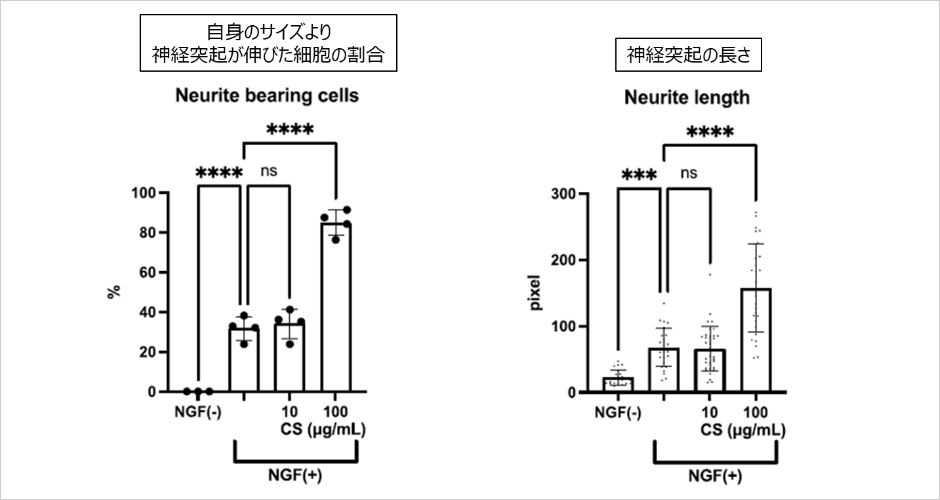
Figure 1: Effect of neurite outgrowth on PC12 cells
<Test Method>
PC12 cells derived from rat adrenal pheochromocytoma were treated with nerve growth factor (NGF) and Cordyceps sinensis ethanol extract (0, 10, 100mg/mL) to induce neurite outgrowth. The percentage of differentiated cells (left graph) and neurite length (right graph) on the fifth day after differentiation induction were quantified. In the group administered 100μg/mL of Cordyceps sinensis (CS) extract, there was a significant (p<0.0001) increase in the number of differentiated cells and neurite length, demonstrating that Cordyceps sinensis promotes neuronal differentiation. (Conducted by Mie University)
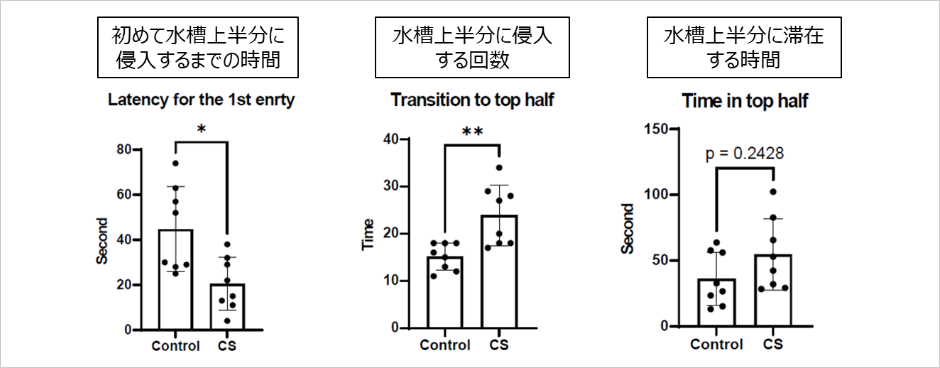
Figure 2: Evaluation results of anxiety behavior index
<Test Method>
Adult zebrafish were divided into two groups (one untreated and one treated with Cordyceps-containing food) and orally administered 400 mg of each dried sample powder per kg of body weight for four weeks (1 g/day for humans, equivalent to 400 mg/kg body weight in HED for mice, and the same amount was used for zebrafish). Afterwards, the fish were transferred from their breeding tank to a new tank, and their swimming patterns were videotaped for five minutes. The time it took to reach the top of the tank, the number of times they moved to the top, and the time they spent at the top were measured. Eight fish per group were used in the experiment, and statistical analysis was performed using Student's t-test to calculate significance (*p < 0.05, **p < 0.01). (Conducted by Mie University)
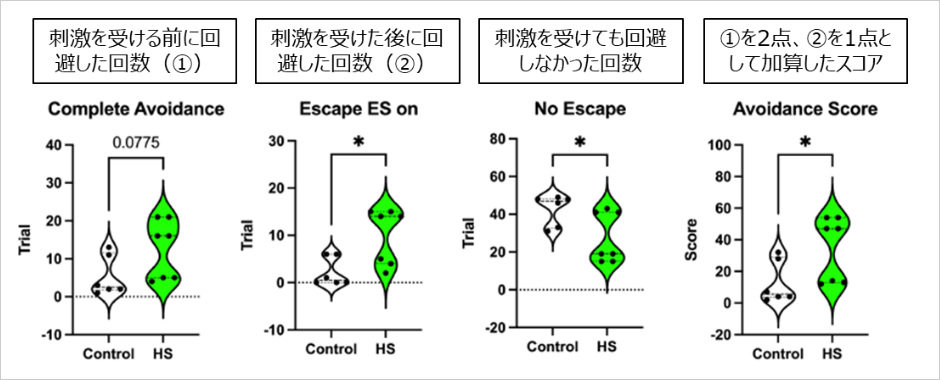
Figure 3: Evaluation results of learning function (active avoidance test)
<Test Method>
Adult zebrafish were divided into two groups (one untreated and one treated with a Cordyceps-containing diet) and orally administered 400 mg of each dried sample powder per kg of body weight for four weeks (1 g/day for humans, equivalent to 400 mg/kg body weight in HED for mice, and the same amount was used for zebrafish). A two-chambered tank was then used, and a green light was shone on the area where the test fish were not present. If the fish did not move to that area within the specified time, a stimulus was applied. Avoidance due to light alone was scored as "complete avoidance" (2 points), and avoidance after receiving a stimulus following light exposure was scored as "post-stimulus avoidance" (1 point). Learning ability was assessed by conducting 50 consecutive trials. Eight individuals per group were used in the experiment. Statistical analysis was performed using Student's t-test to determine significance (*p < 0.05, **p < 0.01). (Conducted at Mie University.)
Impact of this research result on society (significance of this research result)
This study focused on the fact that neurite retraction caused by various factors, such as aging and stress, and the resulting imbalance in emotions and cognition are among the causes of impaired mental and physical health. It scientifically examined the neurological support effects of Cordyceps, a traditional medicinal ingredient. The results confirmed that Cordyceps has multiple effects, including neurite outgrowth, anti-anxiety, and improved learning function, suggesting its potential to contribute to the maintenance of the central nervous system, which supports the health of both mind and body. Furthermore, by reevaluating the wisdom of natural ingredients passed down through the ages using modern science, we were able to present a new, evidence-based approach to societal issues such as aging-related neurological changes and stress-related mental disorders.
This result is expected to contribute to the development of scientifically based material development and product design, as well as the advancement of preventive and pre-disease care, in order to realize well-being centered on neurological health.
Background of this research
This research is one of the results of a joint research agreement concluded between Mie University and Rohto Pharmaceutical in 2018. This research stems from efforts to solve social issues and utilize resources in collaboration with the local community, and aims to create material value based on scientific evidence and contribute to the realization of people's well-being.
Past research results releases
Special Notes
The results of this research were presented in posters at the 42nd Annual Meeting of the Japanese Society of Traditional Chinese Medicine and the 71st Annual Meeting of the Japanese Society of Pharmacognosy.
Name of the conference: 42nd Annual Meeting of the Japanese Society of Traditional Chinese Medicine (August 23-24, 2025)
Title: "Evaluation of the anxiolytic effect of Cordyceps sinensis using a novel zebrafish tank test"
Authors: Yasuto Shimada1,2, Takuro Shinkai2,3, Misa Nakai2,3, Haruka Okunishi4, Liqing Zang2,3, Kazutaka Fukada2,5, Hirotaka Katsuzaki2,4, Norihiro Nishimura2,3
1) Department of Integrative Pharmacology, Graduate School of Medicine, Mie University, 2) Zebrafish Research Center, Mie University, 3) Graduate School of Regional Innovation Studies, Mie University, 4) Graduate School of Bioresources, Mie University, 5) ROHTO Pharmaceutical Co., Ltd.
Conference name: 71st Annual Meeting of the Japanese Society of Herbal Pharmaceutical Sciences (September 14-15, 2025)
Title: "Cordyceps improves learning function in zebrafish and promotes neurite outgrowth in PC12 cells"
Authors: Yasuto Shimada1,2, Takuro Shinkai2,3, Misa Nakai2,3, Haruka Okunishi4, Liqing Zang2,3, Kazutaka Fukada2,5, Hirotaka Katsuzaki4, and Norihiro Nishimura2,3
1) Department of Integrative Pharmacology, Graduate School of Medicine, Mie University, 2) Zebrafish Research Center, Mie University, 3) Graduate School of Regional Innovation Studies, Mie University, 4) Graduate School of Bioresources, Mie University, 5) ROHTO Pharmaceutical Co., Ltd.