What determines whether customers "like" a skincare product?
– Follow-up report *: Exploring the relationship between changes in the feel of Hada Labo Gokujun and physiological indicators –
April 15, 2026
ROHTO Pharmaceutical Co., Ltd. (Headquarters: Osaka City, President: Hidetoshi Segi) is conducting research on the sensory experiences of using skincare products, with the aim of developing products that are tailored to the well-being of each individual customer.
This study analyzed the relationship between physiological indicators and subjective descriptions of the "likability" experienced when using Gokujun Hyaluronic Acid Lotion (HADA LABO Moist Lotion d). The results showed no significant difference in average tactile sensations over the entire application time. However, differences in physiological indicators emerged midway through the application process, where changes in feel were perceived. Furthermore, the group that found the product pleasing described it as "moist" and "supple," while the group that did not found it pleasing described it as "slimy" and "sticky," indicating differing descriptions of the feel. This suggests that how the feel is perceived midway through application may be a key factor in determining the likability of skincare products. This research aims to decipher the question of "why we like something," which has been difficult to grasp through words alone, from the perspective of how the user experience changes over time. In the future, we aim to apply this to formulation design and product development that better caters to customers' latent preferences.
The results of this research were presented at the 21st Annual Meeting of the Japan Society for Kansei Engineering (held in Utsunomiya from March 16th to 18th, 2026).
*Please refer to this link for information on the previous research.
Key points of the research
- Analyzing the "desirability" of skincare products based on physiological indicators and time-series changes in application feel.
- We discovered that "changes in usability" during the application process are a crucial factor influencing subjective evaluations.
- We present a new sensory evaluation method that can utilize customers' latent preferences in formulation design.
Research Background
In the skincare product market, where differences in ingredients and functionality are becoming increasingly difficult for consumers to discern, information disseminated through social media and other channels is having a growing impact on purchasing decisions. On the other hand, whether or not a product is continued to be used is thought to be greatly influenced by the user's perception during use, particularly the pleasant feeling experienced during application. However, traditional evaluations of user experience have relied primarily on subjective methods such as surveys, and have not adequately captured the underlying feelings that arise during application or the reasons why a user "likes" a product.
While our company has previously clarified differences in responses based on "desirability" through sensory evaluation using physiological indicators, we have not been able to clarify at what stage of application these differences occur, how they are linked to the user experience, or their phenotypic characteristics. Therefore, in this study, we focused on changes in user experience during application and aimed to clarify the differences in sensory perception in detail by analyzing them in combination with physiological indicators.
result
Check the relationship between "liking it" and physiological indicators during application.
When using Gokujun Hyaluronic Acid Lotion, no differences were observed in the overall physiological indicators over the application time among the groups classified beforehand based on their "preferences." (Figure 1)
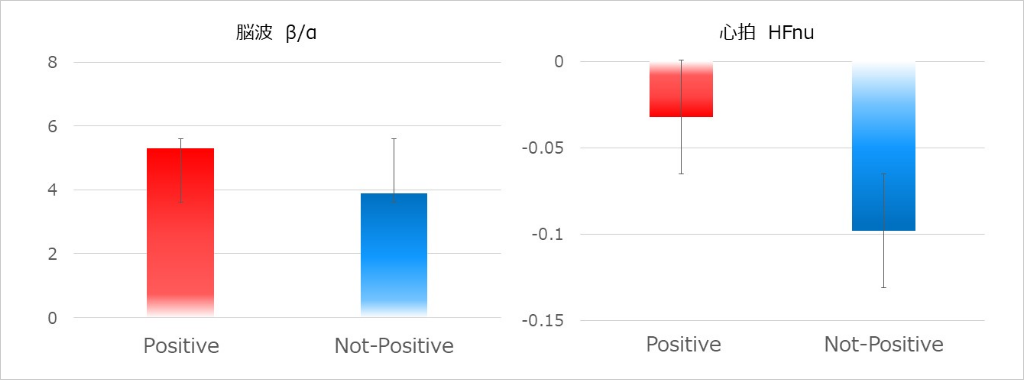
Figure 1: Electroencephalogram (β/α) and heart rate (HFnu) over the entire application time.
<Testing Method>
Women aged 20 to 59 years used Gokujun Hyaluronic Acid Lotion at home for four days and rated their satisfaction on a five-point scale. Based on the results, participants were divided into those who liked the lotion (Positive group, n=13) and those who did not (Not-Positive group, n=12). After attaching an electroencephalograph and heart rate monitor and resting for two minutes, participants applied Gokujun Hyaluronic Acid Lotion themselves using their usual application method. Physiological indicators (EEG and heart rate) were measured from before application to after application. For each participant, the change in baseline (average value during application minus average value before application) is shown in a graph. HFnu (=HF/(HF+LF)) was converted using the arcsine transform. (Conducted by Rohto Pharmaceutical Research Institute)
The change in feel during application is the deciding factor in whether you "like" it or not.
When the application time was divided according to changes in tactile sensation (Figure 2), no difference was observed in the early stages. However, in the middle and later stages, when changes in usability were felt, the Positive group showed a tendency for HFnu, an indicator of parasympathetic nervous system activity, to rise to positive values, indicating a shift toward a more pleasant state (Figure 3). Furthermore, it was confirmed that the feeling of use at that time was described differently by the Positive group as "moist" and "bouncy," while the Not-Positive group used terms such as "slimy" and "sticky." On the other hand, in the later stages, when the feeling of skin finish was felt, HFnu remained in the pleasant direction for the Positive group and in the unpleasant direction for the Not-Positive group, but the feeling of use was expressed in the same way for both groups, such as "bouncy," "moist," and "plump."
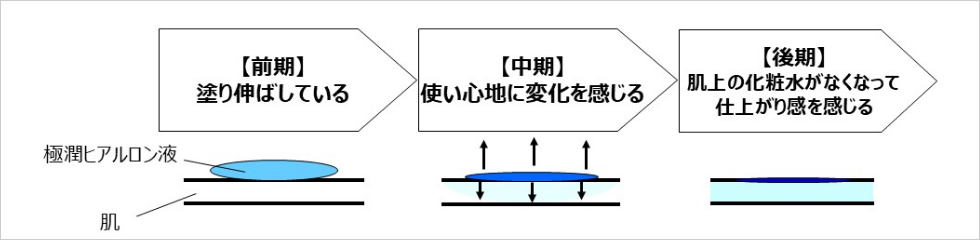
Figure 2: Image diagram illustrating the changes in user experience during each period.
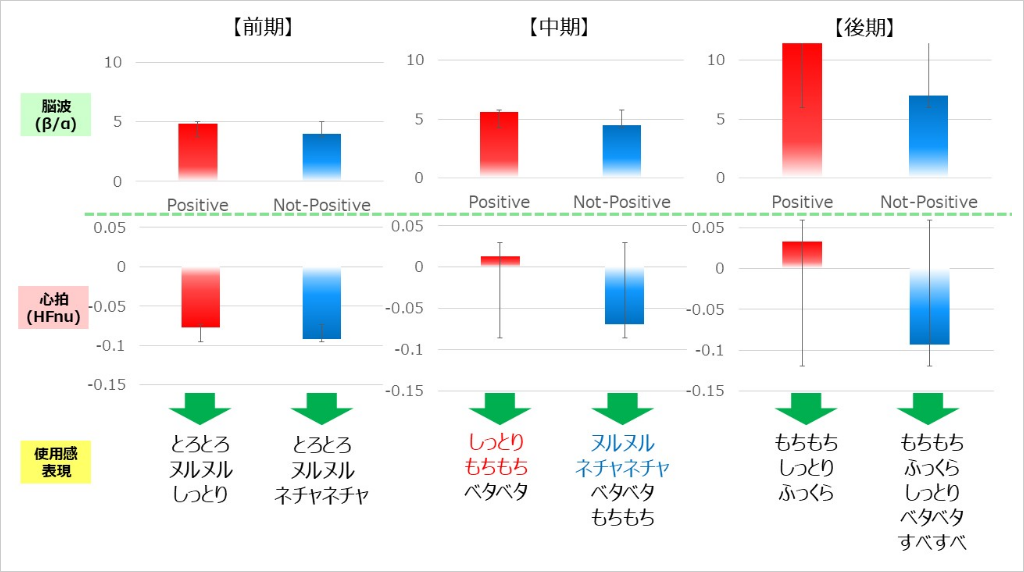
Figure 3: EEG and heart rate results and user experience descriptions for each period.
<Settings and usability evaluation methods for each period>
After application, an interview was conducted regarding the user experience. During the interview, participants divided their entire application time into three phases and selected multiple onomatopoeic descriptions from a set of options to best describe their experience at each stage.
(Early stage: time spent spreading the product, Middle stage: time when a change in texture was noticed, Late stage: time when the finished look of the skin was noticed)
The user experience rankings are displayed in order from the highest selection rate to the third highest.
Consideration
This study suggests that the feeling of "liking" the feel of Gokujun Hyaluronic Acid Lotion may be formed by changes in the feel experienced during application. It is thought that this latent sensitivity to changes in feel influences subsequent feelings about feel. Furthermore, in the later stages, despite differences in physiological indicators, the feeling of feel was expressed similarly, indicating that latent sensitivity cannot be fully evaluated by subjective evaluations such as questionnaires alone, and reaffirming the necessity of measuring physiological indicators. By clarifying the correspondence between physiological indicators and feel of use, we have been able to understand a part of the previously black box structure of perception. This is new knowledge that could not be obtained with conventional research methods alone.
Future outlook
This research has made it possible to structurally understand the feeling of "liking" skincare products based on the relationship between changes in feel and physiological indicators. In the future, by utilizing evaluations that focus particularly on the time-dependent changes in feel during the application process, we expect to apply this to formulation design and product development that are tailored to customers' latent preferences. Furthermore, we plan to use this not only in product development but also to revitalize communication with customers. Moving forward, we will continue to promote product development that is more customer-centric by creating value that includes not only functional value for the skin but also appeals to emotions such as comfort during use.
Terminology
*1: physiological indicators
These are indicators that objectively measure bodily responses, such as brain waves and heart rate. They are used to estimate emotions, concentration levels, and feelings of pleasure and displeasure.
*2: Sensory evaluation
The evaluation of subjective sensations such as impressions and comfort that people feel when using a product.